This morning we began the journey back down to the coast and a return visit, with overnight stay in Lyme Regis. Our journey took us past Barrington Court (NT) which we had visited several years ago. You can see my post here.
The Tudor house was the first major houses to be acquired by the National Trust and a big learning experience for them. The words "Remember Barrington Court?" were words often spoken when a new acquisition was being looked into. The problem came in the high cost of repairs and maintenance. From then on if properties were to be acquired they must come with a considerable endowment.

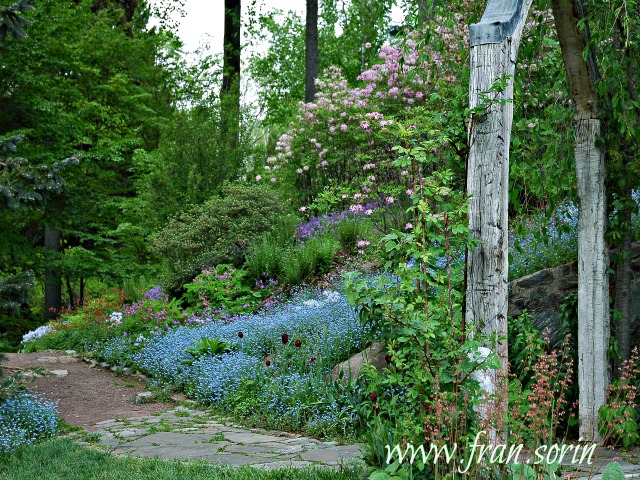
The time between spring plantings and summer flowers is often a difficult time for gardens. Some late tulips were still blooming among the wall flowers and the impressively large vegetable gardens were just getting started. Remember, this area of the country was just coming out of a very mild but very wet winter with flooding in many parts of the south.
 |
| Greenhouses and cold frames |

 |
| Forcing jars |

 |
| Fruit cages |

Our visit was to be brief, and we did not go into the house this time. We had one more place to visit before heading down to the coast but finding it turned out to be a challenge.
Stoke Sub Hamdon Priory appears in the National Trust Handbook but there is no information on how to find it, other than it being 2 miles west of Montacute between Yeovil and Ilminster. Almost all National Trust properties are marked on brown road signs, but not this one. I'm not sure they want anyone to find it. We had to park in the village and find someone to ask and when we found the entrance we parked on the roadside outside a large gate in a wall. I had no expectation that the handle would open the gate but it did. There was no one there to check our membership card and no one else visiting.

No restoration work is going on here although it looked as though they had secured the roof of the great hall.

Built of Ham stone in the 14th and 15th centuries the buildings were never a priory but a college attached to the chapel of St Nicholas.

It is always fascinating to look at the walls to see the changes the various people, who have lived here through the ages, have made; rooms divided, openings closed over, new windows, new doorways made.

Will these buildings see many visitors in the future?

We walked around the property peering into ruined buildings but there was little else to see there.

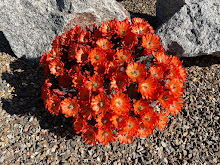
As we closed the gate to leave I saw an amazing display of those campanulas growing out of the wall across the road. A quick photo and then time to get on the road to Lyme Regis.

The ammonites down at the coast were beckoning and we needed to catch the low tide to see them at their best. But first to find our B&B. Yes, the place was called Coombe House and I had written down the telephone number. The problem came when I tried to call for directions on how to find the place. I had written the number down incorrectly. How we missed 4G at that very moment. I was in trouble and there were a few heated words. We found ourselves heading down the steep hill into town with no idea where to go. Fortunately I spotted the information center so I jumped out of the car, ran inside, finding out the B&B was just 100yds away. All is forgiven! We checked into our B&B and headed down to the beach. How nice to be staying within walking distance of the beach. It's quite a long walk along to the ammonite pavement, first along the promenade past the beach chalets and then through the harbor and over the sea wall onto the beach. The footing is difficult because of the pebbles and then larger rocks along the beach. You can see how far we walked.

The reward is to see the remains of the ammonites embedded in the rocks and worn away by the surf.

The Jurassic Coast.

We did pick up a few ammonite in the loose clay shales but did not venture too close to the cliff face. With all the flooding this winter there have been many landslides and we heard some small slips while we were there. As we headed back we passed the lawn bowling green. My father, grandfather and great grandfather played lawn bowls but they played on crowned greens. These were flat greens.

The harbor wall at Lyme Regis is known as The Cobb and was the scene of the French Lieutenant's Woman and of Jane Austen's Persuasion. Jane Austen is known to have visited Lyme Regis on two occasions and probably researched for the book Persuasion at the time. The book was published posthumously.

We also passed by the little rock garden named the Jane Austen Garden. Oh that I could grow all those pretty rock garden flowers.


Back at the B&B our hostess suggested we eat at a little vegetarian restaurant called Tierra Kitchen, just a few steps from her door.
 |
| My choice |
 |
| David's choice |
 |
| Shared side dish of goat cheese and beets |

We sat in the window in the bright morning sunshine.

It would be nice to have spent more time there but we had a reservation at Greenway House at 12:30. Time to load up and get on the road.