My Blog List

Showing posts with label Bluebonnets. Show all posts

Tuesday, April 27, 2021

SPRING IN THE SUNKEN GARDEN

 The area between the house and the pool was a blank canvas and perfect to create a sunken garden. The inspiration was partly inspired by the many sunken gardens I have visited in England, my grandfather's garden where I spent my teenage years and the sunken courtyard at the Lady Bird Johnson Wildflower Center. Many of the rocks dug up during the building of the house were saved in order to create a foundation wall around the sunken area. The floor is Arizona sandstone over decomposed granite. I'm sure the builder was happy not to have to cart those rocks away. Nature has done much of the planting and I am happy for that although it does create considerable work keeping it under control. But, both David and I delight in all the blooms that appear-as if from nowhere. The scene changes from week to week and from year to year. Spring is the most floriferous time.
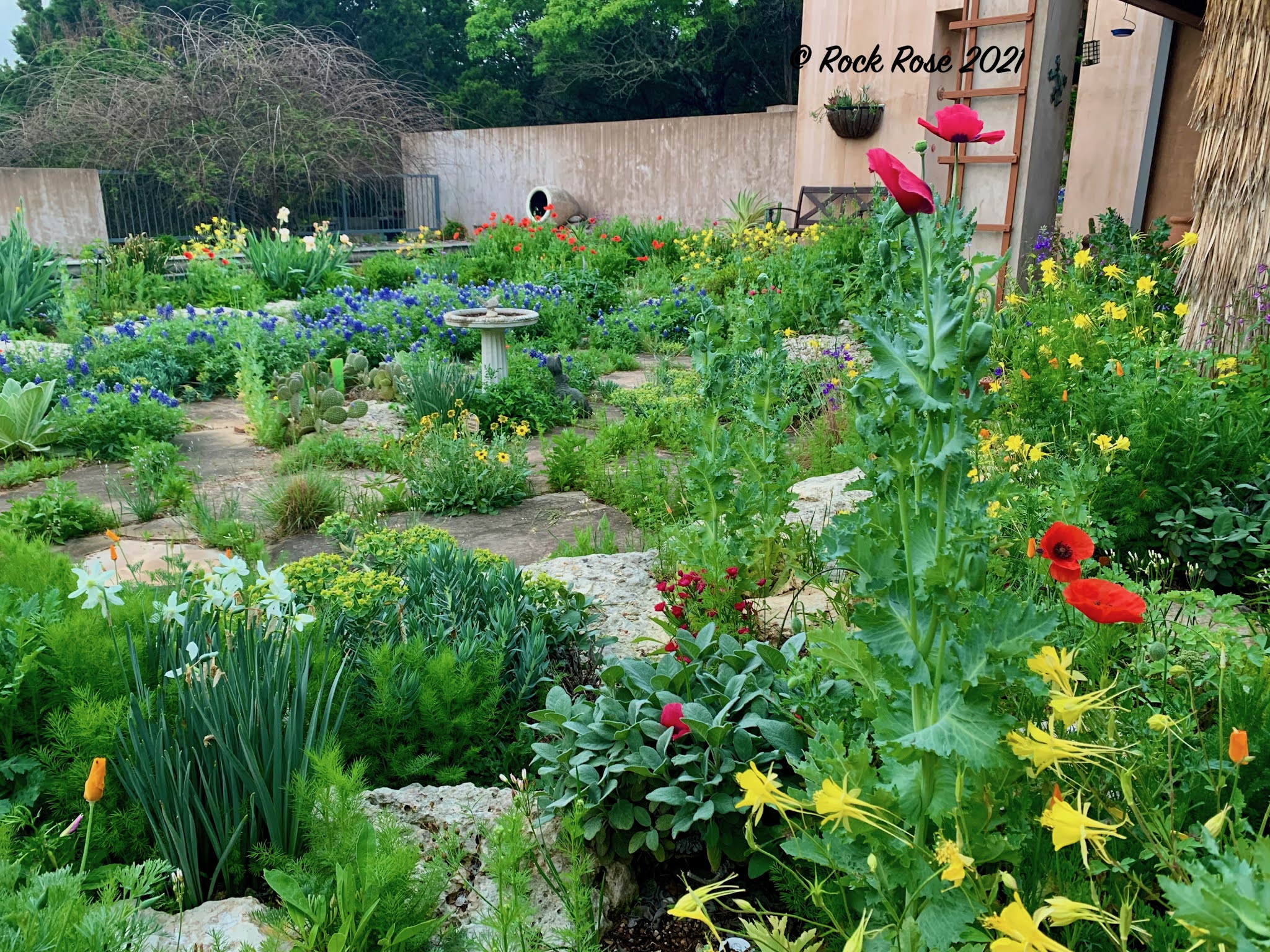
The only step down is along the front and even here it requires some agility as a Gulf Coast penstemon, Penstemon tennuis, has seeded right in the middle of the two stones. How could I possibly pull it when it was so happy there. I love this penstemon but it is prone to root aphids, placed there by ants who farm its honeydew. They are not easy to control and will kill the plant.

A few plants have been with me since the beginning and one is the chocolate daisy, Berlandiera lyrata

Compact in the early weeks it does eventually become rather rangy. It has only seeded in one other place and I suspect this is because I usually cut it back part way through the season and the new seed heads may not have time to mature. 

Mullein, may be considered a weed by many but I love its beautiful form over the winter before sending up a tall flower spike with yellow flowers. It is also a favorite of the bees. Many may seed but only a few will be chosen. This was a lucky one on the lower level.


In early spring bluebonnets can really take over and I'm afraid this year I have let rather too many and some of the plants growing beneath have suffered. A single bluebonnet plant can spread to cover 3' and is better suited to a meadow setting.


Hinckley's yellow columbine. Here there and everywhere as usual.


 It is always interesting to watch how plants grow and move. A large cluster of bee balm was gradually evicted by this yellow iris, so that now there are only a few plants left. Time for the iris to be divided and passed along nd maybe the bee balm will move back in.


 I always let the corn poppies grow wherever they wish. Easy to pull out and something will always take their place later.
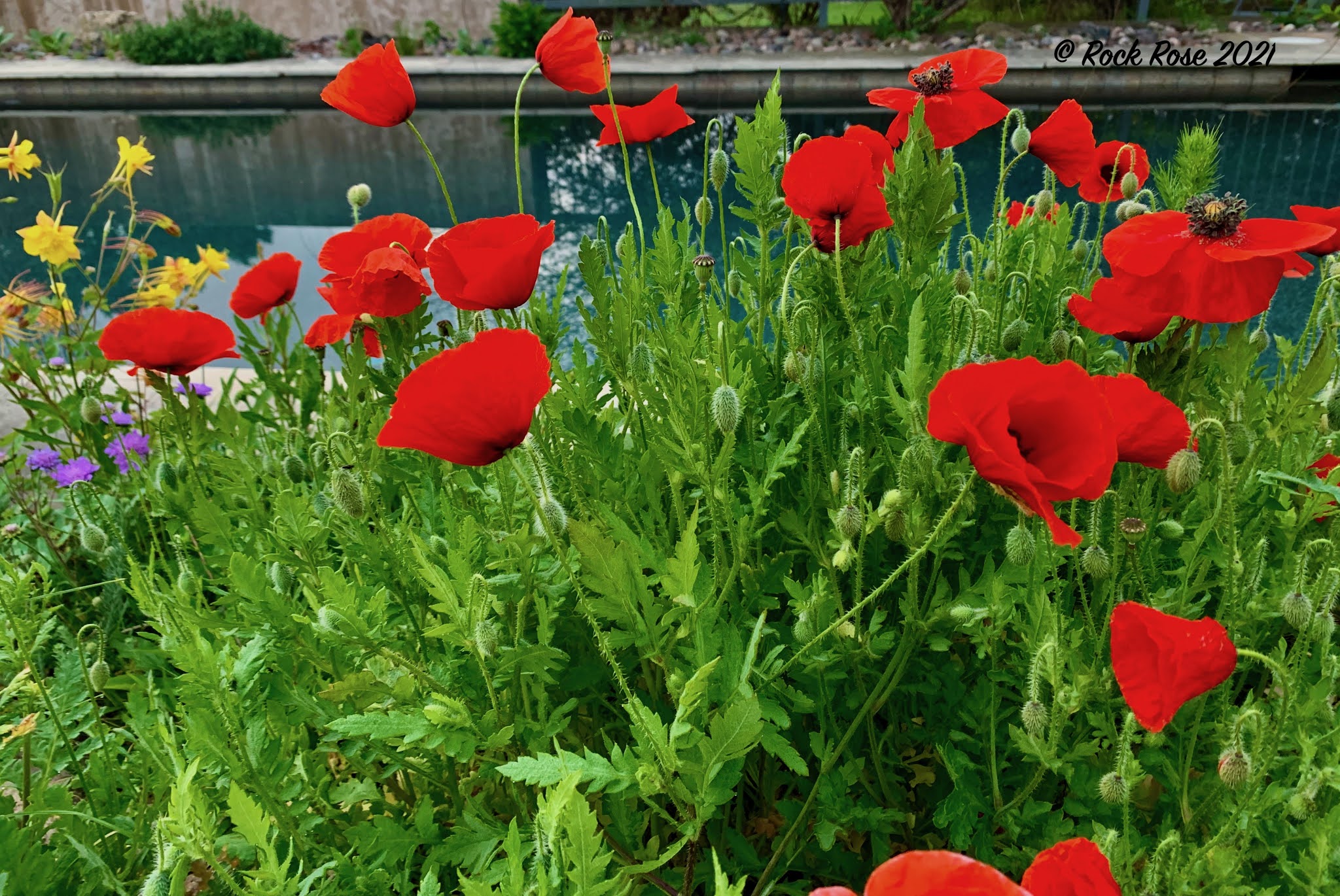
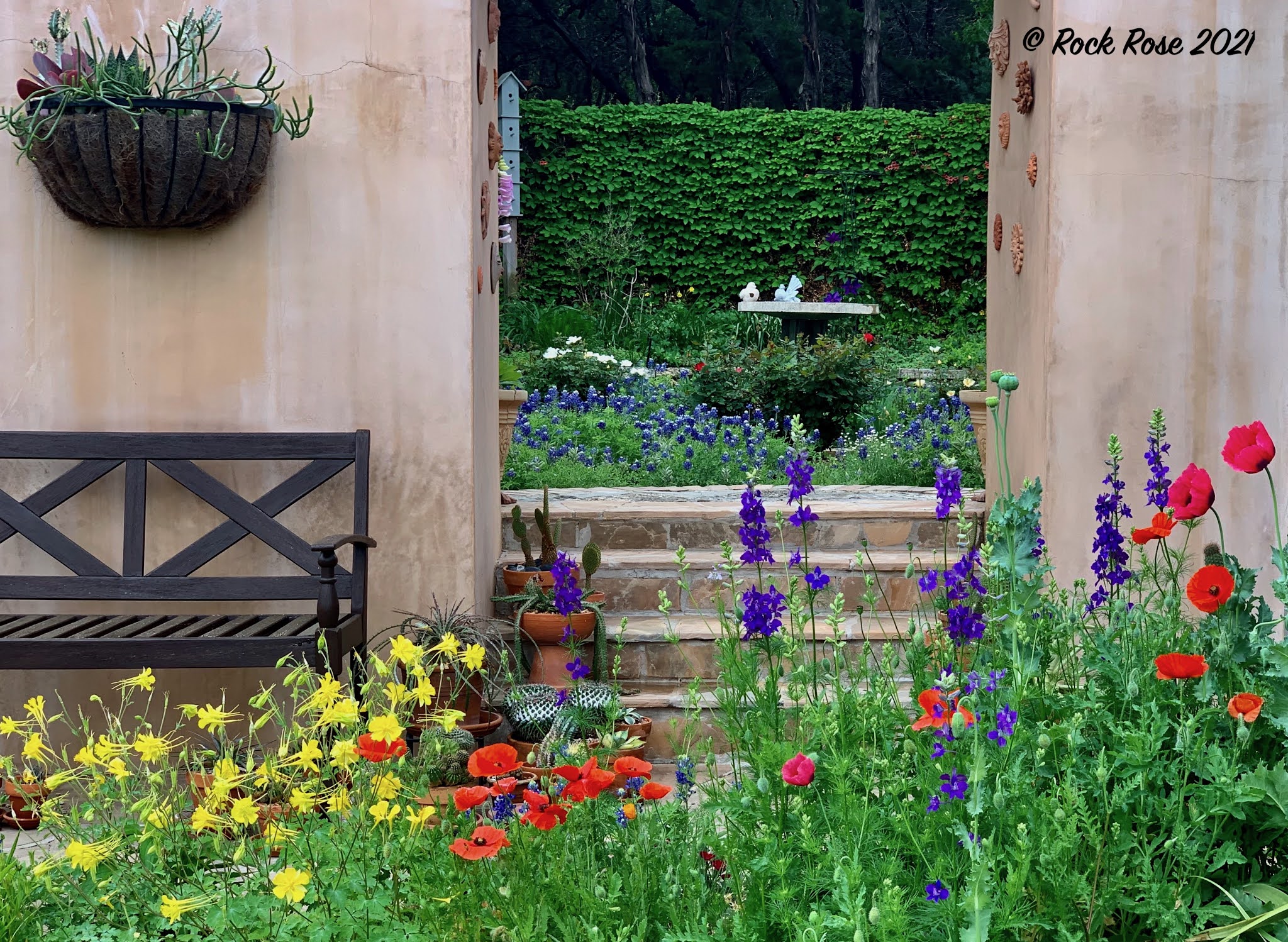
One of my favorite views is standing in the sunken garden and looking up to the Sun and Moon Archway. A mix of columbine, larkspur and poppies.
 

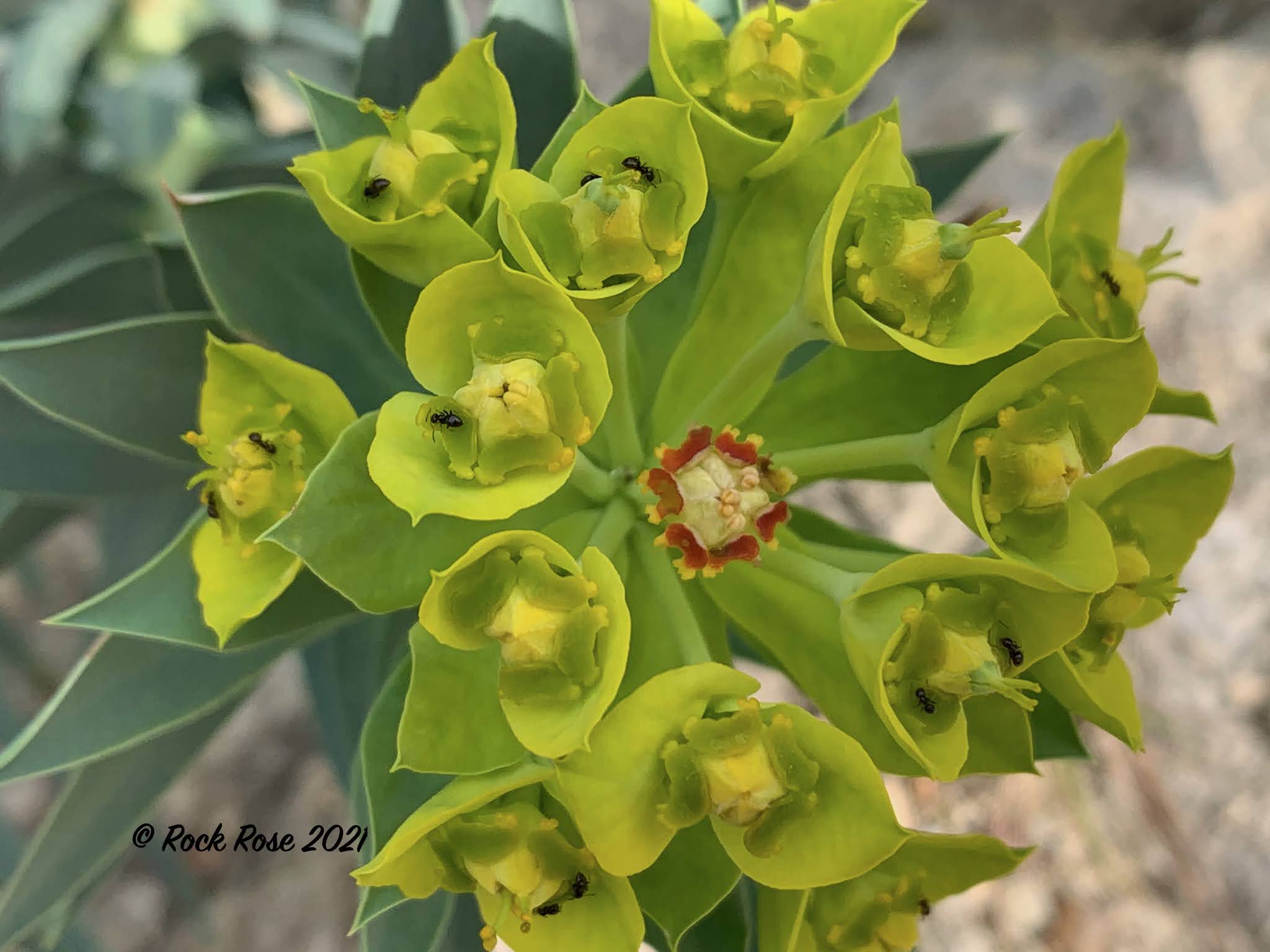
The gopher plant, Euphorbia rigida, has flowered and gone to seed. Some of the longer leaves have been removed to leave a small cluster of seed heads for seed saving. Nigella hides the leaves of the faded daffodils above the  mealy blue sage and larkspur.
 

Late April and the wine cups begin to bloom and spread, and spread and spread! Frequent trims will keep them in order. 

There will be a few plants missing this year and they will be missed. Two beautiful Pride of Barbados were lost to the freeze. The seed had appeared from nowhere and we had several years of their summer blooms. There is however, a very small one growing between two of the ledgestones and possibly in a more favorable place. 


It's time to get out there and remove some of the more boisterous residents in the sunken garden.

Tuesday, April 6, 2021

THE 4 O'CLOCK BLUES

Just as many flowers are fading in the afternoon sun these two little native beauties are just beginning to open. The first is Blue gilia, Gilia rigidula, a member of the phlox family.

I rescued this plant many years ago from the lot next door to us and so glad I did. This delicate plant has spread modestly but seems happy in the place where it is planted. Above the retaining wall in the dry, rocky, shaded, filtered light with no irrigation needed. It is the perfect location because the wall is about 4 feet high so the plant can be enjoyed without stooping. 

I have never seen the plant for sale in the nurseries.

The second afternoon bloomer is the Blue-eyed grass. Sisyrinchium angustifolium. Mine occurred naturally although I have seen hybridized varieties in the nurseries. 


 It loves a sunny location and spreads very easily from seed forming good-sized clumps. It is perfect in a rock garden setting enjoying the spaces between the pavers.

And who could pass up the chance to share more photos of the bluebonnets, Lupinus texensis, that grow both inside and outside my walled garden. Faithful as ever in their appearance every spring and filling the warm afternoon air with a sweet fragrance.


These are the kind of blues a gardener loves.

Saturday, March 13, 2021

THE BEES AND I

 The bees and I had a lot in common today. We were both out hunting for flowers. Looking for what had made it though the freeze.

 Gopher plant

Flowers have been few and far between since the freeze. The first blooms to appear were those of the muscari and the bees were very adept at finding them hidden among their strappy foliage. The lemon trees are full of flowers but few have yet opened. It doesn't seem to deter the bees from flying around and even trying to poke their proboscis in the half-opened buds. 

No surprise to see a Juniper Hairstreak, Callophrys grynius, getting in on the action too.


 And there were lots of little pollinators on the gopher plant, Euphorbia rigida. Much as I love this plant, and the bees do too, it is more of a love/hate relationship for me. Loved when in flower and sending out the newly formed shoots, but at other times of the year disliked as it sprawls across the garden with many dead leaves.  It does not seem to do well in our hot and humid summers. In fact last year I said it would probably be their last year. And this year they look even worse because the freeze did not spare them. But of course I am already relenting because, despite their ugliness, the bees adore them and those new shoots look very attractive. I cut off many of the damaged stems because they were unattractive and were not going to flower.


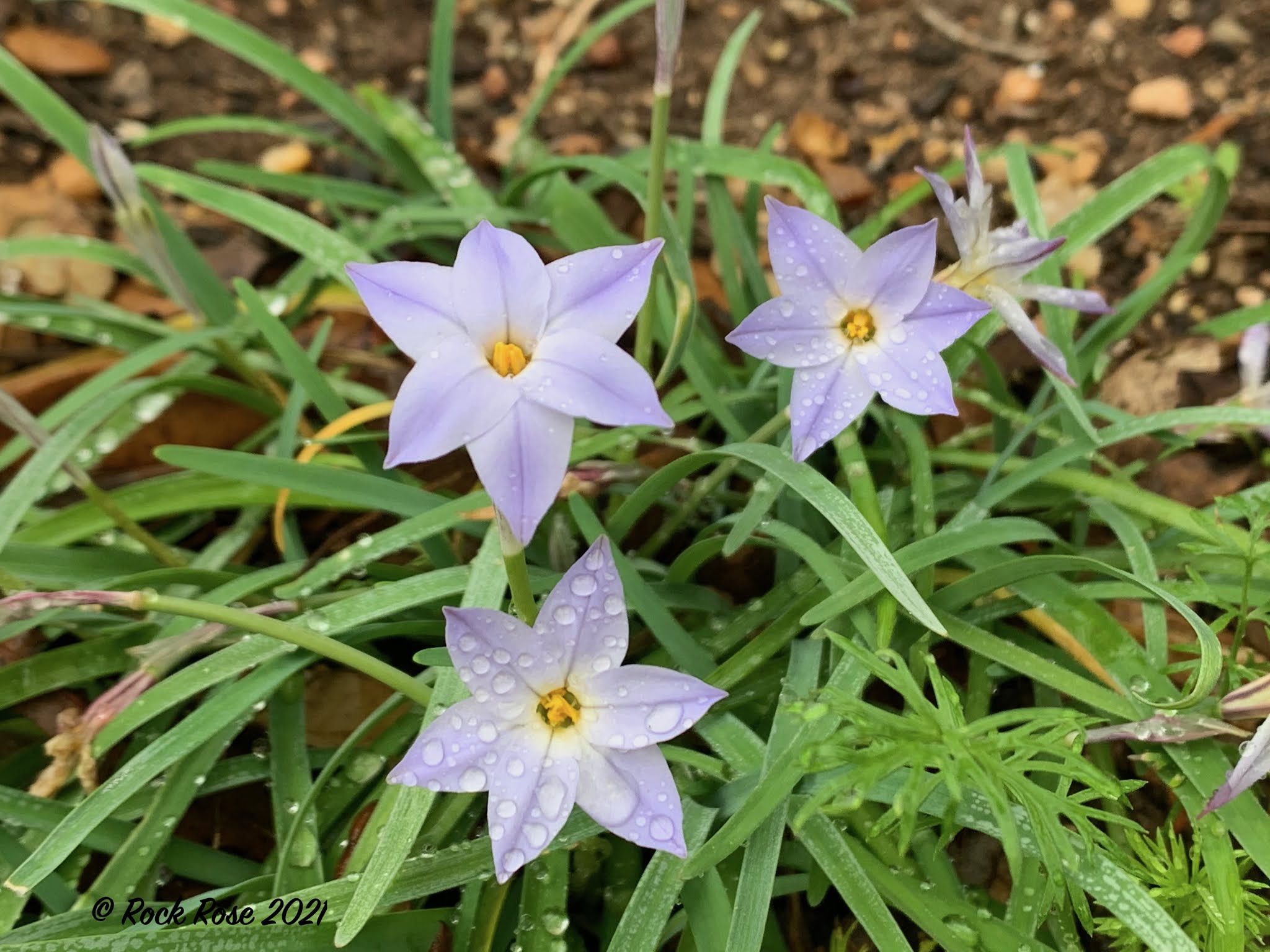
 Fortunately the ipheon. Ipheion uniflorum, were still below ground and have just started blooming. Two shades of blue. I have never seen bees on them so maybe more for my enjoyment than theirs.


And the first of the bluebonnets. Loved as much by the bees as all Texans.

After several warm days the garden is truly coming to life and the first species tulips opened today. And there are several later blooming daffodils showing buds

 Crow Poison, Nothoscordum bivalve! I remember being quite excited about this clump of flowers showing up many years ago. It looked like the perfect rock-garden plant. Now I am careful to remove the heads once they finish flowering but it is too little too late. They are everywhere and impossible to remove as their bulbs go deep beneath the soil. But they do have pretty little flowers. If only it would clump.

But it isn't just flowers that I am searching for on my many walks around the garden. I am also looking for signs of life on some of the larger shrubby plants and those that have gone dormant beneath the soil. I was excited to see that, over the last few days, with warm temperatures, the hybrid musk rose Felicia rose was sending out new shoots  from the base. It really needed a good pruning so I took out my big Fiskars pruners( a raffle prize I won at the Austin Garden Bloggers' Fling) and cut the rose down to the ground. Maybe this time I can do a better job of guiding it onto the pillar. I love this rose for its clusters of pale-pink, fragrant blooms and its habit of blooming several times through the year. 

I also see shoots emerging from the ground on my five Clematis, 2 natives and 3 hybrids. And possibly a couple of seedling Clematis versicolor. A few leaves have appeared on the Philadelphus but nothibng so far on the Philippine violet.

Things are definitely beginning to look up and with the first day of spring just a week away I have new hope for this year's garden. 

Saturday, January 23, 2021

MY GARDEN HAS INSOMNIA

When I lived in Eastern Canada gardeners were well assured of having a respite during the winter. It was a time when browsing through seed catalogues and placing an order was the highlight of winter gardening. Seed starting came next, geared towards being able to plant frost sensitive flowers and vegetables outside by May 24th. The garden slumbered under a thick layer of snow.

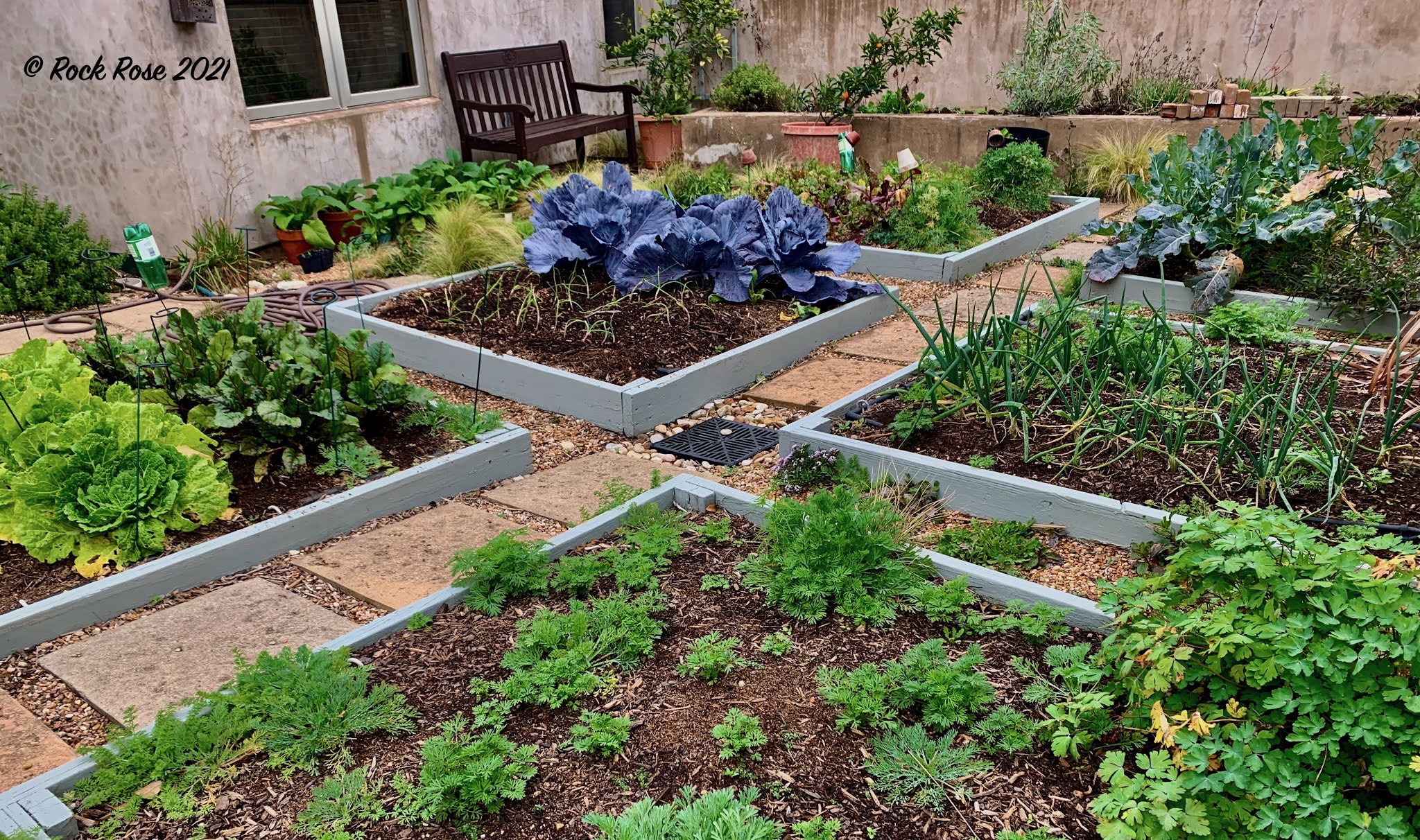
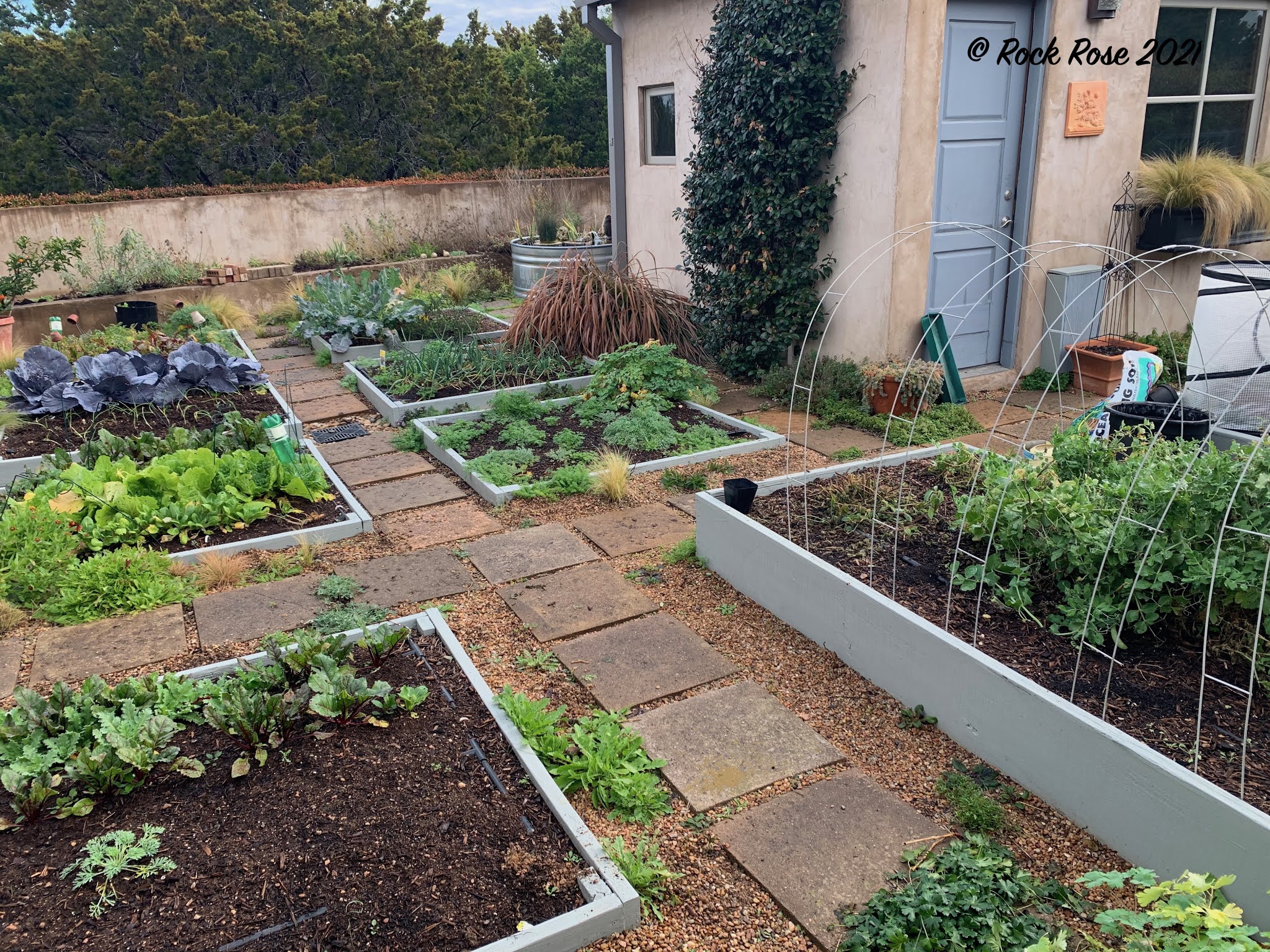
Now here I am in Texas with its unpredictable climate and often mild winters. Because I knew there was to be no winter travel this year it gave me the opportunity to be more diligent about planting a winter vegetable garden. It has been a great success.


We have had an unusually mild fall, although frost has made an appearance on several occasions necessitating the covering of my peas.  I was  determined to keep them going in order to get an early spring crop, but because of mild weather was rewarded with a winter crop. 


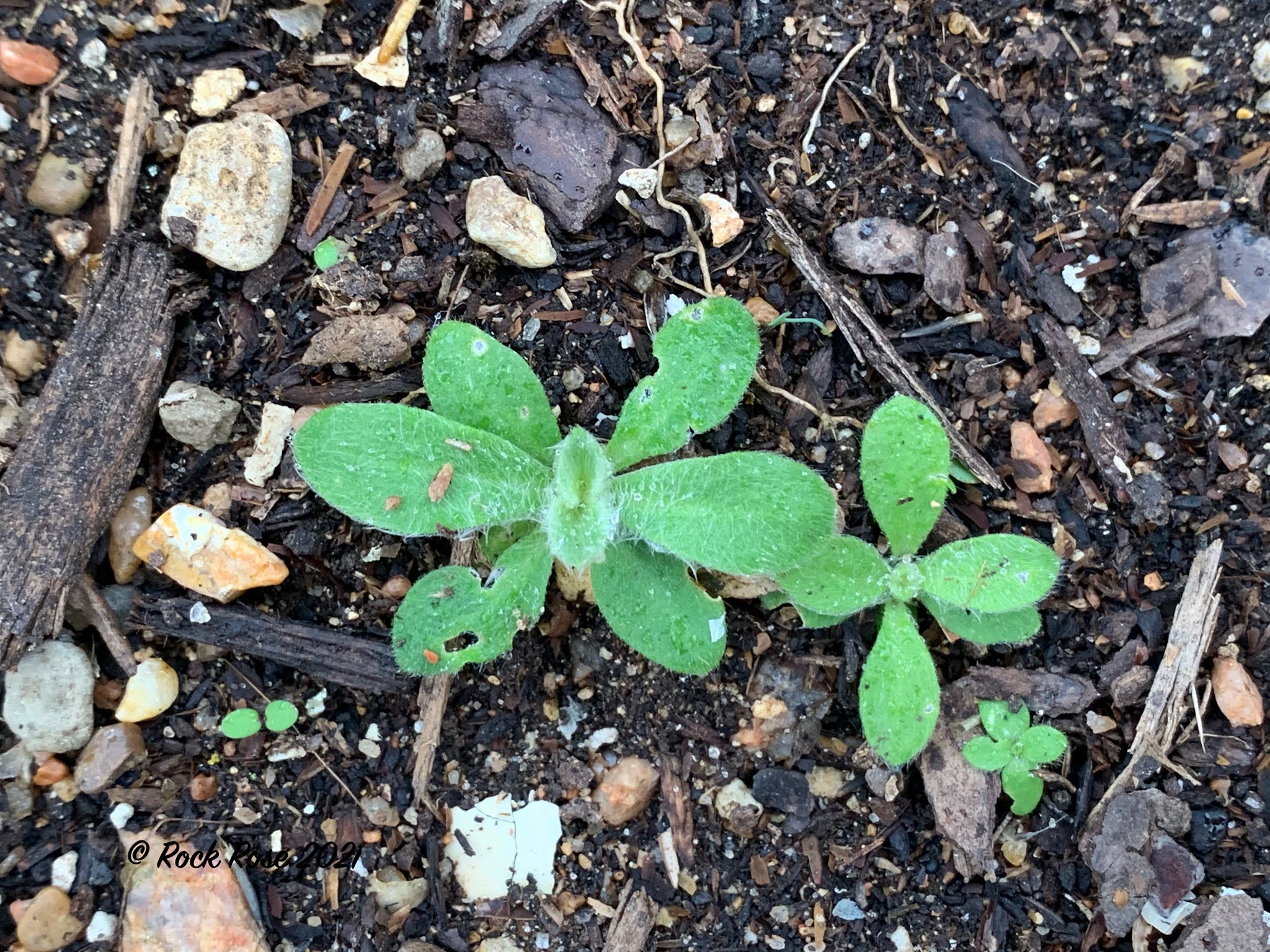
We have already devoured two crops of broccoli, pak choi and a succession of chard and kale not to mention peas, carrots and beets. All these plants are contained in beds in my vegetable garden. Even so there are many intruders in those beds chiefly larkspur, California poppies and the most successful seeder of all Love-in-a-mist. Known as hardy annuals this is their time to germinate, growing over the winter in time to flower in the early spring. I regret I have allowed them to take over. 


Those spaces between the pavers create an ideal spot in which seeds from last years flowers settle and particularly with Love-in-a-mist it seems every one germinates.  

And they found an even better home in the vegetable beds among the cilantro.

And poppies too.


And bluebonnets. Knowing how they can cover a diameter of 3' I may need to remove the one in the center of the path.

Every year I vow to keep those paths free of these opportunists and every year I relent which means even more will arrive every year. 

Blanket flowers, Gaillardia pulchella give me great difficulty. That is because they behave like perennials and these rather shop-worn plants are beginning to flower again. Soon they will have to go because they make a tripping hazard but I will leave them in case the bees come by looking for nectar or pollen. There are hundreds of seedlings just getting going.

It is my firm intention this year to reduce their numbers before they make it impossible to walk down the paths. 

Some plants don't seed quite so prolifically  so I am happy to see a few rose campion, Lychnis coronaria, just beginning to develop. I plan to remove them from where they are growing at the edge of the path to a more prominent position.

 Those that are a little larger will have to stay. A happy trio of rose campion, Lychnis coronaria, Gulf coast penstemon Penstemon tennuis,  and alyssum, Lobularia maritima. They are in the herb garden and will stay there.

Verbena bonariensis by the hundreds! I have already shared many and have potted some up in case of a some weather mishap. Last year's plants are looking strong and healthy but there is much winter to come yet. 

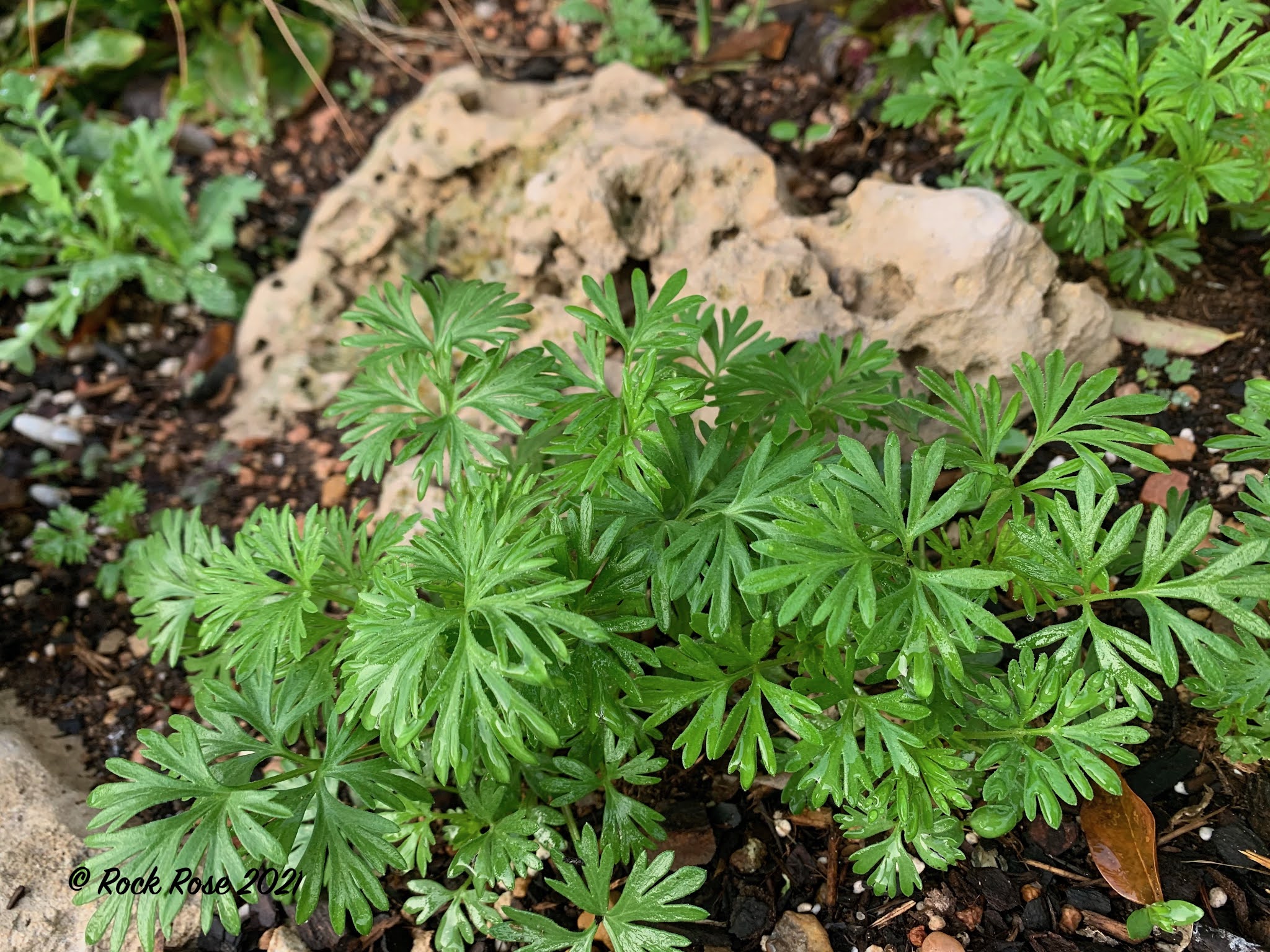
 Larkspur seedlings in the sunken garden. A little thinning required. They won't grow as large as the ones in the beds because the soil is poor. The same being true of love-in-a-mist.

Here is a plant that hasn't slept in 2 years, Scabiosa. One of my favorites in the rock garden becaseu its foliage is never touched by insects.

Someone once said my weeds were a lot different from theirs. The fact is a weed remains something that is growing in the wrong place and I have plenty of those.


Friday, April 3, 2020

HOW TO DO IT WITH WILDFLOWERS

The front courtyard garden is blooming with Texas native wildflowers and has entered its most floriferous season. Using short season wildflowers in the landscape requires some structural specimens as well as hardscape. We are fortunate to have some great agaves that do the job well.


Under the whales tongue agave, A. ovatifolia, the once blooming flowers of Tulipa hummilis, have been replaced by flowering purple skullcap, Scutellaria wrightii, and yellow blooming square bud primrose, Calylophus berlandieri. The skull caps will bloom all summer if given a trim back after flowering.


And on the other side beyond the Mexican feather grass is the damianita, Chrysactinia mexicana with its aromatic, fine-leaved shrubby foliage.


Of course the bluebonnets, Lupinus texensis, being an annual will soon be gone but the accompanying blackfoot daisies, Melampodium leucanthum, will bloom all summer and will be at their best in the fall.


Blackfoot daisy
The claret cup cactus flower, Echinocereus triglochidiatus, is one of my favorite. The flower is longer lasting than many cactus flowers.


In a shady corner, and there aren't many in this garden, baby blue eyes, Nemophila phaceliodes.


A few seeds gathered from some flowers on an unbuilt lot and I now have several clumps of Barbara's buttons, Marshallia caespitosa. They are perennial but when summer comes the foliage dies back only to appear again in late winter.


Lyre leaf sage, Salvia lyrata, pops up all over the garden and would make a great ground cover with its attractively pattered leaves.


One of my favorite places to sit in the garden is in the breezeway between the garage and house There I can enjoy the view of this part of the garden with flowers and bubbling water feature. Yesterday I watched the wrens flying back and forward building a nest in-between the pots on the top shelf of the cactus theater.


Such messy builders but such fun to watch.


I hope you are enjoying spring in your garden wherever you are.