My Blog List

Showing posts with label Clematis texensis. Show all posts

Saturday, April 3, 2021

WHAT DENOTES A COLLECTION?

On UK garden programs they sometimes visit gardens/nurseries who hold the National Collection of a specific plant. In the UK there are over 650 collections and you can see the list at National Collections and where to see a specific family. Plant Heritage aims at conservation of plant and diversity rather like the aim of our own Lady Bird Johnson Wildflower Center. 

Out of curiosity I looked up Clematis where I found myself heading down the inevitable rainy-day rabbit hole. Collections are by group and there among them was our very own  Clematis texensis with  2 species, 15 cultivars and 17 taxa. 

                                                    Clematis texensis Princess Diana

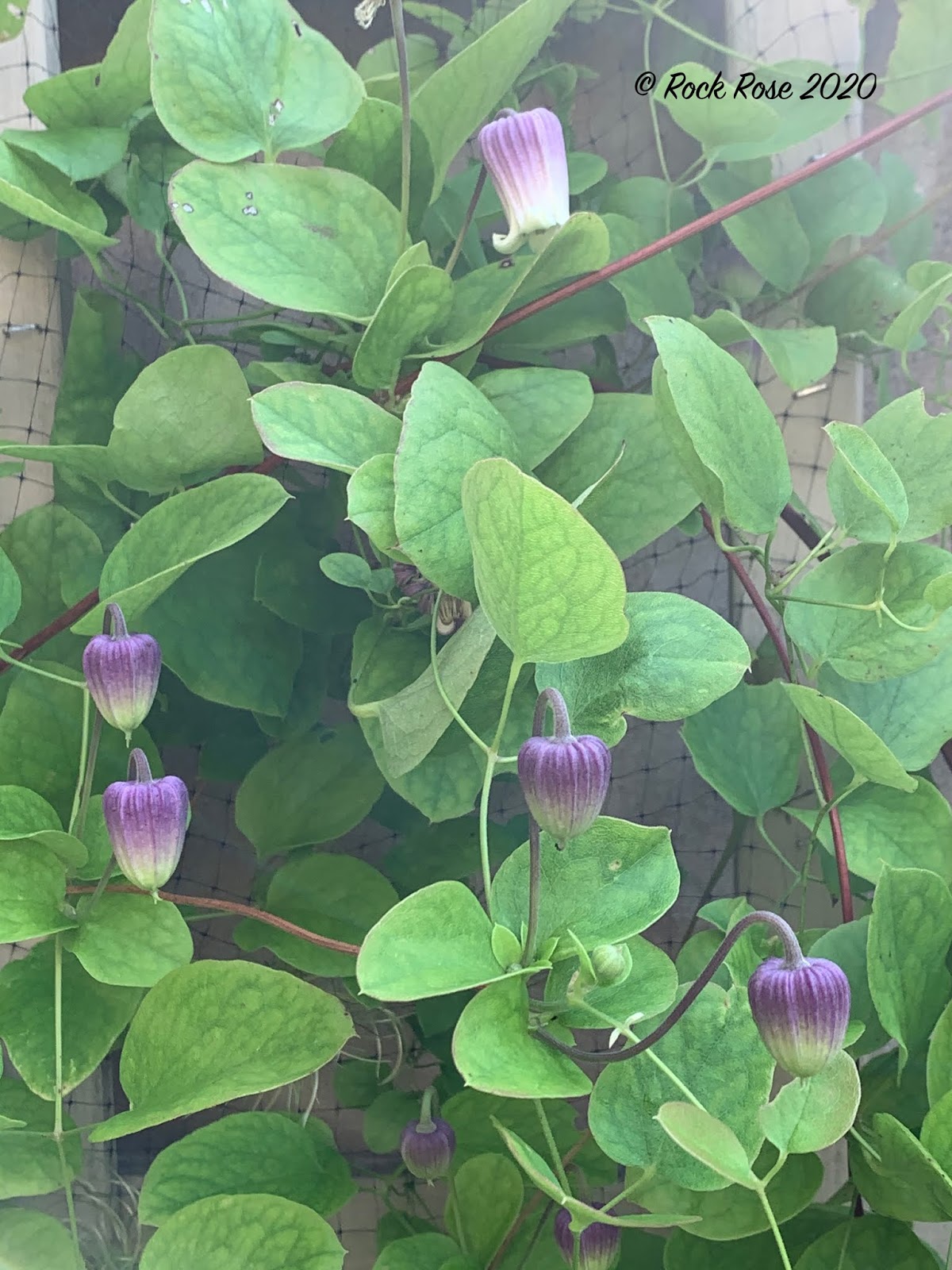
 Our native clematis is almost impossible to find at the nursery and even at the Wildflower Center's Native plant sale coming up soon. I did manage to buy one there some years ago and was at first disappointed in the color but have come to love and treasure it over the years.  I have identified it, rightly or wrongly, as Clematis versicolor , known as the pale leather flower. I think I had expected it to be C. pitcheri, purple leatherflower.

                                             Clematis pitcheri, Pale leatherflower?
 

Now, having found this breeder of clematis in England I plan to send them a photo and ask them what they think about the identity of this clematis. They have one labeled C. pitcheri crispa 26 which they raised from seed. It took 4 years to flower.

Maybe if I am lucky I will be able to add to my one Texensis group, Princess Diana. Among which are Happy Diana, Etoile Rose, Duchess of Albany, Gravetye beauty, Pagoda, Sir Trevor Lawrence, Maxima, Peveril Profusion, Ruby Wedding and Radiance. What I love about these clematis is that they die down to the ground over winter so there is no pruning necessary. But they do require some kind of wire or mesh support in order to support their rapid growth in spring. I think this is why you so often see them planted to entwine around roses.

Both my clematis produce delightful seed heads and this year I have a few seedlings of the C. versicolor. Getting them out of the ground is not easy as they send down very long roots but I have been successful in saving a few rather spindly plants which I hope will grow stronger over the years and eventually flower. Lovely in all its seasons I am now on the hunt.


Thursday, May 21, 2020

A FEW SCENES FROM MY MORNING WALK IN THE GARDEN

It's the second thing I do every morning. Number one is put the kettle on to make tea. Number two is to pick up my phone and head out into the garden. What will I see this morning; a new flower, a wilted plant, a lizard scurrying ahead of me on the path or just that special scene that I want to capture in a photo? Here are a few of the scenes that I enjoyed this morning.

The kumquat is blooming and this year, if all the flowers are pollinated, we will have a really wonderful crop for kumquat marmalade.


In the distance is the pedestal with the hypertufa crevice garden. I planted it with little plants that could not survive my summer travels, nor the blasting sun. This year I am hoping for better success with a few things that have seeded there, a feather grass, and one particularly tough succulent I snuck in there last fall. But it is my opinion that the rocks could just stand alone.


As I walk back I realize I need to do a little editing to make walking through here a little easier.


Further along the wall the clematis, Clematis texensis 'Princess Diana', is starting to bloom. There was an anxious moment a few weeks ago when I was sure it was lost but then I noticed small shoots beginning to grow and within weeks she was showing her first buds.


Back up the steps and a nice shot of the prickly pear with the heart leaf skullcap. I have managed to control its spread so that it is confined to this area but it is an ongoing process.


A passalong plant from Bob Beyer when he moved to Florida, the Crown of Thorns Euphorbia milii, blooms constantly.


I love my hypertufa balls in the English garden.


and the hypertufa trough in the Spanish Oak garden. I finally settled on the African false hosta, Drimiopsis maculata, another passalong plant.


Just outside the back door a cow bell, picked up at an estate sale, an aloe and a metal lizard make a perfect trio.


And on the far side of the courtyard garden I check out the Clematis versicolor, Lots of new buds ready to pop open.


At the same time on my walk I see plenty of jobs for the day but for now that early morning cup of tea awaits.

Tuesday, April 16, 2019

HOW DOES YOUR CLEMATIS GROW?

I was watching a recent episode of Gardeners' World where they visited a gardener who holds the National Collection of clematis. Specifically Clematis texensis and Clematis viticella, the smaller flowered varieties. His belief is that it is unnatural to constrain these clematis on a trellis. Rather, that they should be allowed to twine into roses and other garden shrubs. I think I agree.


Clematis texensis 'Princess Diana'


Clematis versicolor Pale leather flower
It is not the easiest of tasks to get these two to climb a trellis. Twice this week I have caught two of mine heading into other plants, the first into a potted citrus and the second into an American beauty berry. Once they are twined it is difficult to get them untwined. I have used a secondary support in the form of bird netting to make it easier for the leaf petioles to twine and hold on but there are often stem wafting around in the air looking for........another plant to climb! It is too late for these two but a recent acquisition, with no trellis available, I decided to plant it beneath a climbing rose. This is not one of the smaller kind, but I am hoping its bloom cycle will fill in when the Zephirine drouihin rose finishes blooming. For now they are blooming together.

Clematis 'Brother Stefan'
Although Brother Stefan has a medium-sized flower, I think that the larger flowered varieties are better suited to a trellis. My Clematis jackmanii, Most certainly demands a good trellis to display her large flowers. I planted this one 3 years ago from a small bare root start. It is finally showing its stuff. Gorgeous blooms, some 6" across and many of them.


It seems I am starting my own little collection of Clematis. Will I be scouring the internet every night looking for new varieties like that clematis gardener in England? If I want more I may have to, as our local nurseries never seem to carry any. Or I may just start taking cuttings. I came across a tutorial on how to do this and I think now is about the right time.

Monday, May 15, 2017

GARDEN BLOGGERS' BLOOM DAY, MAY 2017

It has been a while since I posted on bloom day. Suddenly it was upon me and I had no time to gather the photos.

Surely the opening photograph for this month's Bloom day post has to be the Monarda 'Peter's Purple' He's certainly King of the garden at the moment.


And Queen of the May garden is the blanket flower, Gaillardia pulchella. Not so easy negotiating the pathways at the moment.


And we have a princess too,  Clematis texensis 'Princess Diana'. What a beauty she is. Just a few weeks ago there was no sign of growth and I was sure I had lost the plant over the winter. In less than a month she has grown to almost cover the trellis.


So many bloomers. The spineless prickly pear, with two different blooms on the same plant.


I wonder why that is?


And all the day lilies.


All but the tiny orange one without names.
Echinacea purpurea, just coming into bloom.


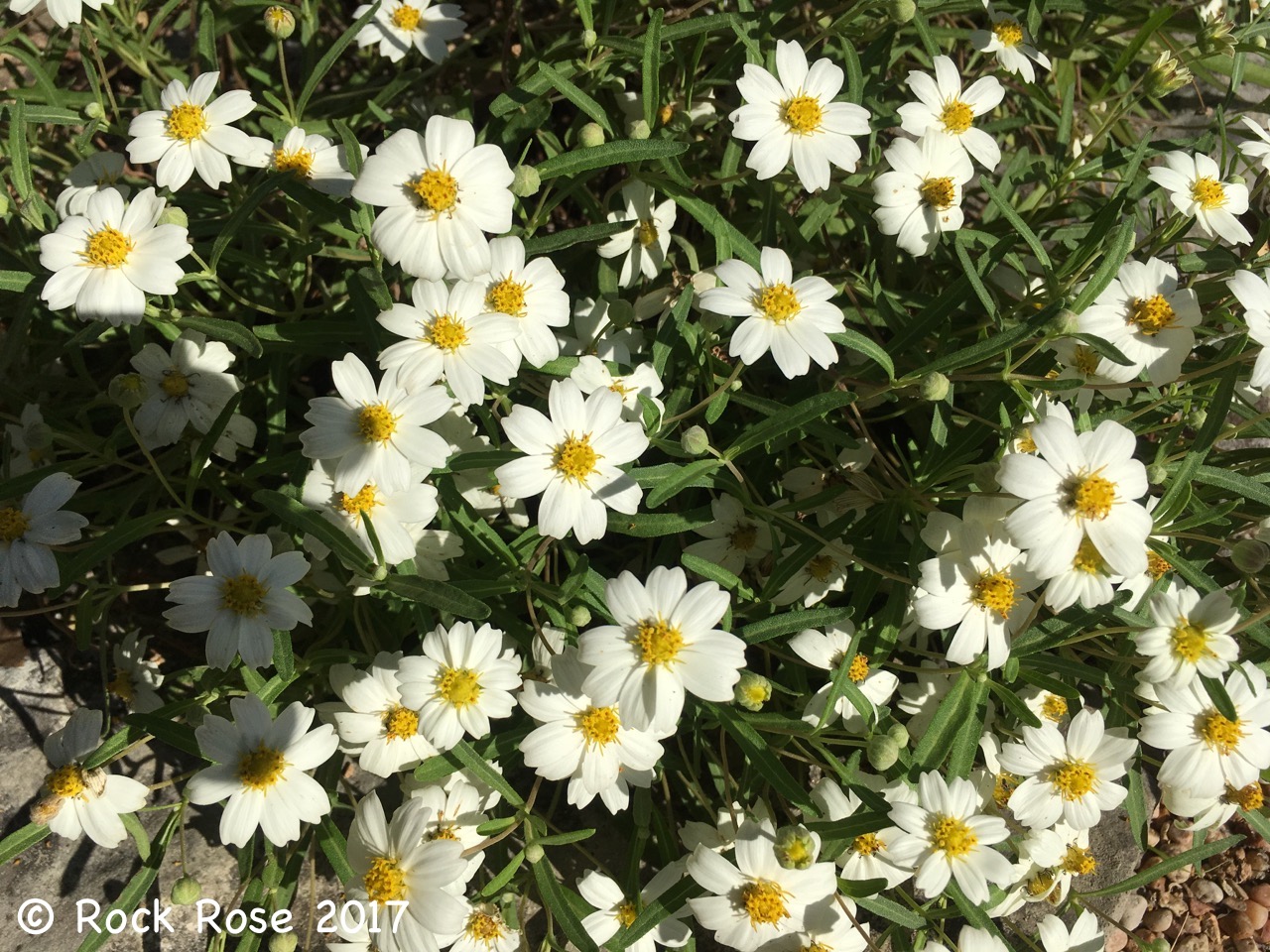
The larkspurs, love-in-a-mist and poppies have finished already but blackfoot daisies, Melampodium leucanthum,  still keep going.


Among the other natives, the purple skullcap, Scutellaria wrightii.


Which pairs well in a rock garden setting with the square bud primrose, Calylophus berlandieri, and pink skullcaps.


Square bud primrose with ruby crystal grasses

Pink skull cap seeded in the dry creek
Scabiosa back for the third year. A rescue plant.


And Texas betony, Stachys coccinea, not a showy plant but the hummingbirds love it.


Another native, horsemint, Monarda citriodora.


The native chocolate daisy, Berlandiera lyrata, with its delicious chocolate fragrance.


And for the first time in a while success with Cleome.


These are just a few of the flowers that are blooming in my rocky Texas garden in mid May.

Thank you Carol at Maydreams gardens for hosting Bloom day. Find out what is growing in other gardens this May Bloom Day.

Saturday, September 5, 2015

A SERIOUS CASE OF THE BLUES


My garden has got the blues. Cape plumbago, Plumbago auriculata, on the left and Leadwort plumbago, Ceratostigma plumbaginoides, on the right. They happily share the same spot in a morning sun because they have different growing habits. Cape plumbago stands a couple of feet tall and leadwort is a ground cover spreading by underground rhizomes. I love them both because they bloom at the hottest time of the year. Both of them disappear over the winter and their place is taken by the Heart-leaf skullcap. When that dies down in late spring the plumbagos take over. Over the winter a Yucca rostrata towers over the area.


But I shall have to admit that I have been feeling a little blue of late. It 's been a horrible year for my garden. First horrendous hail followed by endless rains and now no rain in July and just an unmeasurable amount in August. Twice recently there has been a threat of rain and a brief shower one time may have washed a little dust off the leaves. But with that cold front came a change in barometric pressure and that is pure magic. The first to bloom is the Texas sage, Leucophyllum frutescens. Sometimes called the barometer bush, a title well deserved.


The pink one is growing outside the walls where it gets no irrigation. It was a seedling from ones I had at the front of the house; long gone because they didn't get enough sun to bloom. But then I have a white one in the front garden , not as showy as the pink/purple but pairing well with another fall bloomer, Salvia leucantha, which is just starting to bloom. You don't see the white ones very often and this one came from Vivero Gardens.


The change in pressure also caused a blooming of rain lilies and today a cactus is blooming. My Texas Fishhook cactus, has four gorgeous blooms. Now what could dispel a gardener's blues faster than a blooming cactus.


Or maybe it would be the Texas clematis, Clematis texensis, Princess Diana. Just blooming all summer long. This one, which I purchased in the fall to replace a Confederate jasmine, was sheltered from the spring hailstorm by the potted citrus.


If only all my citrus were doing as well as the Calamondin. It lost all its fruit and flowers in the hail but bloomed again and is now filled with ripening fruit as well as a few sweetly scented blooms. It should be loaded with tiny orange fruits by Chinese New Year in February. Grow this as an ornamental bringing in to the house in winter and it will be sure to chase away any winter blues.


If, at the start of the week, I said I was going to give up gardening then the garden gods made sure that I had changed my mind my the weekend.


Friday, May 1, 2015

A TALE OF THREE CLEMATIS

I have three Texas clematis growing in my garden. This one is on a west facing wall. If you remember the recent hail storm came from the west but a lemon tree in front of it saved it's delicate stems from the brunt of the storm.


Texas clematis x Princess Diana.


The second one is on an east-facing wall. What is amusing about this one is that it sent up a long leggy stalk which went over the top of the wall. It thought better of its desire to go westward when the wind began to blow and promptly retreated behind the safety of the wall. I think it has decided to stay.


It has an unusual flower, more like Clematis pitcheri and a color that I cannot identify. It was purchased at a Wildflower Center sale so I am wondering if it was grown from seed. Although I was at first disappointed with its rather wishy-washy color it has grown on me. Like Clematis pitcheri its tepals don't open any more than shown in the photograph.


But sadness comes with one growing on the South facing wall. It strangely seemed to take the brunt of the hail which all but destroyed its stems.


This one was also purchased at the Wildflower Center and was sold as C. texensis x Princess Diana. Seen before the hailstorm.


This may be a good time to improve on the trellis!