My Blog List

Showing posts with label spineless prickly pear. Show all posts

Monday, May 15, 2017

GARDEN BLOGGERS' BLOOM DAY, MAY 2017

It has been a while since I posted on bloom day. Suddenly it was upon me and I had no time to gather the photos.

Surely the opening photograph for this month's Bloom day post has to be the Monarda 'Peter's Purple' He's certainly King of the garden at the moment.


And Queen of the May garden is the blanket flower, Gaillardia pulchella. Not so easy negotiating the pathways at the moment.


And we have a princess too,  Clematis texensis 'Princess Diana'. What a beauty she is. Just a few weeks ago there was no sign of growth and I was sure I had lost the plant over the winter. In less than a month she has grown to almost cover the trellis.


So many bloomers. The spineless prickly pear, with two different blooms on the same plant.


I wonder why that is?


And all the day lilies.


All but the tiny orange one without names.
Echinacea purpurea, just coming into bloom.


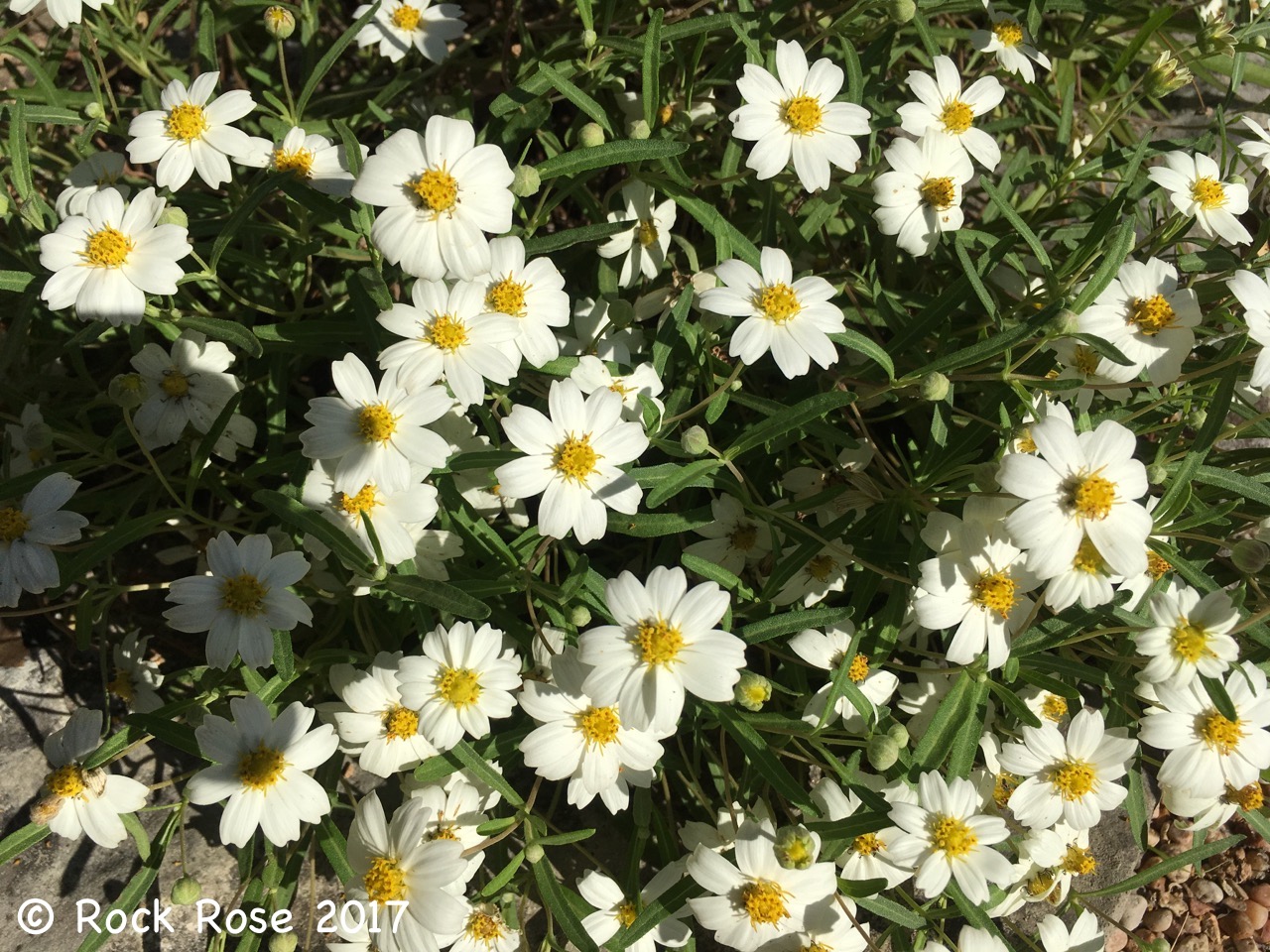
The larkspurs, love-in-a-mist and poppies have finished already but blackfoot daisies, Melampodium leucanthum,  still keep going.

Among the other natives, the purple skullcap, Scutellaria wrightii.


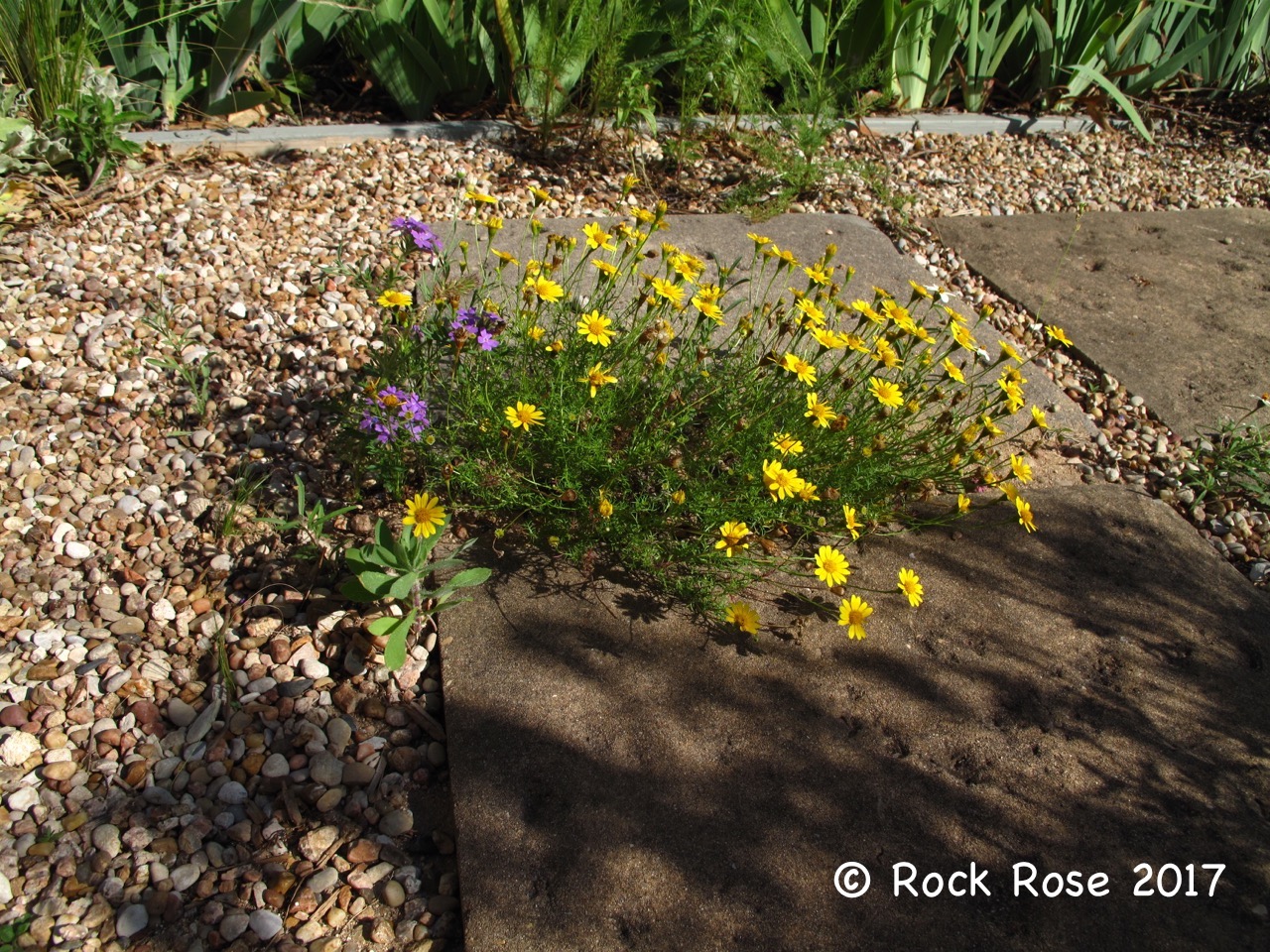
Which pairs well in a rock garden setting with the square bud primrose, Calylophus berlandieri, and pink skullcaps.


Square bud primrose with ruby crystal grasses

Pink skull cap seeded in the dry creek
Scabiosa back for the third year. A rescue plant.


And Texas betony, Stachys coccinea, not a showy plant but the hummingbirds love it.


Another native, horsemint, Monarda citriodora.


The native chocolate daisy, Berlandiera lyrata, with its delicious chocolate fragrance.


And for the first time in a while success with Cleome.


These are just a few of the flowers that are blooming in my rocky Texas garden in mid May.

Thank you Carol at Maydreams gardens for hosting Bloom day. Find out what is growing in other gardens this May Bloom Day.

Tuesday, May 2, 2017

CELEBRATE NATIONAL WILDFLOWER WEEK, May 1-7

Do you have wildflowers growing in your garden? I do. Let's see what is blooming out there this week as we celebrate National Wildflower Week.

I'll begin with Colorado Venus' looking-glass, Triodanis coloradoƫnsis. (A)What a lovely name.


And where did it come from because I have never seen it before? It came inside a hole in a rock I brought into the garden when I redid the dry creek along the garage wall.


The plant is annual so I shall watch carefully for the seed pods ripening. I would like to have more next year.
A final blooming of the lace cactus, Echinocereus reichenbachii.(P) Even after the blooms die it remains a tidy addition in the rock-scape.


And the blousy Engelmann's daisy, Engelmannia peristenia, (P) opening with new flowers every day from a winter rosette of leaves.


The pathways in the vegetable garden are crowded with blanket flowers, Giallardia pulchella. (A) Goldfinches feast on their seeds but always leave plenty to bloom next year.


And Mexican bush sage, Salvia leucantha,(P) blooming months ahead of schedule this year. Will it bloom again in the fall as the hummingbirds begin their long winter flight to SouthAmerica?


The trailing wine cup, Callirhoƫ involucrata, (P) spilling over the dry-stone wall. Always everyone's favorite when they visit the Wildflower Center.


The flowers on the Texas prickly pear may only last for a day but they may leave behind some nice fruits. These fruits, call tuna, ripen to a burgundy red and can be used to make jelly.


Wooly stemodia, Stemodia lanata, (P) makes a good ground cover and is deer resistant.


It has tiny blue flowers.


Our native Lantana, Lantana horrida (P) is also deer resistant and blooms through the hottest months of the year with little water.


Purple skullcap,  Scutellaria wrightii,(P)  can be pruned into a tidy clump and blooms all summer.


Echinacea, Echinacea purpurea, (P) a summer bloomer and another favorite of the birds when it goes to seed.


The Blackfoot daisy, Melapodium leucanthum, (P) another deer proof summer bloomer.


The columbines are among the earliest of spring flowering plants. here the Hinckley's yellow columbine, Aquilegia hinkleyana, (P).


and the more delicate smaller flowered Aquilegia canadensis,(P)


Damianita, Chrysactinia mexicana,(A)is both drought and deer tolerant but does best when given occasional waterings.


All these plants are blooming in my west Austin, rocky landscape, with minimum watering.

If you would like to learn more about wildflowers for you area you can get information on the Ladybird Johnson Wildflower Center website. There are all kinds of programs going on this week in Celebration of National Wildflower week.

Monday, June 15, 2015

GARDEN BLOGGERS' BLOOM DAY . JUNE 2015

Rainy skies are once again hanging over central Texas on this bloom day. Our recent strange weather pattern is making for some anomalies in the garden. Flowers that would normally bloom in the fall are blooming now and some that finish their bloom cycle in the spring are booming again. These are the flowers blooming in my Central Texas garden at the moment but photographed before the rain started.


Standing cypress, Ipomopsis rubra, is a biennial and reseeded in my garden this year. Although they grow in dry sandy soil it would seem that the unusual amounts of rain we had in May are responsible. The hummingbirds love this plant which is usually around in the fall when the hummingbird migration begins. A June appearance is very early for my garden.

And how unusual to see another crop of California poppies. I am thinking that many were beaten to the ground by the hail we had in April and were determined to bloom.


This is the first blooming of these rescue, nameless day lilies I bought several years ago. This year I moved them into a better spot and they like it there. I am thrilled with their rich, deep color.


They are growing in front of a spineless prickly pear cactus. Is that scale I see on some of the pads. This is a common problem with prickly pear and easy to miss.
Another hummingbird favorite is the Dicliptera suberecta, sometimes called the hummingbird plant. But be careful about using a name like that because there are quite a few plants with this common name.


Another late bloomer is the columbine, Aquilegia chrysantha.


Scabiosa was another rescue plant that has continued to perform for several months. Battered by hail it has come back again.


An Agapanthas  I nursed back to flowering this year, along with the foxgloves.


Small flowers often go unnoticed but how could you miss these. The plant on our outside table sends out these long shoots which stretch right across the table in all directions. Then produces  the tiniest of flowers.


 Many thanks to Carol at May Dreams Gardens for bringing you here. I hope everyone is enjoying a wonderful bloom day in their garden.