My Blog List

Showing posts with label Echinopsis. Show all posts

Thursday, August 10, 2017

FIRST RESPONDERS

There is not a plant in my garden that didn't respond to the wonderful rain we had this past week. So long overdue. One day I was looking at plants that were withered and dying and a day later it was as though someone had waved a magic wand and breathed new life into them. But of all the plants in the garden there are no plants that respond so dramatically as the rain lilies.
It may be time to divide this large clump of pink rain lilies.

Zephyranthes
Our native rain blooms a couple of days after rain. Unfortunately if a deer walks by he likes to nibble off the flower.
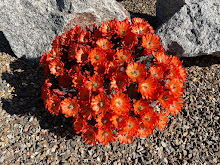
Cooper pedunculate
Just a couple of yellow zephyranthes.
Zephyrathes
And this stunning flower on the Trichocereus cactus greeted me this morning.
Trichocereus

Sunday, July 23, 2017

THE DESICCATED GARDEN

A friend went away for a couple of weeks leaving her indoor cat with only an occasional visitor to feed and water him. When she arrived home the cat never stopped meowing for over an hour. He had so much to tell her, mostly about how much he had missed her but probably about leaving him for so long too.


If plants could do the same thing I know I would be getting an ear-full right now. While I was busy swanning around Europe for a month my poor garden was slowly desiccating. I really did try my best to prepare it for my absence but I also rely on a little rainfall to help out. It was not forthcoming this time and my drip irrigation system is no match for this brutal Texas sun. (The garden is too much of a responsibility to leave to someone so I let it fend for itself.) There is a lot of damage out there.
You probably had no problem identifying the desiccated individual above. When I left there were a couple of nice green cantaloupes, which I carefully wrapped in netting, to thwart the critters.


I was so looking forward to enjoying a plate of melon with prosciutto, just as we have had many times in the past 4 weeks.


So, you can imagine how I felt when the reality sank in that my lovely cantaloupes would not be on the menu. Ah! well, maybe next year.

All my cactus and agaves are in pretty bad shape. Most of them were under cover where they only get morning sun but the dry heat has most of them shriveled and sunburnt. There is plenty of sun scald on the ones that are in the open.


But I have learnt one thing over the years and that is that these will mostly repair themselves when they get a little water and temperatures moderate. For now I am getting out the sunscreen cloth to give them a little relief and next year I will put them under the trees outside the garden.

It is never a good thing to arrive home in the late afternoon, when the day has taken its toll. That first  walk around the garden can be heartbreaking.  Much better to wait until the morning when new flowers will have opened on the gaura and will be wafting on the early morning, cooler air. Cooler by Texas standards at 75° and enough to give a little respite for the plants.

My first morning, jet lag had me up before 5am and, in the dark, doing my first job; filling the stock tank pond in the entry garden which was down about 12" Fortunately because the plants are in floating islands they had survived the drop even though leaning. As daylight broke there were a couple of lovely surprises. Both the white echinopsis and the plumeria were flowering.


Then I began to water with the hose giving the plants growing in the gravel a much needed drink. That has been my main focus for two days in the short window of cooler mornings. Just a little water each day to get the plants used to the fact that I am home to take care of them. And this morning a water lily in the recently filled stock tank bloomed with a beautiful white flower. ( A passalong from my friend Cat at the Whimsical Gardener)


Things are already starting to look up.

Monday, May 22, 2017

WALK YOUR GARDEN EVERY DAY

Let's look at the really rewarding part of gardening; the walking around and taking in what you have achieved and then those, somewhat rare for me, moments, just sitting and enjoying the sights smells and sheer loveliness of nature.

On Thursday, I went out, camera in hand, to see if there was anything new. Wow! The Echinopsis was blooming. Three gorgeous pink flowers on what I believe is Anastasia. Isn't she gorgeous? It is a fleeting flowering with the buds opening during the night and closing by lunchtime. Their job over.


I can't tell you the number of times I have missed that fleeting moment, but not this particular day. Thank goodness I walked around in the morning because I could so easily have missed the open flowers. You can see another bud between the two flowers and that one opened on Friday. One of the withered flowers is visible to the right.


I don't know if there are night-time visitors. Maybe they don't exist here because this is not the natural habitat for the Echinopsis which comes from South America. The only visitor I have ever seen is a tiny bee and he was there again today rolling in the pollen. In fact there were two of them.


That was not the only cactus to be blooming on Thursday. Along the outside edge of the walls I found another cactus in bloom. This one is the Nipple cactus, Coryphantha sulcata, a Texas native. The flowers last a little longer, usually a couple of days. I'm happy to say that the rains last summer have prompted number of babies to pop up around the base although it will be years before ti forms a good sized clump.


There was another surprise in the front Bluebonnet( currently bluebonnet less ) meadow.


A single stem of standing cypress, Ipomopsis rubra. Where did that come from? It was right next to the clump of lace cactus and I had never noticed its feathery foliage before. The one standing cypress I did have in this bed, and which I had been watching for weeks, had had its top nipped off. Deer!!! I must think about getting some seeds to plant in this area in the hope of more flowers.


I was surprised to see the first Mexican hats, Ratibida columnifera, blooming. I wonder how many different colors of flower will show up this year?


That prompted me to go up to the top meadow and see if there were any more colors. A little disappointing this year.


But I did observe all this activity on the milkweed pod.


I left them to it and walked down the culvert where I saw these tiny beauties.Mountain pink, Centaurium beyrichii, and the tiny yellow, ubiquitous daisy. I must try to collect seeds from the mountain pink because I think I have a place for it inside the garden.


And returning through the gate there was the anole waiting for a photograph.


Even if you don't take your camera with you take a walk around your garden every day. You may find some surprises.

Tuesday, September 6, 2016

IT'S BEEN A MOST UNUSUAL SUMMER

I think it has been a most unusual year-weather-wise.  First we had unseasonably warm temperatures with no rain in February. That was enough to kill some plants in my garden, because I was gone for 5 weeks and the watering system was off. Then we had a spell of temperatures over 100ยบ- 16 in all. The rest were in the 90s which feels cool! Then came the rain and lots of it. Somewhere in the region of 16" in less than a week. Are we done yet, I wonder?
But that rain has been a blessing for some plants and the death knell for others.


Cactus and succulents like dry conditions. Correct? But when the rain comes they burst into flower. First you might notice a slight protuberance on the stem. Sometimes smooth and sometimes fuzzy. It's a signal that within days a glorious flower will arrive.


Is there anything more beautiful? Each day a new cactus opened.

Echinopsis oxygona


Gymnocalcyium baldianum


The flowers on the stapelia, Stapelia gigantia are jostling for position. I kept my eyes open for maggots but this time it would seem no flies visited. A blessing.


Day lilies have burst into bloom again. I always worry about out of season blooming thinking that maybe there will be no spring bloom. Sometimes this happens in the fall with my Philadelphus but it has always bloomed again in the spring again. I certainly hope this will be the case with these day lilies which have been putting out blooms every day for over 3 weeks.


Ditch lilies are blooming on the ground because their foliage is now hidden by the ever increasing size of the Philippine violet. The flower stems just grew out along the ground until they found the light.


But among all the good surprises there have been some bad ones. A few cactus have rotted inside and the gopher plant, despite being planted in very free draining soil is rotting. I have noticed a lot of splits on the stems which may result from them taking up to much water. Rather like tomatoes which split after too much rain.


I have actually pulled a couple out because I can see they are a lost cause with many of their leaves brown and stems rotting. I am so sad because come spring this is one of my favorite plants lighting up the garden with its chartreuse blooms.
But our lakes are full and the landscapes are green again so the loss of a few plants is a small price to pay. Although I have heard recently that a lot of post oak tress are dying and they are blaming inconsistent weather patterns. I hope the same doesn't happen to the live oaks too or we are going to see vast changes in our landscapes.

Sunday, June 28, 2015

LASTING IMPRESSIONS

No one likes to write about the bad things that go on in their garden. They really like to share the pretty photos of their garden design and flowers. No one has a perfect garden and no one is exempt from things that go wrong.
Not everything is rosy in my garden. It has been more than 2 months since the horrendous hail storm that battered our garden for more than ten minutes. The garden has made a good recovery and the plentiful rain has helped enormously. We were lucky it was in May because many plants were only just starting to grow. The worst hit of all were the cactus and succulents. This damage will never go away.


But it isn't just a matter of the unsightly. Many of the severely damaged plants are starting to fail. It's as though they have post traumatic stress. This plant bravely put out two new pads which are now hanging loosely. It was such a beauty too.


I have already discarded many agaves and pruned off tens of lower leaves on the large agaves at the front. Most of those are A. weberi, with sturdier leaves, and have taken the pruning well, their leaves spreading down to cover the cuts.  Not so the A. desmettiana. I waited before pruning the two in pots at the front gate. But in the end I had to do it. I knew it would create the pineapple effect and it just doesn't look right.


I think they will have to go. One of the reasons I decided to cut back was pups growing underneath. I want to give them a chance to grow in a more upright fashion. The mother plant will remain until the fall. At least I won't have to worry about the pots over the winter.


There are split stems on all the trees and bushes. Some will not recover. This is my beautiful Felicia. She put on a brave show producing new leaves only to find she couldn't support their growth. Then she bloomed again but the flowers were puny and pale. Now she is just bare twigs. I'm not sure whether to cut her back now or wait until the late winter. Either way it will be to the ground as all the stems are in this state.


A similar fate beset my once fabulous sage. I have waited hoping that it would recover but apart from a few new leaves most of the plant is dead.


Just before the storm it looked like this.


The vegetable garden faired pretty badly too. This is the first year that I have had to buy tomatoes. Beaten to the ground I hoped for their recovery but it was too late in the season to set fruit for this year. There will only be two lemons this year as all the flowers were knocked off the trees. Only the little calamondin is making new flowers.

But in all this I have my wonderful gardening friends to thank for some garden gifts. From Cindy at My Corner of Katy came a big box of bluebonnet seeds along with frilled poppy seeds. None of my bluebonnets managed to mature seed because their leaves were pounded to death. It was a huge blooming year too which made me concerned that they were putting their everything into the bloom after the great fall and winter rains. But surely mother nature is smarter than that and doesn't put all her eggs in one basket. Without these seeds from Cindy there may have been a poor bloom next year.


From Rock'N Oaks Garden Club in San Antonio, who had just visited my garden the week before, a generous gift to replace some of my lost plants. I know the new Felicia rose I buy in the fall will have their name on it. As will the replacement of my Princess Diana Texas clematis.

And my Austin garden friends have brought me agave pups, an Eve's Necklace tree and perennials to take the place of bare spots in the garden.
Thank you all. What a wonderful community of gardeners I belong to.
And on a much brighter note the Easter lily cactus bloomed two days after the white ones. Such a pretty color.


Sunday, June 21, 2015

TODAY WAS THE DAY AND MAYBE TOMORROW TOO

For one brief moment the sun came out this morning. It was long enough for me to wander onto the patio to put a few cactus out in the sun. You would have heard me exclaim out loud as I turned to the Echinopsis on the table. I bent down to smell the flowers' sweet fragrance. Wonderful!


I missed the first blooming of 3 flowers a couple of weeks ago, but the great thing about this plant is that flowers come in flushes. But how they sneak up on you. When I last looked I thought it at least a couple of days from flowering. How wrong I was. The first sign that the plant is about to flower is the appearance of a fuzzy nubble. Each one of those spots you see on the plant could potentially produce a flower but I have no idea what triggers a bloom. The fuzz begins to swell, a stalk starts to grow, a small bud forms on the end and then seemingly overnight the stalk lengthens and it flowers.


The flowers on this plant opened during the night and may have had nocturnal visitors. None of the previous flowers have ever produced seed pods.
This plant was a chance find at Lowe's one Mother's Day weekend a few years ago. It has bloomed every year since.


The name echinopsis stems from two Latin words, ekhinos meaning sea urchin or hedgehog and opsis meaning resembling. Because there are more than 100 species and hundreds of hybrids it is sometimes hard to identify and plants are often sold a Easter lily cactus. Mine have never bloomed at Easter and I believe this one to be Echinopsis subdenudata.
I have a second but different one which is about to bloom. Tomorrow morning will I wake up to a red flower? I see a little pink on the petals. This plant has a different history. Garage sale! It was a mother plants with babies all around but as I drove home the pot tipped over in the back of the truck and everything came out including the mother and all the ants that had decided to move into her rotted, hollow interior. I separated everything in the pot, dried everything out and for a few days and then replanted in pumice. This is the mother and this is the first year she has sent up a bloom. First she got busy making new babies.


I am awaiting the ripening of seeds on this little cactus, Gymnocalcyium baldianum. The seed pod is almost bigger than the cactus and baldianum sounds like a good specific name for this little cactus.


If my other echinopsis blooms tomorrow I will add it to this post.

Tuesday, July 22, 2014

LOOK WHO JOINED US FOR BREAKFAST THIS MORNING

The four echinopsis flowers opened this morning. Why waste those exotic, one day blooms in a place where they cannot be admired.


They joined us at the breakfast table this morning.


Along with a little pollinator.


If I was to choose just one cactus it would be this one for its faithful annual blooms. It has boomed 4 times this year and I think there are two more blooms to come. They open during the night and close by lunch time, but they are oh so lovely.