I can assure you Shakespeare was not thinking bluebonnets when he penned those words. But those words often come into my head at bluebonnet clearing time.

You may recall having seen this photograph earlier this year when the bluebonnets were at their peak. Who could not love this view of the front of our house? But what happened this year? In the past there were but a few bluebonnets in this dry creek. Almost all were in the larger area of granite to the right. It would suddenly seem that they prefer to be in the creek bed and I'm afraid I don't care for all the work that is involved in their removal from the rocks.
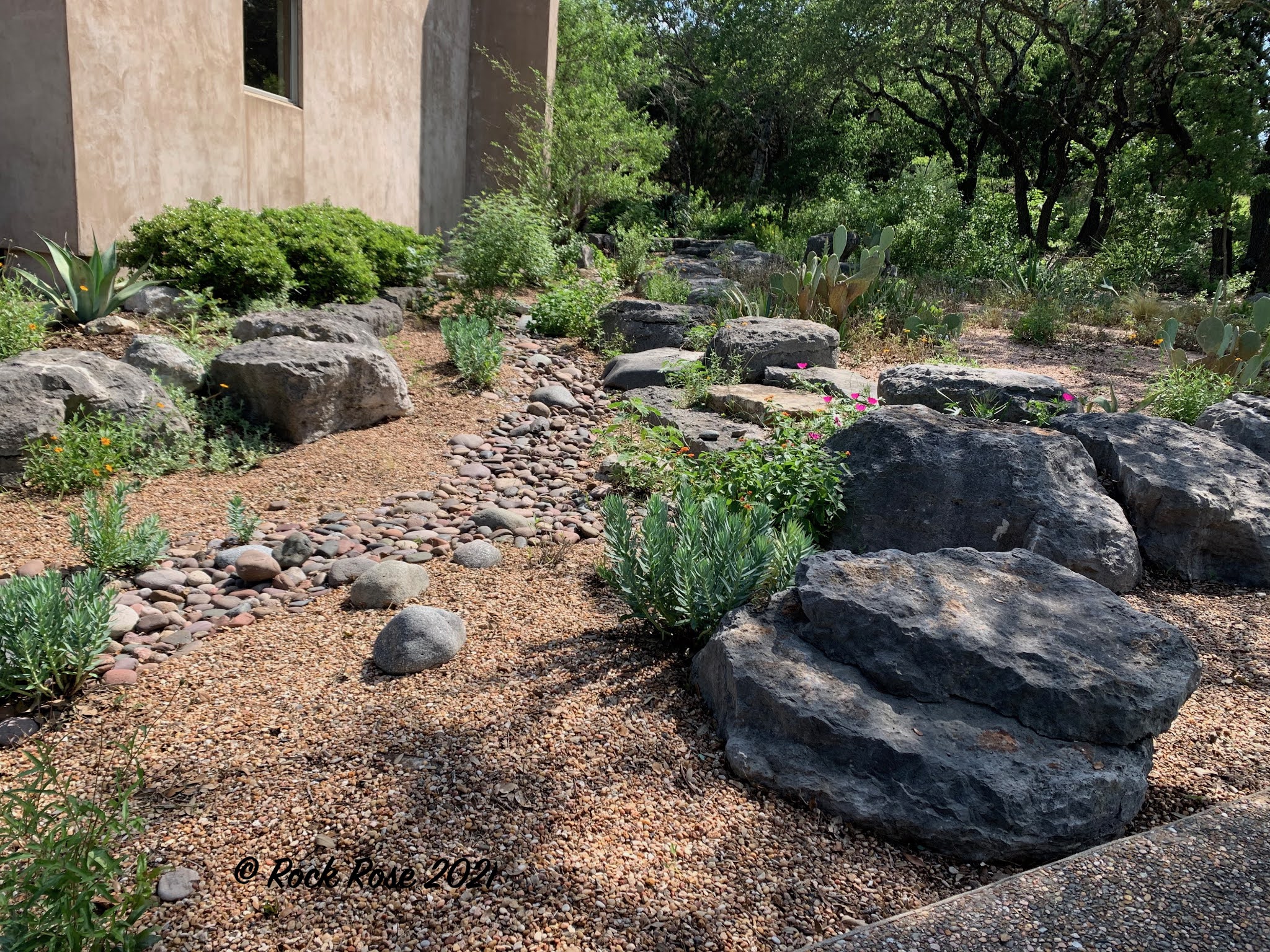
It took 2 hours to remove them followed by another hour of blowing and collecting. And then a further pass with the blower.


And in both areas there were other plants to remove, such as woolly stemodia, Stemodia lanata, that had crept over the wall and set down roots. lantana, Mexican feather grass, Stipa tennuisima, and weeds. A few like gopher plants, Euphorbia rigida, and trailing winecup, Callirhoe involucrata, and the native lantana , Lantana horrida, were allowed to stay-for now!
David took care of the oak sprouts which have really taken over since we removed the failing oak tree. Nothing will stop them.
That accomplished I turned my attention to a bare spot in the corner of the wall. The Anacacho orchid tree, which over the years, had failed to thrive ( probably my fault) expired during the winter. But as luck would have it I had left the little oak tree that had seeded there and I moved a large pot that, was hidden among the trees out at the front, into the bare spot.
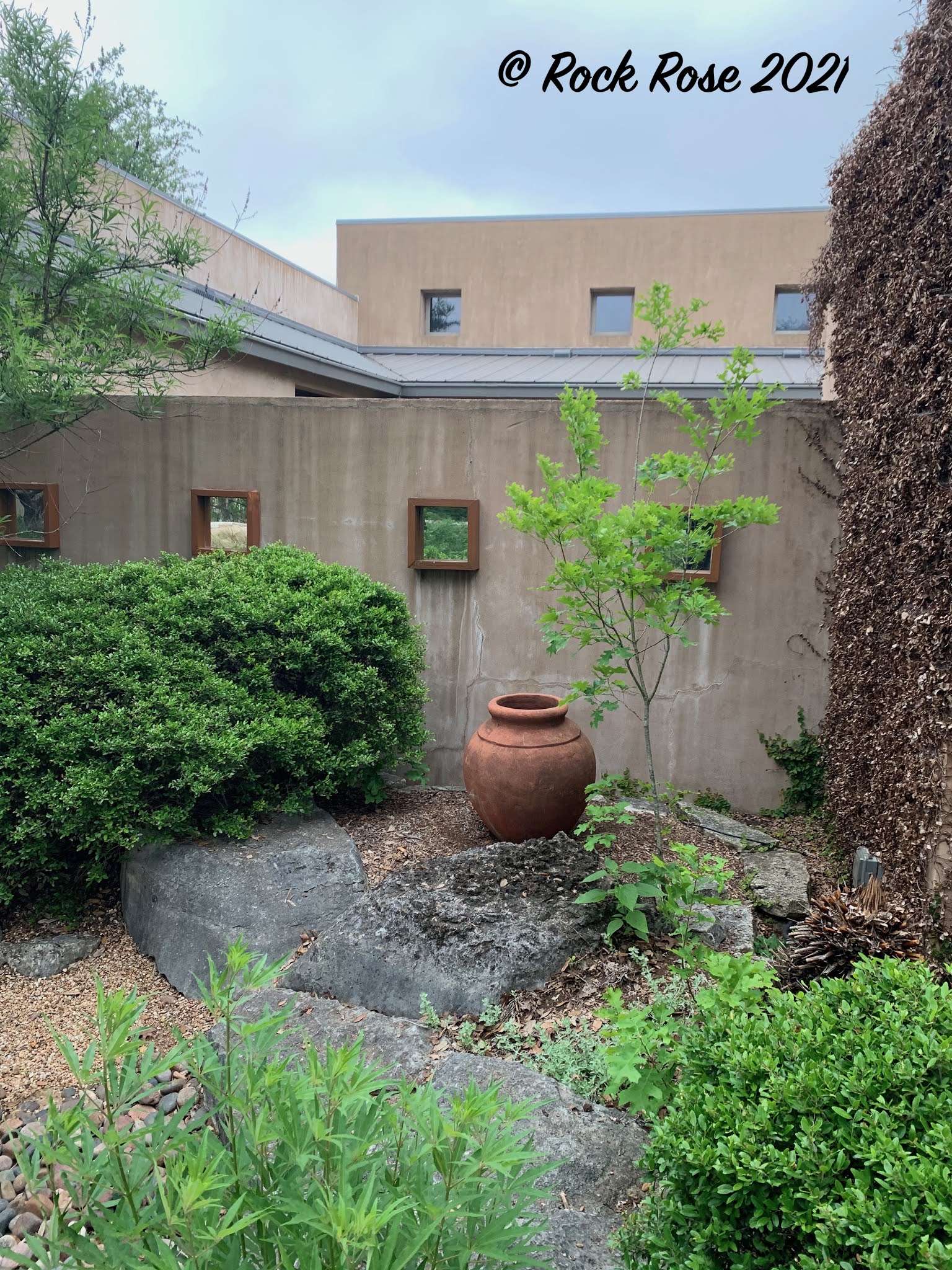
And the color of the pot is a perfect match for the mirror boxes on the wall.
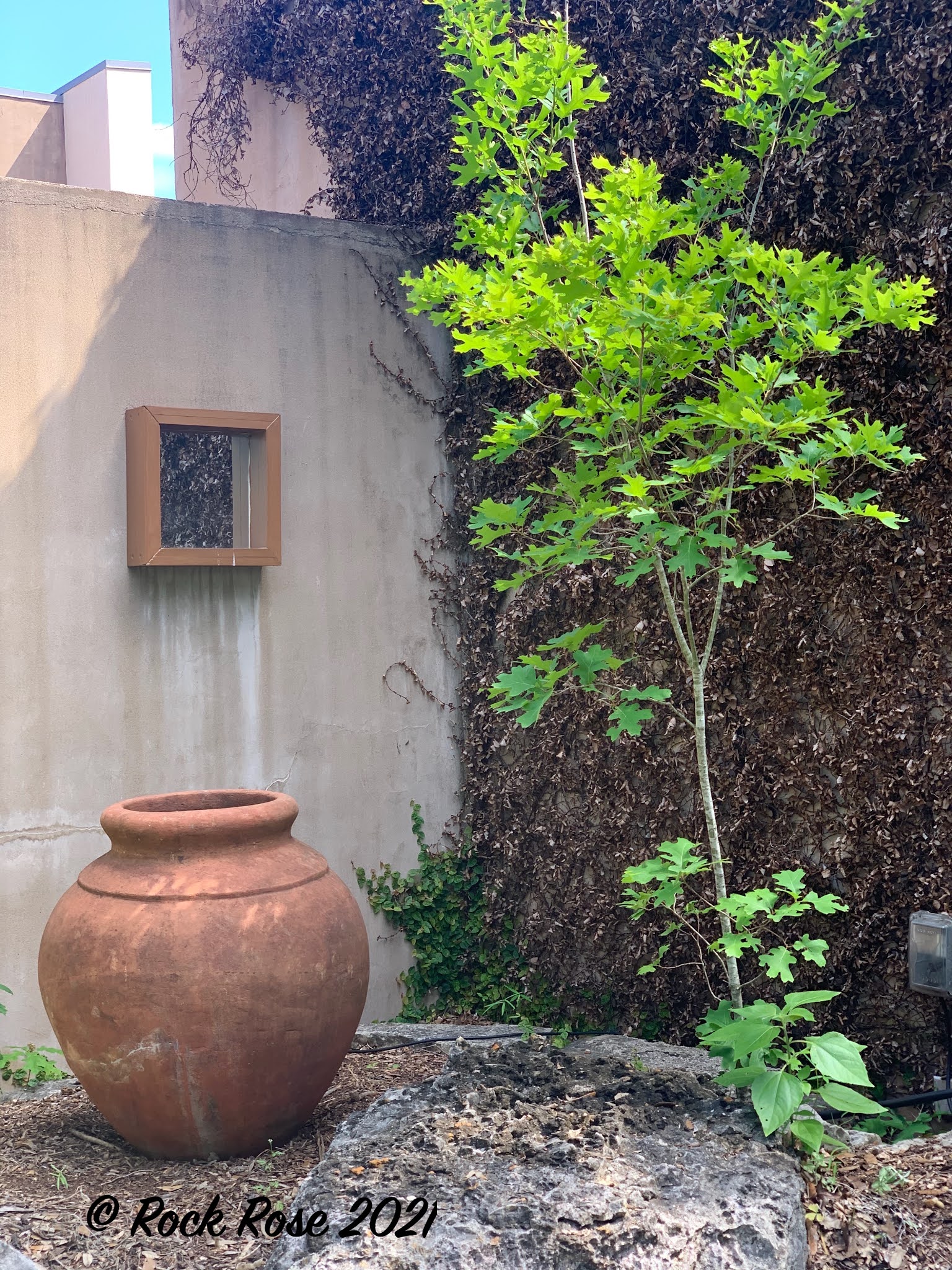
Just the dead fig ivy yet to remove!
And onto the much larger area, once a parking area. The removal of bluebonnets, raking and blowing of oak leaves plus collecting and disposing took 2 days. Then the weeds.


A few prickly pear, A. lophantha and liatris have survived and there are also a few rose campion, Lychnis coronaria, liatris, and Liatris spicata, which have been pruned by the deer but the other plants have been safe so far.
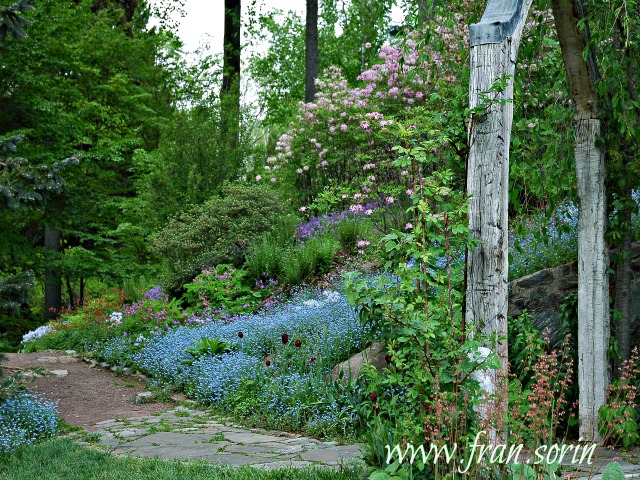
I have plans! We have some large flat rocks and I would like to make a walkway through this area with just a few select plants. I realize that it is not the desert but this is a garden I saw recently in Tucson and which I love. Surely I can do something similar? I'm definitely going to try. David!!!!!!