My Blog List

Showing posts with label Yucca recurvifolia. Show all posts

Wednesday, October 7, 2020

GOODBYE SUMMER, HELLO FALL

At last! Temperatures are moderating and fall is on the way. It is not just the gardener who is celebrating the advent of the new season but the garden plants are too.

All that is except the plumeria. A few nights of temperatures in the 50s and it is already beginning to cry "I'm out of here" Shortening days mean the plant starts to cut back on food production, the leaves turn yellow as the supply of food is reduced. The leaf forms  an abscission layer and eventually falls off. 
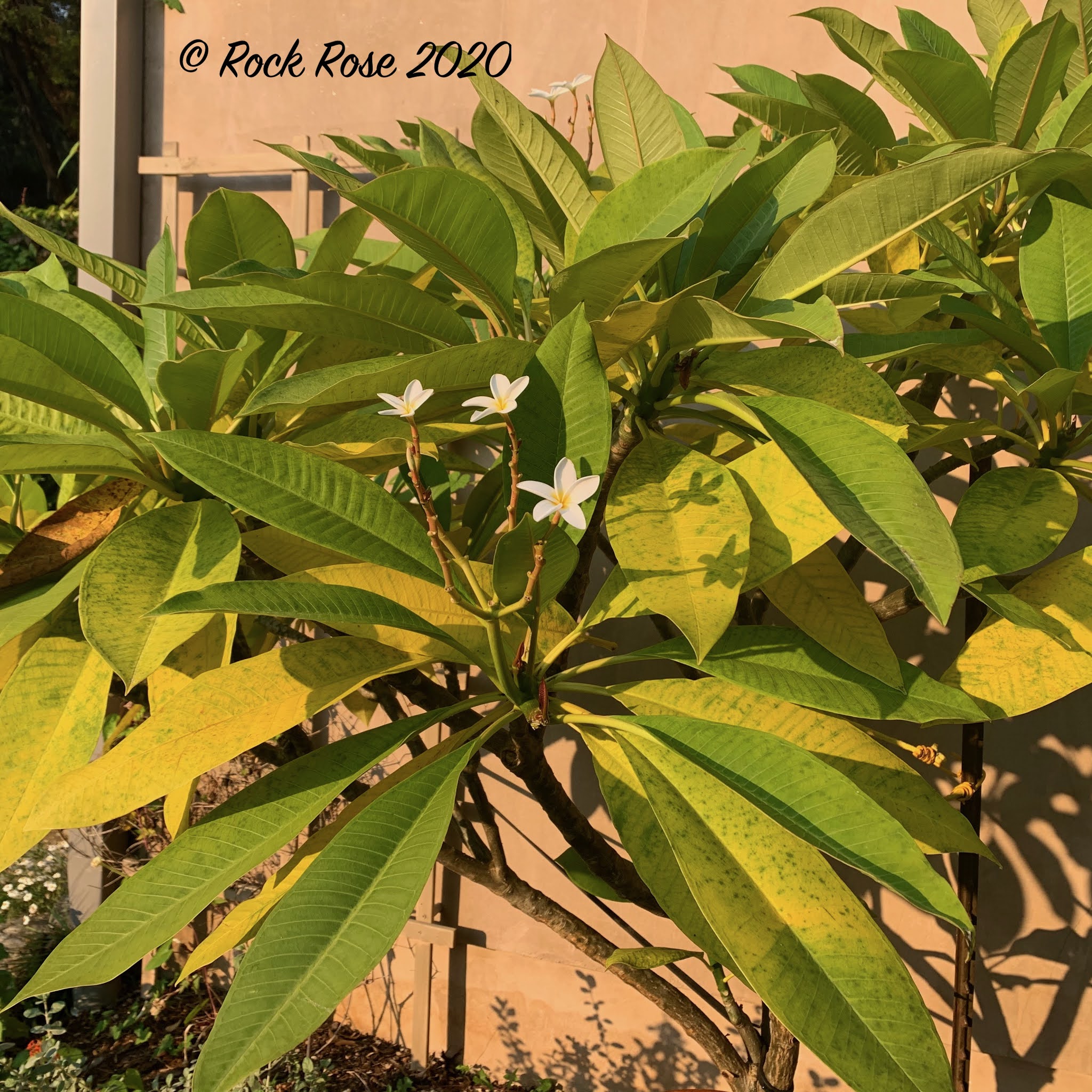
 Every day new leaves fall and soon it will be time to move the plant into the garage. During the winter it will receive no water and will go completely dormant. Because the plants are so large I plan to do some pruning before I move them which will make the job a lot easier. 


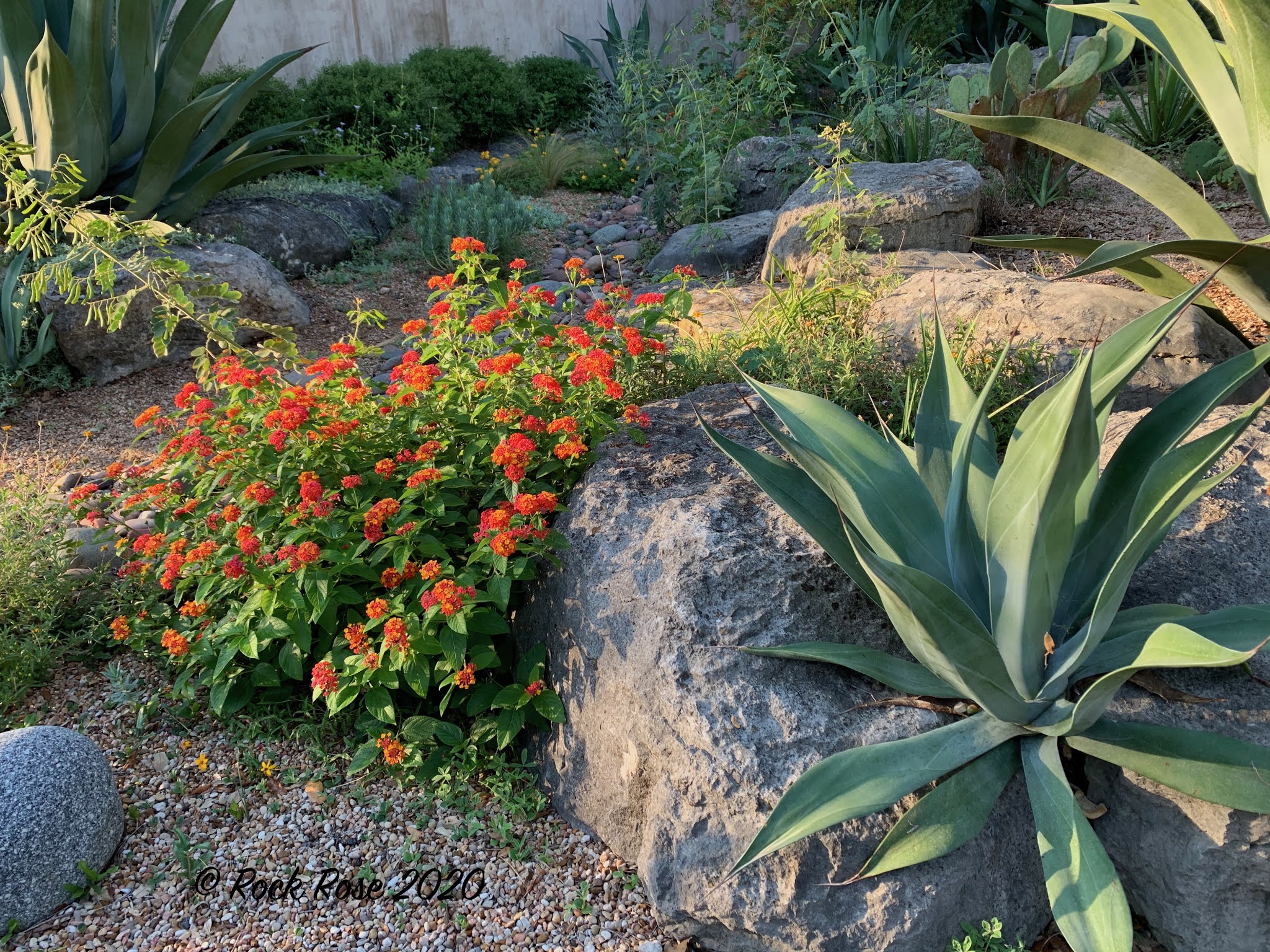
Flower colors become more vibrant as with the native orange lantana, Lantana horrida. And the award winning David Austin rose, Rosa 'Molineaux', blooming again for the first time in months. This shrub rose is a repeat bloomer and named for David Austin's favorite soccer team. 


There are lots of flowers that are repeat blooming such as the Verbena, Verbena bonariensis whose lanky growth was cut back to the ground a few weeks ago.


Another repeat bloomer is the soft leaf yucca, Yucca recurvifolia, which the deer have failed to find. 


It has become quite a free-for-all of flowering plants in the sunken garden with Perovskia, white Salvia greggii, mealy blue sage, Salvia farinacea, frost weed Verbesina virginica, and Mexican bush sage, Salvia leucantha.


 But there are some plants that bloom only in the fall. They wait patiently for the shorter days before they begin to bloom. Notable in my garden is the Philippine violet, Barleria cristata. 


It blooms best when given plenty of sun and is one of my favorite fall bloomers because it attracts neither bugs nor disease. It dies to the ground during a normal winter and shifts a little from its original positions as the center often becomes very woody and dies out. 

And finally the bush clover, Lespedeza thunbergii, waits patiently to bloom in the partly shaded border of the English garden. 


There are lots of short day plants which will bloom over the next few months including chrysanthemums, poinsettias, Christmas cactus. Make sure the later receives at least 15 hours of darkness from now on. 

Happy Fall Y'all.

Sunday, October 26, 2014

THE SUNKEN GARDEN

I have been working hard, all week, in the sunken garden. It gets very overgrown during the summer during which time it loses its identity as a sunken garden as plantings become too bountiful. Some editing is necessary.


I am removing tired skullcaps which become woody with age. When I open up the space I find all kinds of seedlings vying for a spot in the garden. There are lots of bluebonnets and it is unlikely I will let them remain because their spread can reach over 3'. The ones I want to nurture are the blackfoot daisies, skullcaps and dahlberg daisies.


So many plants in such a small place. A fireworks gomphrena, columbine, asparagus fern, euphorbia, blackfoot daisies, all hoping that I will let them be.


Ghost plant, Graptopetalum, as managed to peak out from underneath the lavender cotton, Santolina chamaecyparissus. In front a coreopsis is hoping to escape the dreaded cobra head.


I like to have evergreen anchors at each corner of the upper level of the sunken garden. This spot has seen rosemary, A. desmettiana and recently the soft leaf yucca, Y. recurvifolia. Last year I removed the tall soft leaf yucca from this area. It left behind lots of offspring which I just left. They have now grown into a large cluster. OK for now. We'll see how they develop. It certainly looks healthy and as yet is untouched by those sap-sucking bugs.


I had no idea when I planted this Yucca rostrata, several years ago, that it was going to grow into such a magnificent specimen. It anchors this corner of the garden closest to the patio. See the Philippine violet to the right. It seeded here right on the very edge. I thought it died in last years cold winter but it it surprised me with its return. I doubt it is removable without destroying it so it will have to stay until such time as it becomes to large.


I first planted a crape myrtle in this spot. It grew too big. Then a dwarf Greek myrtle. It grew too big. Two years ago I replaced the myrtle with the spineless prickly pear and the squid agave, Agave bracteosa. This week I removed 15 baby squids and one teenager. The teenager was forcing the mother plant over so is much relieved by the loss of offspring. The teenager is planted in the fourth corner. I'm hoping it will survive the move. I also cleared out all the ruellia and heart leaf skullcap although I doubt they are gone forever.


Time to think about some companion plantings.

Sunday, May 5, 2013

TALL AND SPIKY THINGS

It's the time of the year when tall and spiky blooms appear and the most striking of all are the blooms of the red yucca, Hesperaloe parviflora. 


They look striking en masse but equally so with a backdrop of Mexican feather grass. Their flowers are long lasting and attractive to hummingbirds.


The softleaf yucca, Yucca recurvifolia is also a spring bloomer with pendulous bells of white. It looks its most striking when in flower then retreats to a somewhat untidy appearance until it blooms again in  the fall. Its presence in this spot may be long past its time. We shall see.


This is also the time when Manfreda sileri sends up her 4' bloom stalk from the rosette of speckled, strappy leaves.


Probably not everybody's cup of tea!


Then there are the 4' flower spikes of the Manfreda udulata, 'chocolate chips' This plant was a pass-a-long from a gardening friend who is no longer with us, but whom we remember every time her plant flowers, in our gardens, with these fascinating blooms.

Monday, September 24, 2012

CENTER PIECE OF THE SUNKEN GARDEN

The soft leaf yucca, Yucca recurvifolia blooms for the second time and lights up the fall garden.


Sunday, October 9, 2011

RAIN DROPS ON YUCCAS


There is not a gardener in central Texas who is not celebrating the arrival of the first rainfall in months. 2" fell in my garden in the last 24 hours. My plants are happy, the soil is happy I am ecstatic. Never mind that we had to cancel our Sunday walk around Lady Bird Lake.


Last night I pulled all the succulents out in the hope that we would get that promised rain.


The baby kalanchoes decided ti was time to strike out on their own, falling on stoney ground. I gathered them up and put them on the soil.


After a good drink I pulled everything back under cover to dry off.
Everyone is happy.

Friday, October 7, 2011

GARDEN GOINGS ON

This is the first preying mantis I have seen this year and boy was she/he doing a dance. Wouldn't keep still jigging back and forward. I decided she was doing a rain dance because she was heading towards the sprinkler on the vegetable bed. Even the mantis is excited about our 40% chance of rain this weekend.


Then as I walked along the path and, what I can only assume was, a male monarch, swooped in onto, what I can only assume was, a female monarch and then began a violent, frantic, thrashing,  frenzied jig. Really!


Eventually things calmed down enough to get a clear picture and they eventually flew off together.


Earlier that morning, when I was inspecting the bloom on the yucca I noticed a leaf footed bug in one of the flower bud axils. He was so dozy I was able to pluck him off and dispose.


Nothing is going to spoil this bloom. Time is getting closer.

Saturday, October 1, 2011

SHOOTING FOR THE STARS

The other day I was out doing my usual early morning inspection when I noticed this. A flower forming on my soft leaf yucca, Yucca recurvifolia.


I'll swear that flower stalk was not there yesterday. Surely I would have noticed it.


But then again, just like the flower stalk on the agave this flower grows at an enormous rate. The good news is that the plant will not die.


These photographs were taken on each morning for four days. Here we are today.

How many days until the blooms open? Less than a week I think. This is one yucca that will flower because it is protected from wildlife. All my yuccas outside the walls have their flower stalks nipped off before they open.