My Blog List

Showing posts with label Dicliptera. Show all posts

Friday, August 14, 2020

A MUST HAVE FOR THE SUMMER GARDEN. Dicliptera suberecta

As we enter into a spell of triple digit temperatures there is one plant that seems to thrive on these tough conditions; Dicliptera suberecta. It has both multiple Latin and common names but I have always just called it dicliptera as some of the common names can be confusing.


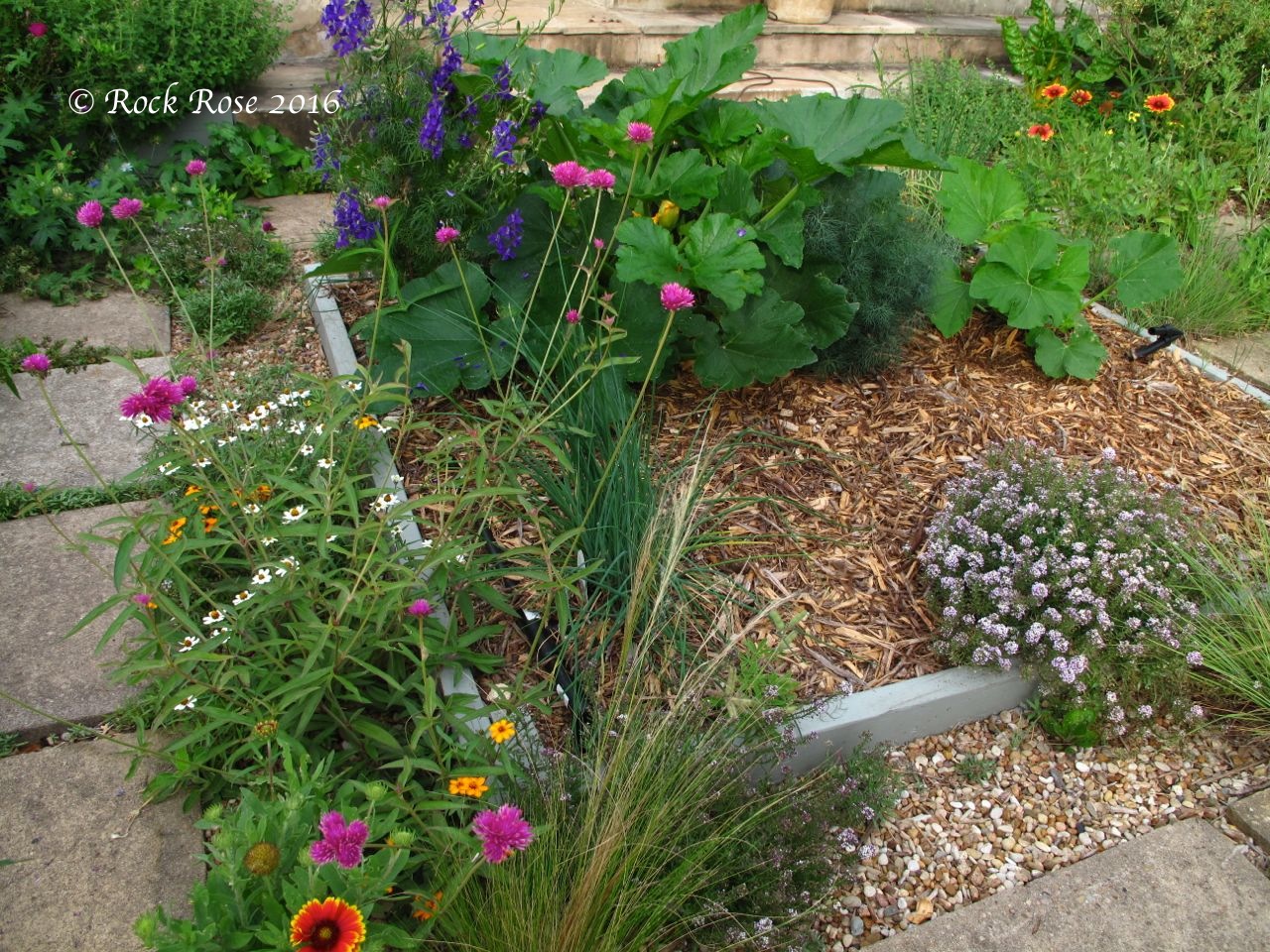
This one is a surprise seedling in one of my vegetable beds. I noticed it starting to grow in the spring and recognizing the leaves I was almost certain it was dicliptera. I have great plans for it this fall when I will move it into the upper level of the sunken garden. It never reaches more than 2' in height and 3' in spread.


A native of Uruguay, and sometimes known as the Uruguayan firecracker plant, it is root hardy dying back to the ground during the winter which makes it a good plant to combine with some spring flowering bulbs. It is happy in alkaline soils and very drought tolerant, flowering through some of the hottest Austin days and right through into the fall. This is what makes it so welcome in my garden. Its tubular flowers are greatly appreciated by hummingbirds as they begin their winter migration to South America. 


Bluish gray leaves are covered with fine hairs which is usually an indication of a plant that will do well in hot weather. It tolerates the humidity well and never wilts during the days when other plants wilt by noon. Its hairy leaves undoubtedly make it unattractive to insects. Flowers fade a little with age but there are always plenty to replace them.  

I am told it is not deer proof although if i get any more seedlings  I might try them outside the walls. They are better propagated by the runners they send out. Removing them means the mother plant can be kept more compact. 

I am grateful for this bonus plant which I believe will do well in my soon-to-be renovated sunken garden.

Saturday, May 14, 2016

I HAVE THE COTTAGE GARDEN GENE

It's not surprising that I have this gene. After all, I spent the formative years of my life growing up in England, the land of cottage gardens. You only had to drive into a rural area to see multicolored, informal groups of plantings both in gardens and along the hedgerows. Who knows how far back the cottage garden dates but their numbers increased dramatically during prosperous Elizabethan times.  Once-fashionable garden designs have come and gone but the cottage style of gardening has remained. It seems I have brought it to Texas.


It isn't an easy gene to carry with you to Texas. In the words of Penelope Hobhouse, 'Well, I just think that if I were a plant, I wouldn’t want to live in Texas.' Not true. There are plenty of plants that like living here in Texas and even though their flowering may be short they are happy enough to return for another year. The problem is more to do with their success during a long growing season. They don't come in quietly in the spring, flourishing through the summer and fading into the fall. They just keep growing.


This year many plants didn't even go dormant and the penalty is that they now have a very long growing season to look forward to and they will keep on growing and growing unless they are cut back.

Engelmannia peristenia with Verbena bonariensis

So what are the features of a cottage garden. The first is that they are usually enclosed by walls or hedges. The garden is not meant for the person passing by. Plants are crowded together so there is little soil showing. The plants generally come from neighbors and friends, cuttings and seed. The plants are a veritable jumble with flowers growing alongside the vegetables.


Plants put themselves where they want to be.


And even the most weedy plants are welcome.

Pink primroses among the Dicliptera.

And when the annual  plants fade the cottage gardener goes out and collects their seed to save for next year so she can spread the flowers everywhere.


It's in the genes.

Sunday, November 15, 2015

GARDEN BLOGGERS' BLOOM DAY November 2015

Some much needed rain has brought many flowers out of hibernation in time for May Dreams November Bloom Day.

Rosa Felicia

Roses a re booming again and a cluster of blooms on the musk rose Felicia has me stopping to inhale her wonderful fragrance.

Not nearly so fragrant is Molineux, but with more of a tea rose fragrance, a new addition this fall.

Rosa Monineux


Called pink crystal by some and ruby crystal by others I am beginning to understand why. Pink seed heads in the spring and with the cooler weather a much deeper ruby-colored seed heads.

Melinus nerviglumis
Other flowers have a greater depth of color with the cooler nights. Mealy blue sage, Salvia farinaceae.


Salvia leucantha blooms were quick to fade during the long warm dry days of October, but the rain bought a flush of new flowers.


The first flowers on the rosemary.


Still plenty of color from the narrow leaf zinnias, Zinnia linearis. Soo I will be collecting their sees for next year.


Society garlic, Tulbaghia violacea


And the generous seeding common orange cosmos, Cosmos sulphureus.


Clouds of pink and white gaura, Gaura lindheimeri


A cluster of blooms, with Dicliptera the main player.


We are winding down for the winter but signs of spring are already popping up all over the garden.

Monday, June 15, 2015

GARDEN BLOGGERS' BLOOM DAY . JUNE 2015

Rainy skies are once again hanging over central Texas on this bloom day. Our recent strange weather pattern is making for some anomalies in the garden. Flowers that would normally bloom in the fall are blooming now and some that finish their bloom cycle in the spring are booming again. These are the flowers blooming in my Central Texas garden at the moment but photographed before the rain started.


Standing cypress, Ipomopsis rubra, is a biennial and reseeded in my garden this year. Although they grow in dry sandy soil it would seem that the unusual amounts of rain we had in May are responsible. The hummingbirds love this plant which is usually around in the fall when the hummingbird migration begins. A June appearance is very early for my garden.

And how unusual to see another crop of California poppies. I am thinking that many were beaten to the ground by the hail we had in April and were determined to bloom.


This is the first blooming of these rescue, nameless day lilies I bought several years ago. This year I moved them into a better spot and they like it there. I am thrilled with their rich, deep color.


They are growing in front of a spineless prickly pear cactus. Is that scale I see on some of the pads. This is a common problem with prickly pear and easy to miss.
Another hummingbird favorite is the Dicliptera suberecta, sometimes called the hummingbird plant. But be careful about using a name like that because there are quite a few plants with this common name.


Another late bloomer is the columbine, Aquilegia chrysantha.


Scabiosa was another rescue plant that has continued to perform for several months. Battered by hail it has come back again.


An Agapanthas  I nursed back to flowering this year, along with the foxgloves.


Small flowers often go unnoticed but how could you miss these. The plant on our outside table sends out these long shoots which stretch right across the table in all directions. Then produces  the tiniest of flowers.


 Many thanks to Carol at May Dreams Gardens for bringing you here. I hope everyone is enjoying a wonderful bloom day in their garden.

Thursday, June 14, 2012

GARDEN BLOGGERS' BLOOM DAY, JUNE 2012

The middle of June already!  What is more amazing than that is that flowers are still blooming in my garden as we join Carol of Maydreams for a late spring bloom day. After all, we have been having summer in Texas for weeks on end with very little in the way of rain.

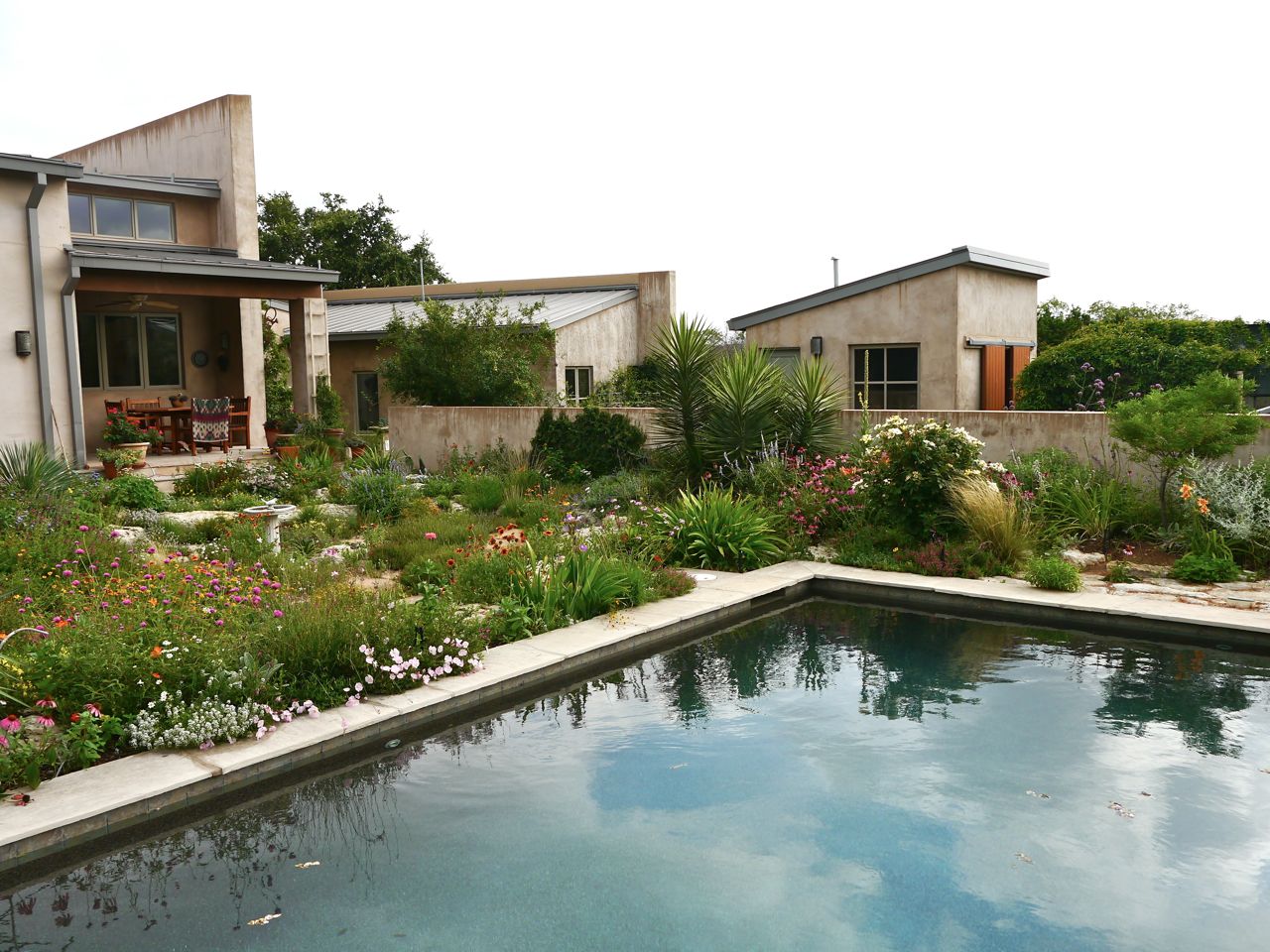
The pink evening primrose, Oenothera missouriensis, is blooming along the pool edge, for the second time this year. I cut it back severely several weeks ago and here it is again. Angel's fishing rod may not grow in this climate but the arching flowers of the gaura are a great substitute.


One favorite from last year is the Gomphrena 'fireworks' In the fall the root had gone so deep that I couldn't pull it out. I just cut it to the ground thinking the root would rot over the winter. Happily the mild winter didn't kill it and here it is back again. Gomphrenas of all varieties are a summer favorite because they just keep on blooming.


Here's the flower, hence the name.


On the other side of the pool more favorites, like the narrow leaf zinnias Zinnia linearis,  line the edge. They come from seeds saved from last year.

By and large this is a self seeding garden and at the far end a beautiful cone flower has seeded in among the stones, its growth curtailed by lack of irrigation.


They would normally grow much taller as the ones above next to the yellow knockout rose.


The chocolate daisy never seems to stop blooming. It is there in the morning but flowers have faded by late afternoon.


Among the flowers that the hummingbirds adore are Dicliptera suberecta, above, and flame acanthus, Anisacanthus quadrifidus, below.


I think it's about time to cut back the lantana, in the sunken garden, once again before it takes over..


Another plant ready for a clipping is the wall germander, Teuchrium chamaedrys. I am gradually re-establishing the plant as a low hedge in the English garden.


Last week we planted a new tree close to where the 5 Spanish oak trees once grew. It will never take the place of those trees but it may eventually offer some shade in the lower garden. It is the native, desert willow, Chilopsis linearis 'bubba' Although they say this is a small tree I have seen some pretty large ones around here. I have put it on a drip system to make sure it makes it through the summer. On the subject of the lost shade in the once Spanish oak garden I planted a new seed today. I talked at dinner about the possibility of doing an overhead arbor in this garden! We really miss the shade we once had and I see the plants in this garden are none too happy.


And who would not fall in love with its pretty orchid-like blooms?


There are lots more blooms but I think I will end here with my 50c pot of plants. They came from the rescue table at Lowes. Each 4" pot was marked down to 10c. All they needed was some TLC.


Have a great bloom day and a great summer!

Wednesday, June 15, 2011

GARDEN BLOGGERS' BLOOM DAY JUNE 2011

No doubt we will have another 100 degree day today, so I look forward to seeing how gardens are faring in cooler parts of the world. Thanks to Carol at Maydreams for bringing us all together.

It seems appropriate to showcase the blooms which match the temperature first. Dicliptera suberecta isn't fazed by the triple digit temperatures.


Nor is the Flame acanthus, Anisacanthus wrightii, which has similar tubular flowers attractive to hummingbirds.

This Gaillardia grandiflora 'fanfare' re seeded in a burgundy form this year.


Along with the simple burgundy flowered blanket flower.

I have never seen a yellow form before. One of nature's endless surprises.

Last year a white form of Echinacea appeared. This year there are more than ever.

Blue plumbago.

Some spring time lingerers, larkspur.

Chocolate daisy may not be the tidiest plant in the garden but it is a sure fire early morning performer and during the morning hours fills the air with that delicious chocolate fragrance.

Among white achillea and purple statice a new addition to the garden. Gomphrena 'fireworks', on tall slender stems, wafts in the breeze.


Coreopsis tinctoria.

Narrow leaf zinnia, Zinnia linearis.

Rock rose, Pavonia lasiopetala.

I still can't believe that this perfectly mounding purple skullcap, Scutellaria wrightii, is still alive after 5 years. It grows larger every year. Obviously very happy in the sunken garden.

In the herb garden, clouds of pretty pink flowers dancing on slender stems. This is dittany of Crete, Oregano dictamus. What happened to my plans to move some to hang over the low wall in the vegetable garden. Next year, maybe!
So from scorching hot Texas, Happy Bloom Day.