My Blog List

Showing posts with label alyssum. Show all posts

Thursday, January 28, 2021

WINTER FLOWERS THAT BRING JOY

We send flowers to friends in hospital, on their birthday, Valentine's Day, when they lose someone dear and we celebrate weddings with flowers, the bride carrying her favorite flowers in her wedding bouquet. Flowers bring joy to everyone. These days we can enjoy flowers year round with winter no longer a problem because flowers can be grown in glass houses and from there transported to flower shops and grocery stores. 

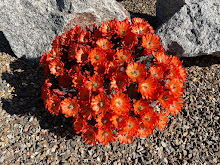
For the gardener flowers that bloom during the winter season are special. Yesterday when I went into my greenhouse I was thrilled to see flowers blooming on the Mammillaria compressa. This is the best flowering I have seen in many years.


The original plant was bought many years ago at the Austin Cactus show, a gift from friends who were staying with us. It was cluster of about 7 growing closely together. When I tried to repot into a larger pot the individual plants, which had been growing very close together collapsed. They never regained their original form.

There was only one thing to do and that was to cut off the individual plants, let the cut dry and pot up in some really good succulent mix. The only one I have found, which in my opinion is the best, is from East Side Succulents and is called Cactus Gold. I made up several pots, this one with three and several singles. This time I would really take care of them. As you can see I was rewarded. 

Over the late fall and early winter tufts of white fiber began to fill the spaces between the tubercles and it was from these that the flowers burst. Furthermore new branches have begun to sprout from the sides which means that it will eventually make another clump. It is for this reason that it has often been called Mother of Hundreds. This cactus comes from Central Mexico and is supposed to be hardy down to -5°C or 23°F if kept dry.


Other mammillarias are flowering too. This pink flowered variety.


And recently a much larger one which is also starting to make off-sets. This one blooms multiple times throughout the year.

They seem to favor having a cold dry spell during the winter and although in my greenhouse they are not in full sun. A sunny window ledge in the house might suffice.

In the garden there are a few early bloomers. The Mahonia is one.
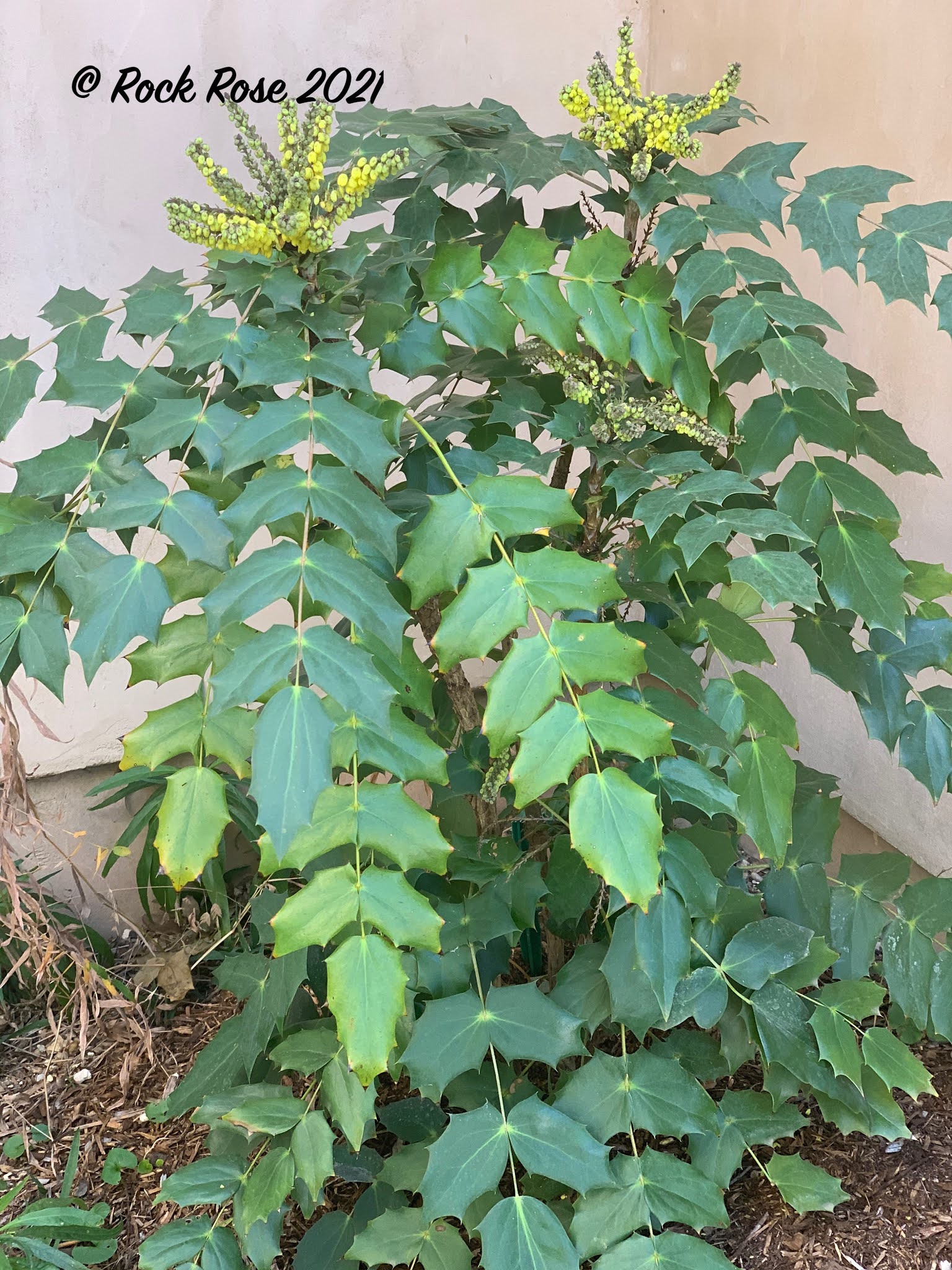


 It grows in the shadiest spot I have in the garden never receiving any sun. For this reason it blooms later than most in the area.

Yesterday I was thrilled to see several bees had managed to find the flowers.

And sweet alyssum, Lobularia maritima, is of the early bloomers. It re-seeds around the garden and is  loved by bees.


Plant it now and you will never have to plant it again and at the same time you will enjoy its sweet honey fragrance for months.


Saturday, January 23, 2021

MY GARDEN HAS INSOMNIA

When I lived in Eastern Canada gardeners were well assured of having a respite during the winter. It was a time when browsing through seed catalogues and placing an order was the highlight of winter gardening. Seed starting came next, geared towards being able to plant frost sensitive flowers and vegetables outside by May 24th. The garden slumbered under a thick layer of snow.

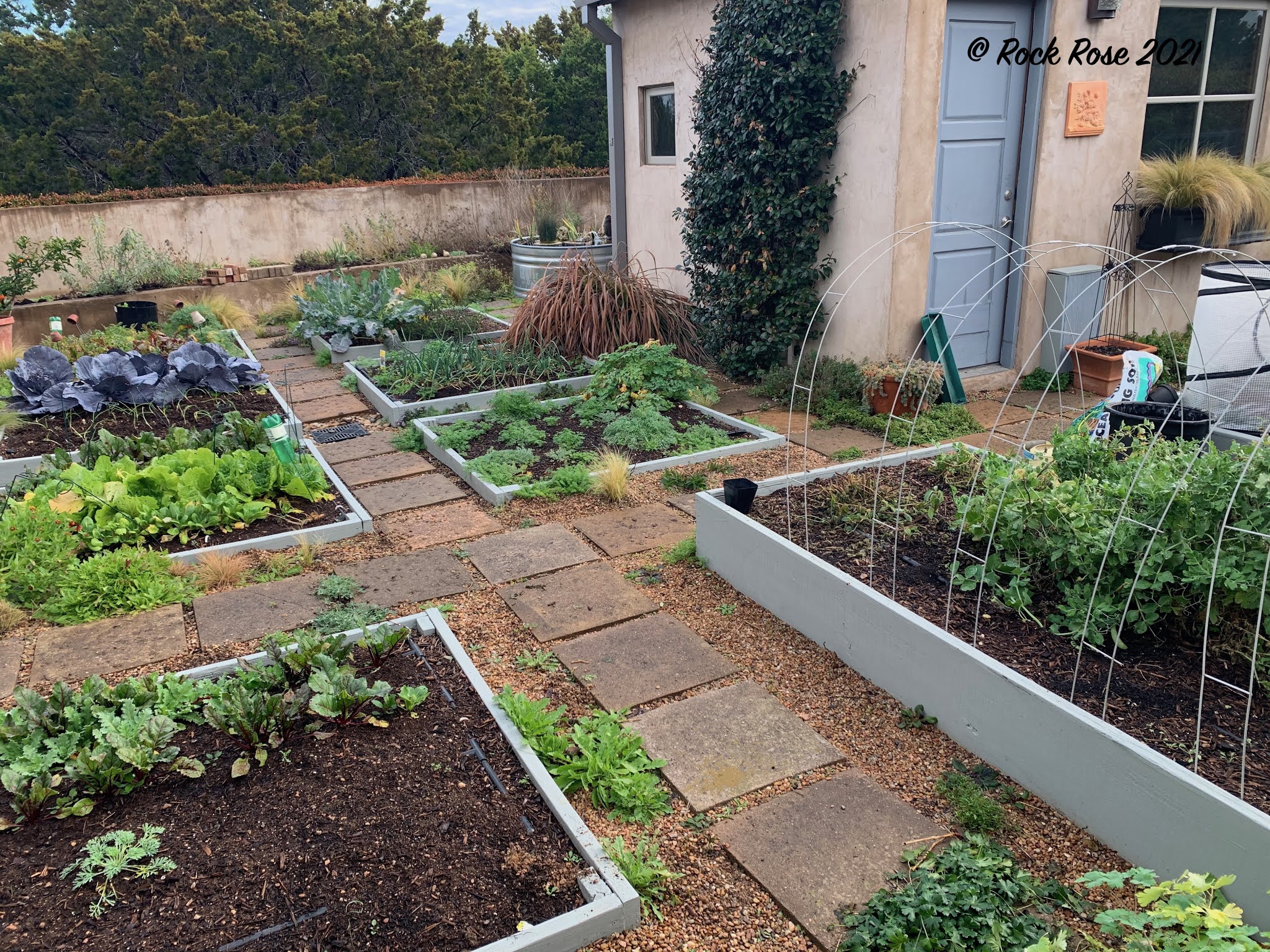
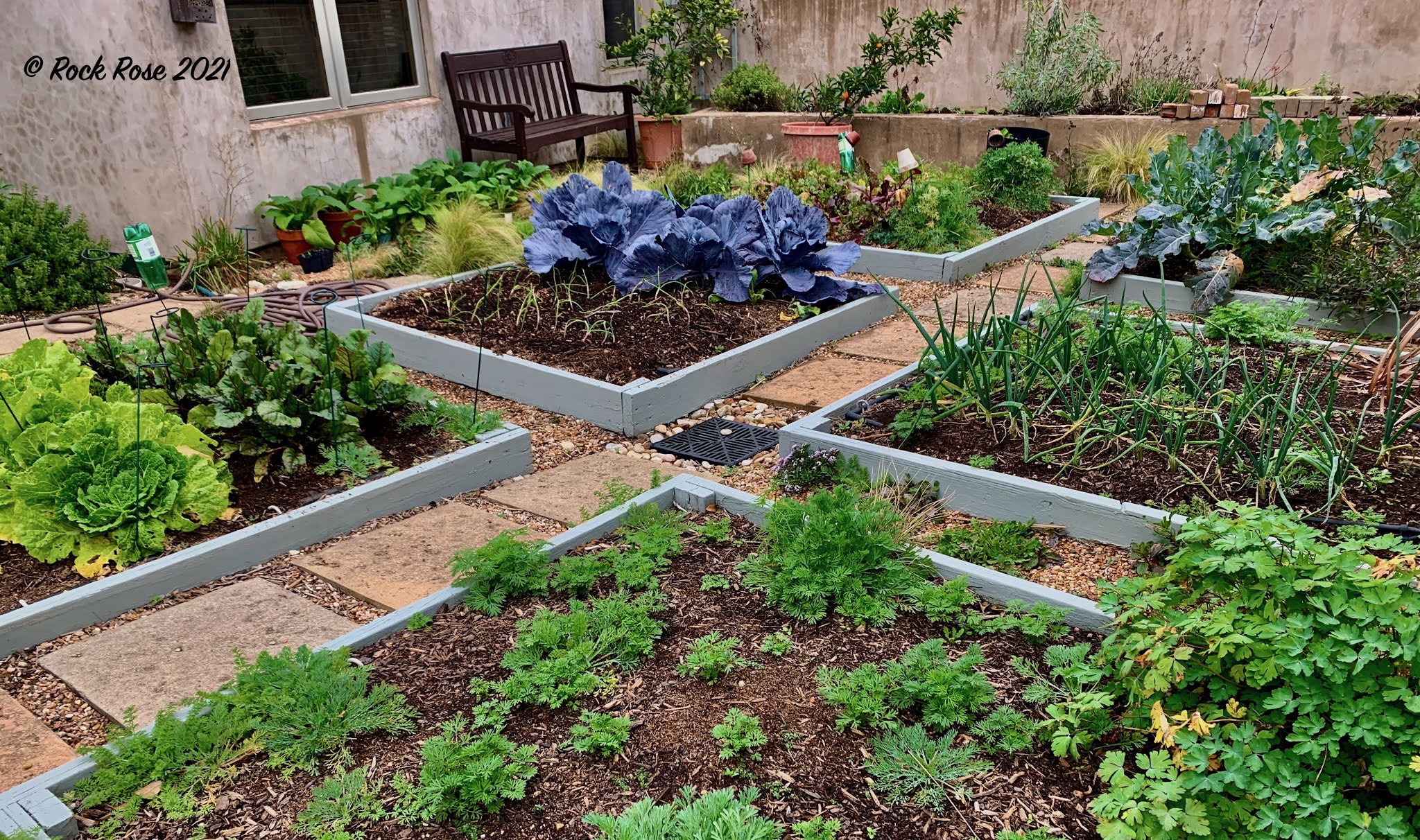
Now here I am in Texas with its unpredictable climate and often mild winters. Because I knew there was to be no winter travel this year it gave me the opportunity to be more diligent about planting a winter vegetable garden. It has been a great success.


We have had an unusually mild fall, although frost has made an appearance on several occasions necessitating the covering of my peas.  I was  determined to keep them going in order to get an early spring crop, but because of mild weather was rewarded with a winter crop. 


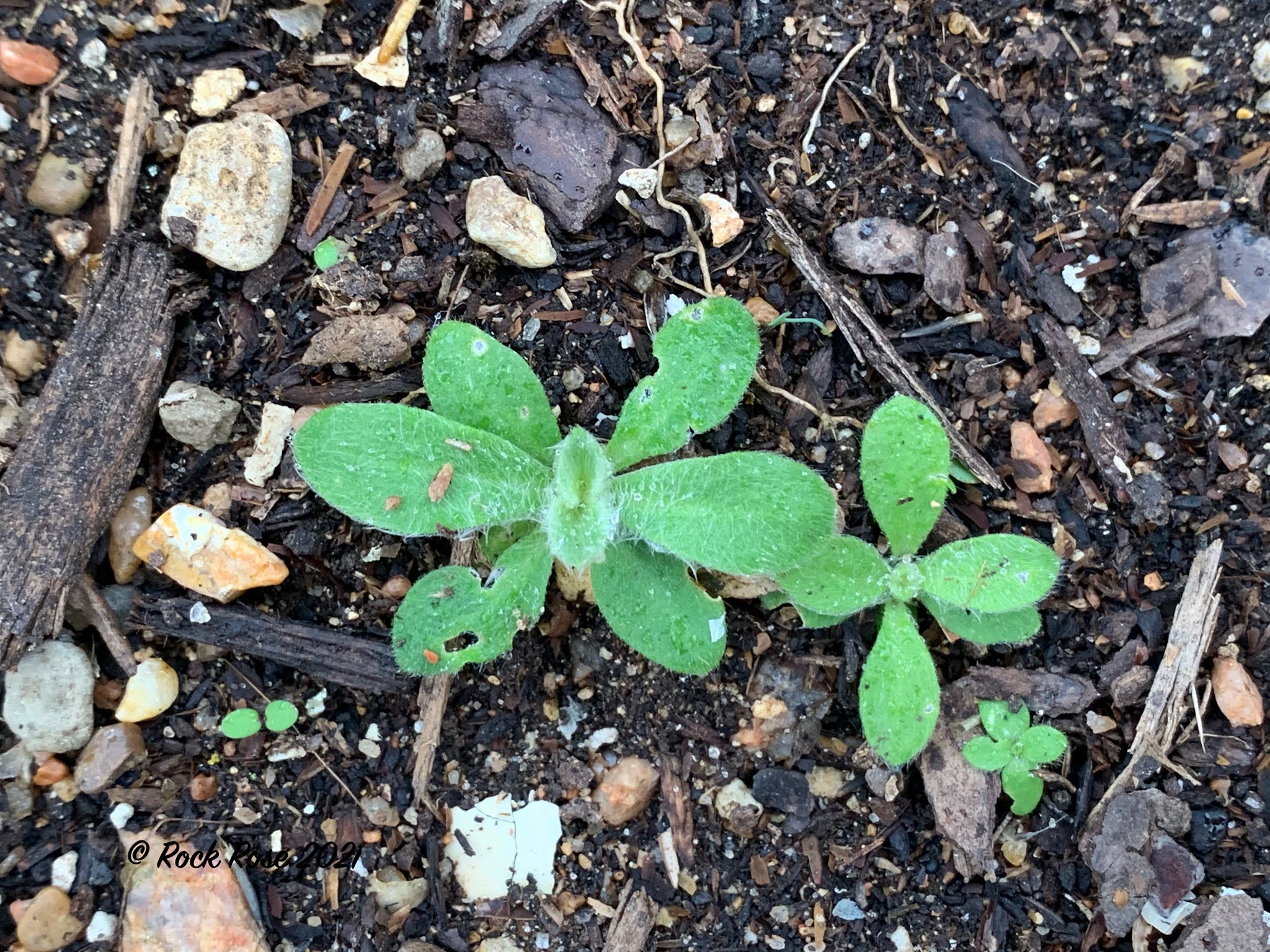
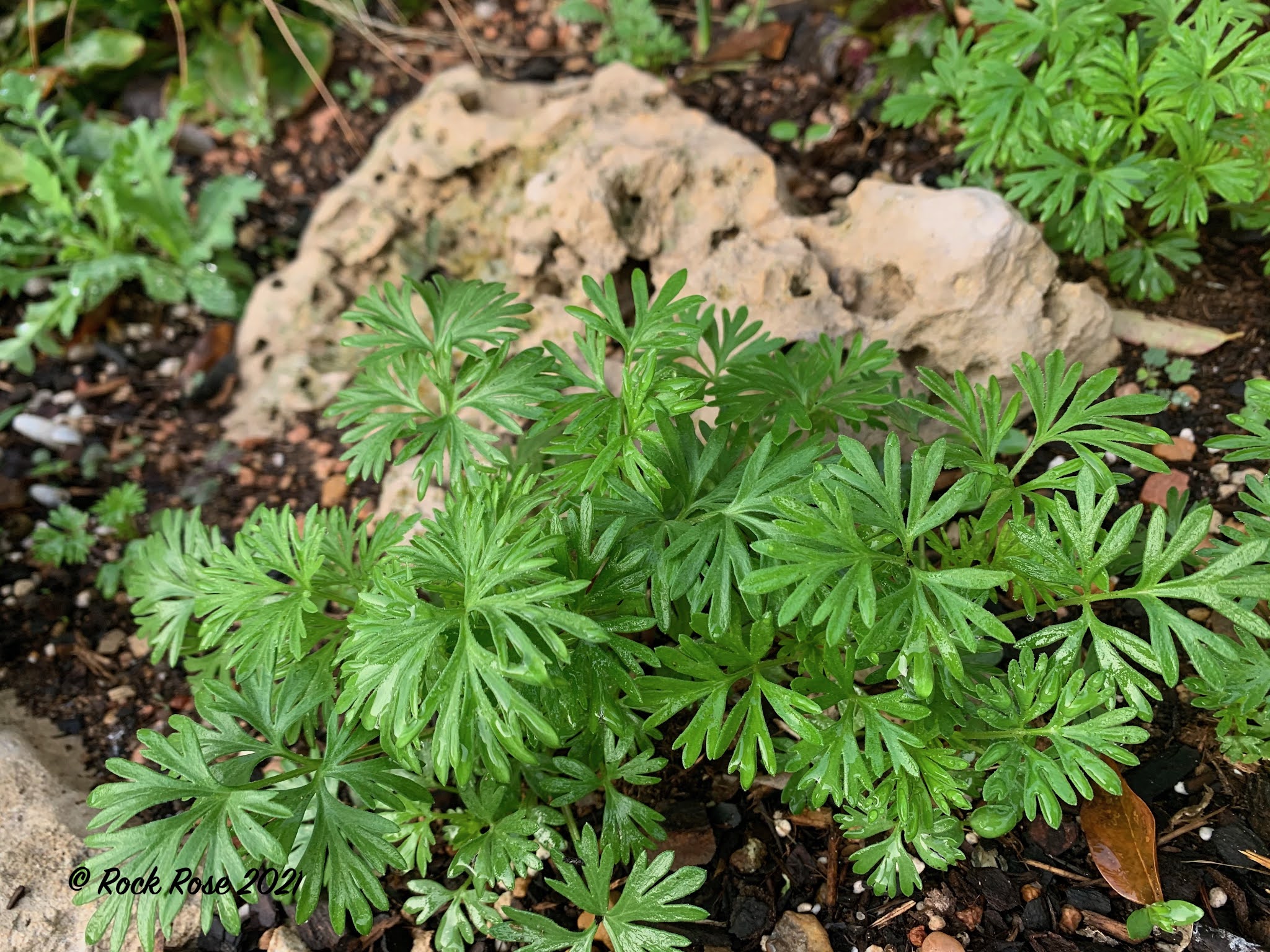
We have already devoured two crops of broccoli, pak choi and a succession of chard and kale not to mention peas, carrots and beets. All these plants are contained in beds in my vegetable garden. Even so there are many intruders in those beds chiefly larkspur, California poppies and the most successful seeder of all Love-in-a-mist. Known as hardy annuals this is their time to germinate, growing over the winter in time to flower in the early spring. I regret I have allowed them to take over. 


Those spaces between the pavers create an ideal spot in which seeds from last years flowers settle and particularly with Love-in-a-mist it seems every one germinates.  

And they found an even better home in the vegetable beds among the cilantro.

And poppies too.


And bluebonnets. Knowing how they can cover a diameter of 3' I may need to remove the one in the center of the path.

Every year I vow to keep those paths free of these opportunists and every year I relent which means even more will arrive every year. 

Blanket flowers, Gaillardia pulchella give me great difficulty. That is because they behave like perennials and these rather shop-worn plants are beginning to flower again. Soon they will have to go because they make a tripping hazard but I will leave them in case the bees come by looking for nectar or pollen. There are hundreds of seedlings just getting going.

It is my firm intention this year to reduce their numbers before they make it impossible to walk down the paths. 

Some plants don't seed quite so prolifically  so I am happy to see a few rose campion, Lychnis coronaria, just beginning to develop. I plan to remove them from where they are growing at the edge of the path to a more prominent position.

 Those that are a little larger will have to stay. A happy trio of rose campion, Lychnis coronaria, Gulf coast penstemon Penstemon tennuis,  and alyssum, Lobularia maritima. They are in the herb garden and will stay there.

Verbena bonariensis by the hundreds! I have already shared many and have potted some up in case of a some weather mishap. Last year's plants are looking strong and healthy but there is much winter to come yet. 

 Larkspur seedlings in the sunken garden. A little thinning required. They won't grow as large as the ones in the beds because the soil is poor. The same being true of love-in-a-mist.

Here is a plant that hasn't slept in 2 years, Scabiosa. One of my favorites in the rock garden becaseu its foliage is never touched by insects.

Someone once said my weeds were a lot different from theirs. The fact is a weed remains something that is growing in the wrong place and I have plenty of those.


Saturday, November 21, 2020

GARDENING IN NOVEMBER

 November is a busy time in the garden. Winter vegetables need to be tended and direct sowing of seeds. And there are seeds to be saved from summer bloomers. November finds my counters littered with saved plastic boxes filled with dried seed heads waiting for a little finger work. Tender plants are already in the greenhouse safe from expected frosts-although so far we have been fortunate. Apart from a few nights of temperatures in the high 30s we are now having Indian summer which is a lot nicer than a Texas summer. Warm dry days and cooler nights. The plants are loving it.
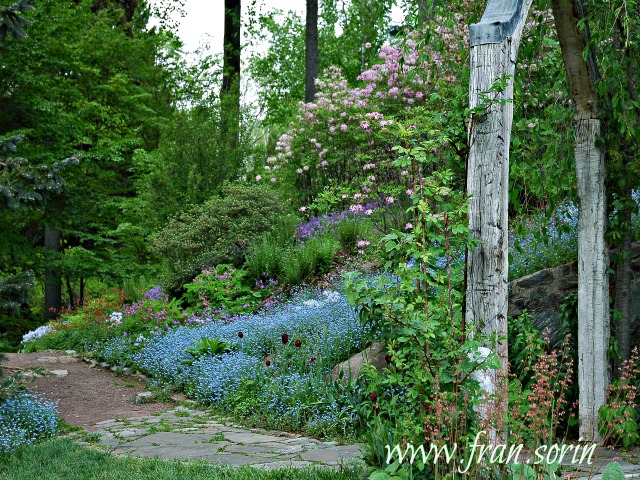
There are many years when the Copper Canyon daisy, Tagetes lemmonii, never gets to bloom. It can be so late that an early frost nips it in the bud. This year, however, it is spectacular.

The same is true of the Gomphrena 'grapes' Because it is a late bloomer it rarely get chance to bloom. In the end I gave the original plant away, but it had left behind some seedlings in the gravel, which I left, and this year the plants are blooming beautifully. They grew like spindles all summer and then about a month ago they started to produce flower heads. Maybe I will try to transplant into a place at the back of the border where they can mingle in among other plants including Verbena bonariensis. It is best grown where it can grow through other plants. 

Ajania pacifica, is another good fall bloomer. It is quite the spreader but easy to pull and performs well in a rock garden setting. 

But it is seed collecting time for many of the fading summer bloomers including the globe gomphrenas, pink and purple although not entirely necessary as they usually naturalize-sometimes a little too vigorously. Gomphrena 'fireworks' gives off a curry smell in the fall. The first year I grew the plant I remember thinking that one of my neighbors was busy making an Indian dinner! Since then it has shown up everywhere although none seems to have escaped the garden. It has a big tap root which often results in it overwintering. All the gomphrenas leave a lot of mess behind when the petals start to fall. Confetti time.

I have so many blanket flower and verbena seedlings that I have to move some of them to places where I would like them. Not in the pathway, although alyssum and daisy fleabane can stay. I will probably pull out the Mexican feather grass that is growing alongside it. 

I have already transplanted a few Larkspur from the vegetable beds to the sunken garden. I just have to make sure that the snails don't eat the seedlings before they are big enough to stand on their own two feet.What's going on in your garden?

Fruit is ripening on the citrus but it will be a few more weeks before I pick the kumquats and the calamondin to make marmalade. Lots of work but so worth the end result. We are terribly finicky about our marmalade and like the sweet/tangy taste when made from these little fruits. 

Kumquat

Calamondin

Improved Meyer lemon

I'm having one of the best winter vegetable garden seasons in quite a while. Already harvested pak choi, chard, peas and beets broccoli and carrots are well on the way to a good harvest. 

It's not often we get a successful pea harvest in the fall unless we protect the crop from frosts. This year, so far, no frost but then no rain either.

This variety is Cascadia which I have the best success with in spring. It produces tender posts that can be eaten at all stages from snap to full pod. They remain crisp and stringless. 

I don't know what I would do without my garden as it has kept me busy during these difficult stay-at-home days. 


Sunday, January 21, 2018

A WORRYING TIME FOR SOUTHERN GARDENERS

Like many gardeners in the south I am tempted to grow plants just outside my range. Cold snaps cause me to run for the blankets but there was no way I could have protected against the cold temperatures we had last week. We had already suffered a significant freeze event while I was away after Christmas but that was was not near as bad as the last few nights. We are typically much colder than Austin, from anywhere between 5-10ยบ. partly because of the lack of housing and roads but in my garden there are no trees to moderate the temperature. I am fearful of the losses which may take a few weeks to really show.
I went out with my camera this morning. Typically a gardener likes to show the best of his/her garden but this morning that was impossible to find.
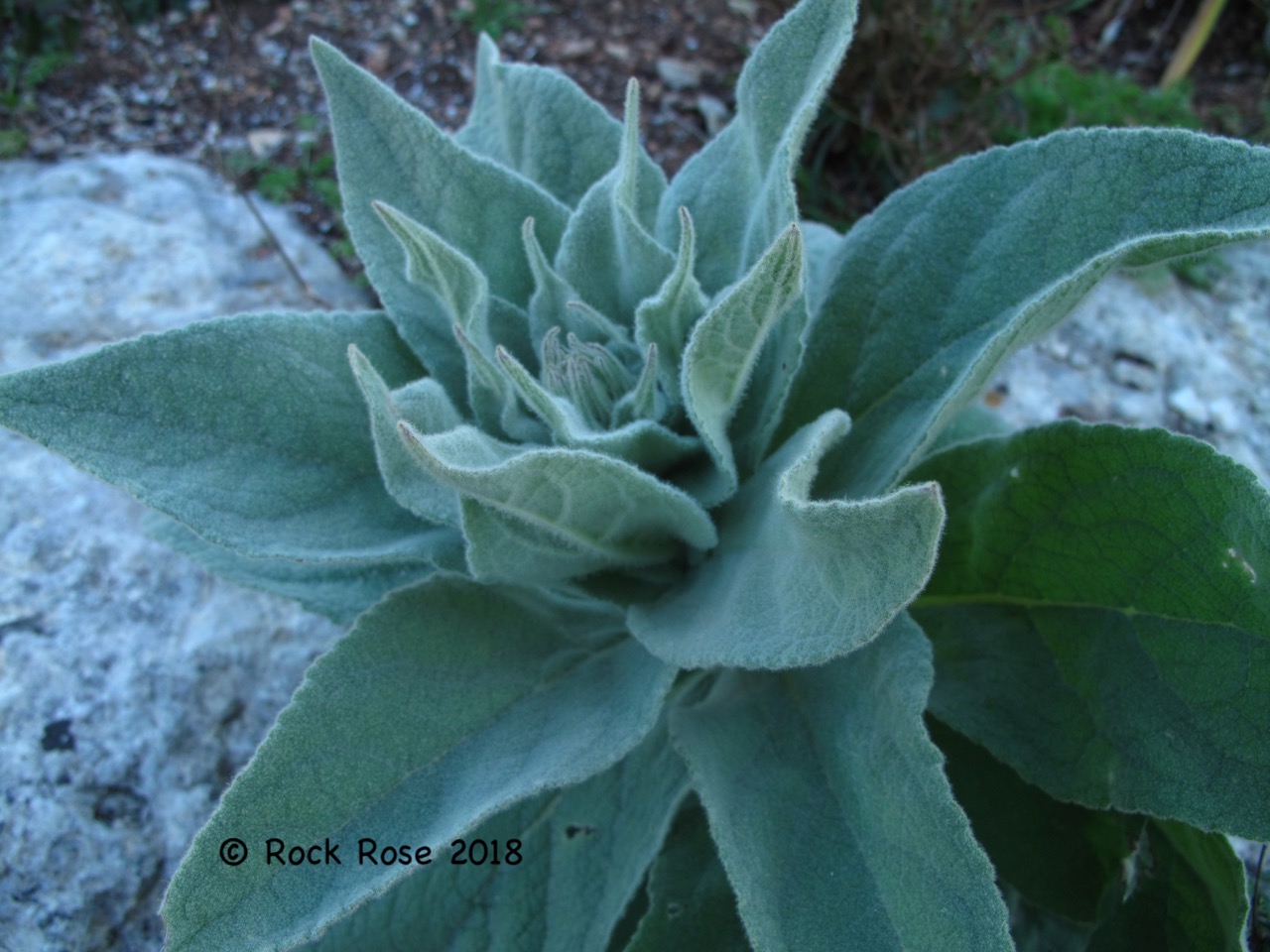
Our native mullein is a pretty tough plant, right? It made it through the first cold snap.


But not the second. It's hard to imagine that cold could bring it down. I shall miss the those soft velvety leaves and the beautiful flower stalk with yellow flowers.


But the plants I worry about most of all are my gorgeous structural agaves, Agave weberii.


They are already beginning to collapse. And I don't like what I see here.


Will the Philippine violet, that show stopper of the fall garden, survive? Only time will tell.


This week brings a thaw and should reveal what will live and what will die.
And I don't like this. Of course I know full well that spalling takes place when pots are full of wet soil and it freezes and thaws. There wasn't even anything growing in this pot but it was full of soil. It was very careless of me to leave out outside.


This was one of last year's garden purchases and I must say they were worth every penny.


They come in a set of 3 and I put them to good use this year. Despite the fact that calendula and alyssum are usually winter hardy I experimented by covering one grouping one. The plants came through with flying colors, whereas an uncovered grouping suffered horribly.


On a cold morning when there was no hope of getting outside I turned my attention to new life; seed cleaning and sowing. These are the dried seed heads of the American basket flower, Centaurea americana, given to me by a gardening friend last summer. This native annual has large thistle-like seed heads, but without the prickles. On the left what remains after seed removal.


The seeds are difficult to clean so some will be planted with a little extra. I use coir fibre to plant and they are on a heated seed mat. They should really have been planted in the fall so fingers crossed they will germinate quickly and soon catch up. If not I will remember to plant earlier next year.


Under the new grow light system I have arugula, chard, kale, pak choi, cilantro, tomato, brachyscome, and stocks. There is nothing more cheering on cold winter days than seed germination.

Swann River daisy, Brachyscome

10 week stocks
Pak choi
At least it makes me feel as though spring is on the way.

Sunday, September 17, 2017

THE SEPTEMBER GARDEN

When hurricane Harvey slammed into the Texas coast, 200 miles away, it brought some much needed rain to Central Texas. Along with that we saw a significant drop in daytime temperatures but more importantly night time temperatures in the low 60s. Warm days and cool nights. For a few days it was like being in California. The plants showed an immediate response; the sickly yellow leaves greened up and the flowers colors brightened. It was glorious but not to last. Still, for those brief few days I enjoyed every moment in the garden.
Sometimes I think fall is better than spring. Everything in the garden has become more blousy. There is barely a scrap of earth or gravel to be seen.


I never know from one year to the next how this will look or which flowers will be present-except there will always be plenty of rock roses.


The Salvia leucantha I have been planning to move for years is still there. The hummingbirds are very adept at flying in through the window in the high wall that separates the gardens.


A week ago there was but one bloom on the butterfly pea, Clitoria ternatea. Now there are many. The blackfoot daisy, Melampodium leucanthum, continues to spread across the step.


Ruby crystal grass, Melinis nerviglumis, is flowering. There will be plenty of those again next year.


  Globe amaranth, Gomphrena haggeana, 'Strawberry fields' is everywhere.


As are the purple and pink varieties growing in the pathway of the vegetable garden.


The spider zinnia will eventually be evicted from its home in the vegetable bed but I will save the seeds for next year.


In the sunken garden it grew where the white California poppy once grew.


In the sunken garden there are gomhrena, pink and purple skullcaps, aura, mealy blue sage, white Salvia greggii, and an errant member of the cucumber family which came in on the compost.


As well as zexmenia, Wedelia texana,  chocolate daisy, Berlandiera lyrata,  and returning alyssum.


But the absolute show stoppers of the moment are the liatris in the front courtyard. Purple is definitely the color of the moment.


Last year I removed many of the bulbs and planted them outside the walls. It seems that every seed germinates but they are silent all summer until their bloom time in the fall.


Phlox paniculata John Fanick, After the first flowering I pruned it back and here it is again. Smells wonderful.


Trailing Snapdragon vine, Asarina procumbens is a native of Mexico but seems to do well here as an annual.


Tradescantia sillamontana with its cobweb leaves and pretty pink flowers, easily grown from cuttings.


In the spring I bought a hanging basket because it looked simply gorgeous. I repotted it into a larger basket with baby diapers in the bottom. It was an impulse buy. It has been watered all summer on a drip system twice a day, and received an occasional fertilize. I have cut it back completely about 3 times. It took a beating on one side during the hurricane but is recovering.


The mandevilla vine is into its second year. I cut it down and put it in the potting shed last winter. It dried out and went dormant but started to come back after a good spring soaking. I will try to keep it for another year.


It is wonderful to see so much color back in the garden and there is still the Philippine violet yet to bloom. Soon it will be fall and these icky-sticky days will be a thing of the past!