My Blog List

Showing posts with label meyer lemon. Show all posts

Sunday, August 27, 2023

HOME FROM THE HILLS

After 6 weeks away you can imagine I was a little nervous about how my garden would look. The summer monsoon had not materialized and temperatures had been unseasonably hot. Tales from the DBG in Phoenix told us of the saguaro suffocating in the unusually high night-time temperatures. We are a little higher in Oro Valley (3000') which makes us cooler by about 8° More than my fingers were crossed when we pulled into the driveway. But I had to wait until morning because it was already dark too late to walk around. We had arrived home to a strong thunderstorm and temperatures in the 70s so next morning I was delighted to find the front garden looking very good.

The bougainvillea on the front walkway had a few blooms. Just enough to brighten the wall. 

 It looks as though a bird has been busy making a nest. For now it is just a platform of twigs and may even have been abandoned. Possibly a thrasher or cactus wren. Our comings and goings may be too much for it.


The chocolate daisy, Berlandiera lyrata, opens up with new flowers every morning, so I was happy to see it was still putting on a show. It is getting a little lanky and could do with a prune but is now the right time? Like most I am not happy to cut off a good bloom.

And the blanket flower, Gaillardia pulchella, still going strong. It was blooming when we left six weeks ago.


Other native plants likes the skullcap, Scutellaria potosina ssp platyphylla add a splash of purple in front of the young Whale's tongue agave, Agave ovatifolia. Despite all the structural plants I am not happy to do without a little color.

Along with the bright white of the blackfoot daisy, Melampodium leucanthum. 


So many of these plants are a reminder of my Austin garden, although there the barrel cactus were in pots. I regret now that I didn't bring the larger ones. I think I could have pulled them out of their pots and brought them bare root.

There are only a few large agave remaining. This one is on the corner beneath the palo verde. But wherever we took out the Agave weberi new pups are springing up. I am potting some of them up to plant out behind the house. There is good value to be had out of these large structural agave and I find I miss them. For the first time ever I have started to protect them from the weevil by using the systemic Imidacloprid around the base.
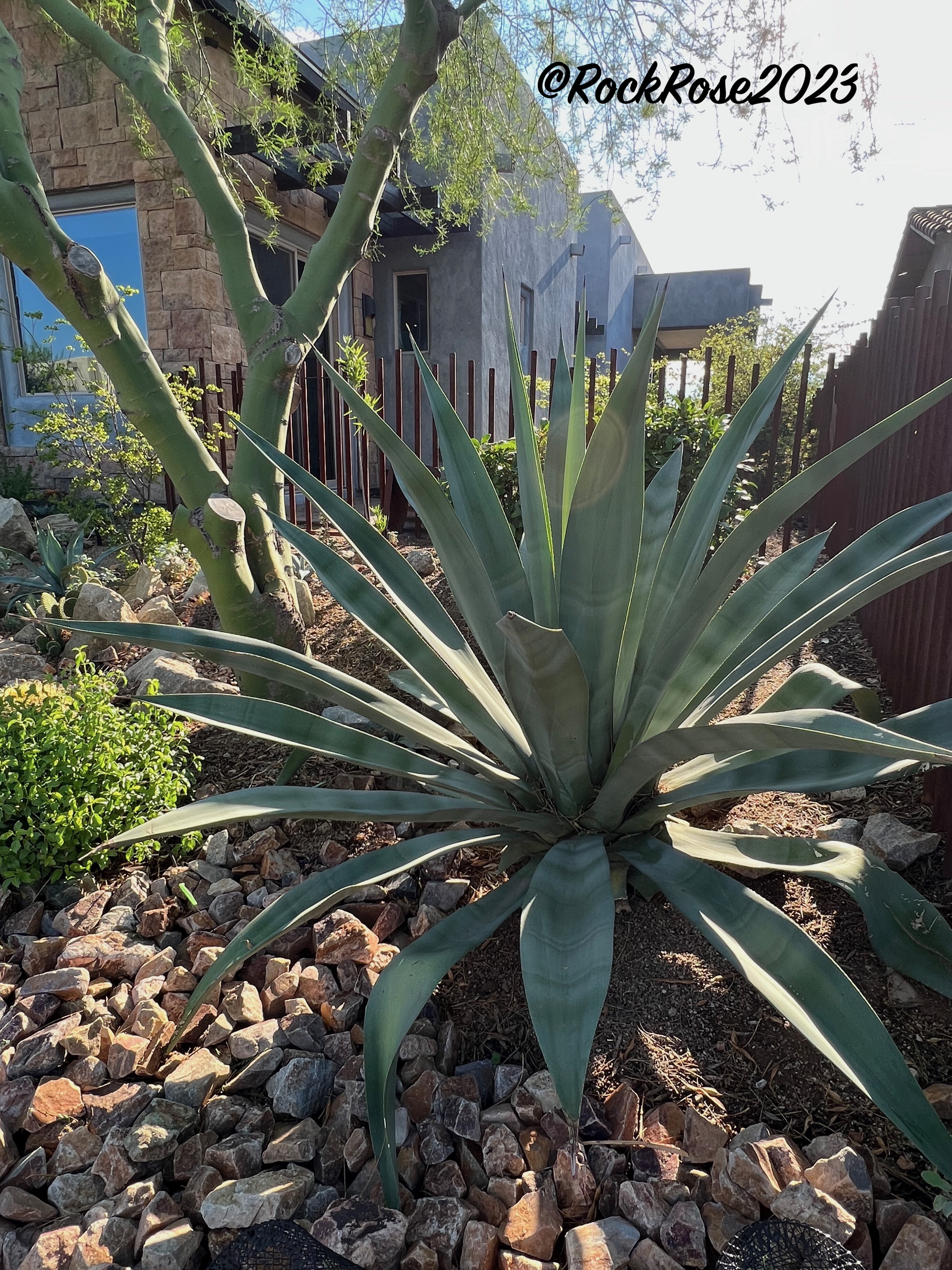
 Another very spiny agave guards the edge of the driveway and is forever in risk of being run over. It is a slow grower but it puzzles me why they would have planted it so close to the edge. It has produced only one pup which I relocated.

I am really quite fond of the brittle bush, Encelia farinosa, which blooms in the spring with masses of yellow flowers. It reseeds around the garden and I leave some of them to grow into small bushes.


One of the plants I was most concerned about was the Meyer lemon tree. It had lived in a large pot for 12 years, providing us with tens of lemons every year. We brought it with us and last year planted it in the ground. It looked good during the winter and produced many blooms but it wasn't happy and by May almost all its leaves had turned yellow and dropped off. I full expected it to be dead and was already planning to put in a new one this winter. Amazingly extra watering and some summer showers had brought it back to life and there is new growth.I will always give any sign of life in a plant a chance so it remains to be seen whether I will be replacing this after all.

Also down the side of the house the grapefruit tree is looking great and the 6 grapefruit are getting bigger. They have about 4-5 months to grow to full size and ripen.

It is my potted plants that suffered the most and many died. The lime tree had fallen over along with the plumerias. I must try to get the lime in the ground although the Mexican lime is one of the least hardy of the citrus. I may just have to give up in the plumeria. A large jade plant had completely rotted away. I don't know if it was the heat or lack of water but there was no9thing left of it. Of my herb and vegetable raised planters only the basil, sage, chive and peppers survived. David had put in a new water line to water them from beneath but I think they were getting too much water being on every day. This was really due to there being mixed water need plants on the same circuit. There is a lesson to be learnt here, although I think I have had the same lesson many times before. A constant presence in the garden is the only answer.

 Another storm blew through and was the trigger for all the Mammillaria grahamii to bloom. They have certainly put on a big show-a show always worth waiting for. 


One of the benefits of living in an arboreal desert.

Tuesday, January 17, 2023

DAY 2 OF WET AND WILD IN THE DESERT

 I am remembering some stretches of wet and cold days in Austin when David would grumble about getting away. I asked him this morning how he was feeling about day 2 of wet and cold in the desert. He surprised me by not seeming to be bothered at all. The fact is that these days don't come along too often in winter and when they do our thoughts are filled with the increasing chances of having a bumper wildflower season in the desert.

Of course I stood at the front window this morning looking out on a dreary, wintry scene and when I stepped outside to fill the bird feeder I noted the bird bath was full. It really is time I bought myself a rain gauge as well as a rain barrel. This is where I regret not bringing at least one barrel from my old garden. 


 There are cold day things to do in the kitchen. I brought a bag of lemons home from my son's house with a plan to make some lemon marmalade and maybe some limoncello. Last year I made calamondin and sour orange marmalade but I have not been able to get hold of those two fruits this year. Once that is all used we will have lemon marmalade on our toast. Not having ever made lemon marmalade before I dug out my very old Jams and Jellies book from England and found the page for lemon marmalade. 


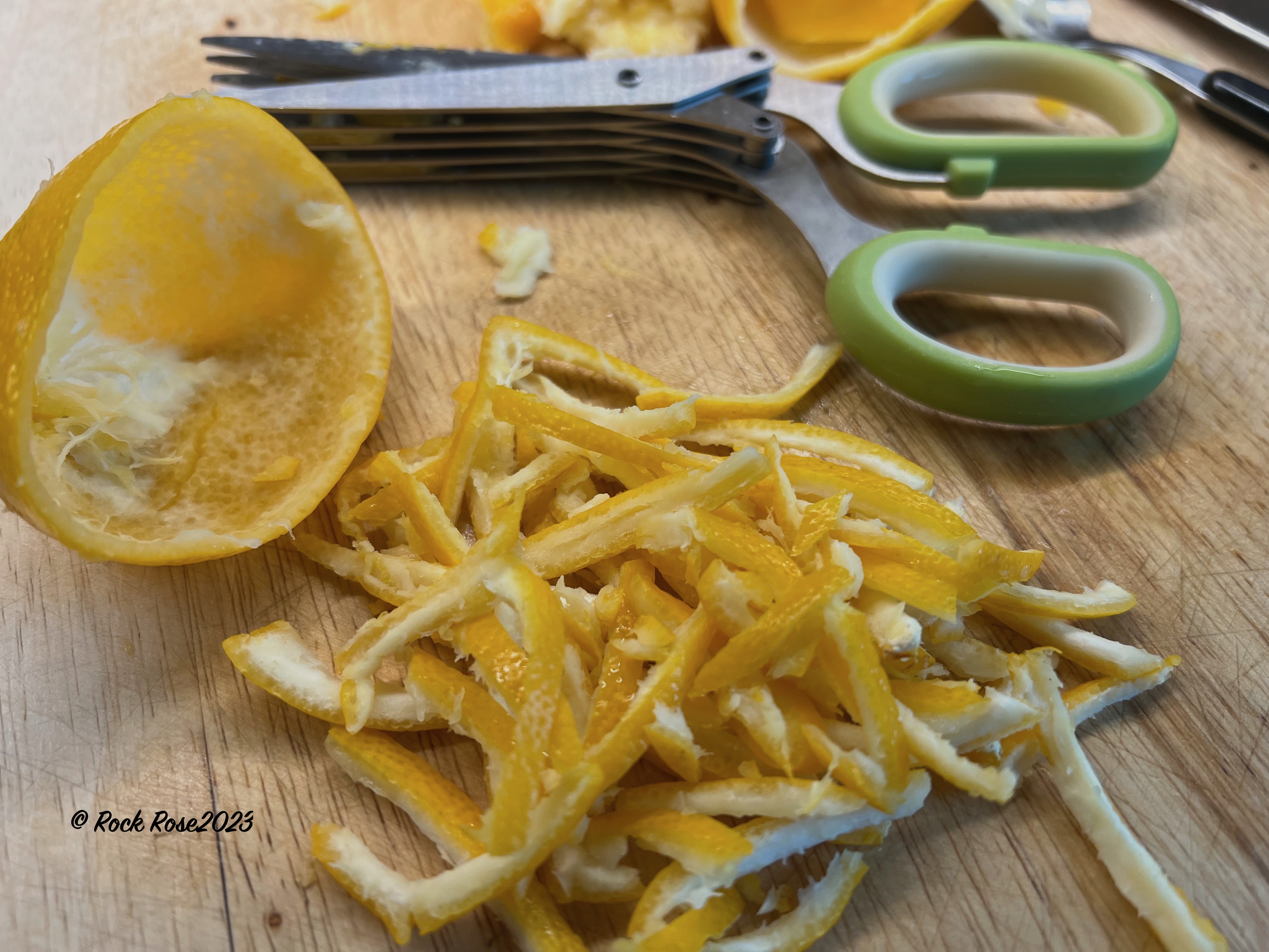
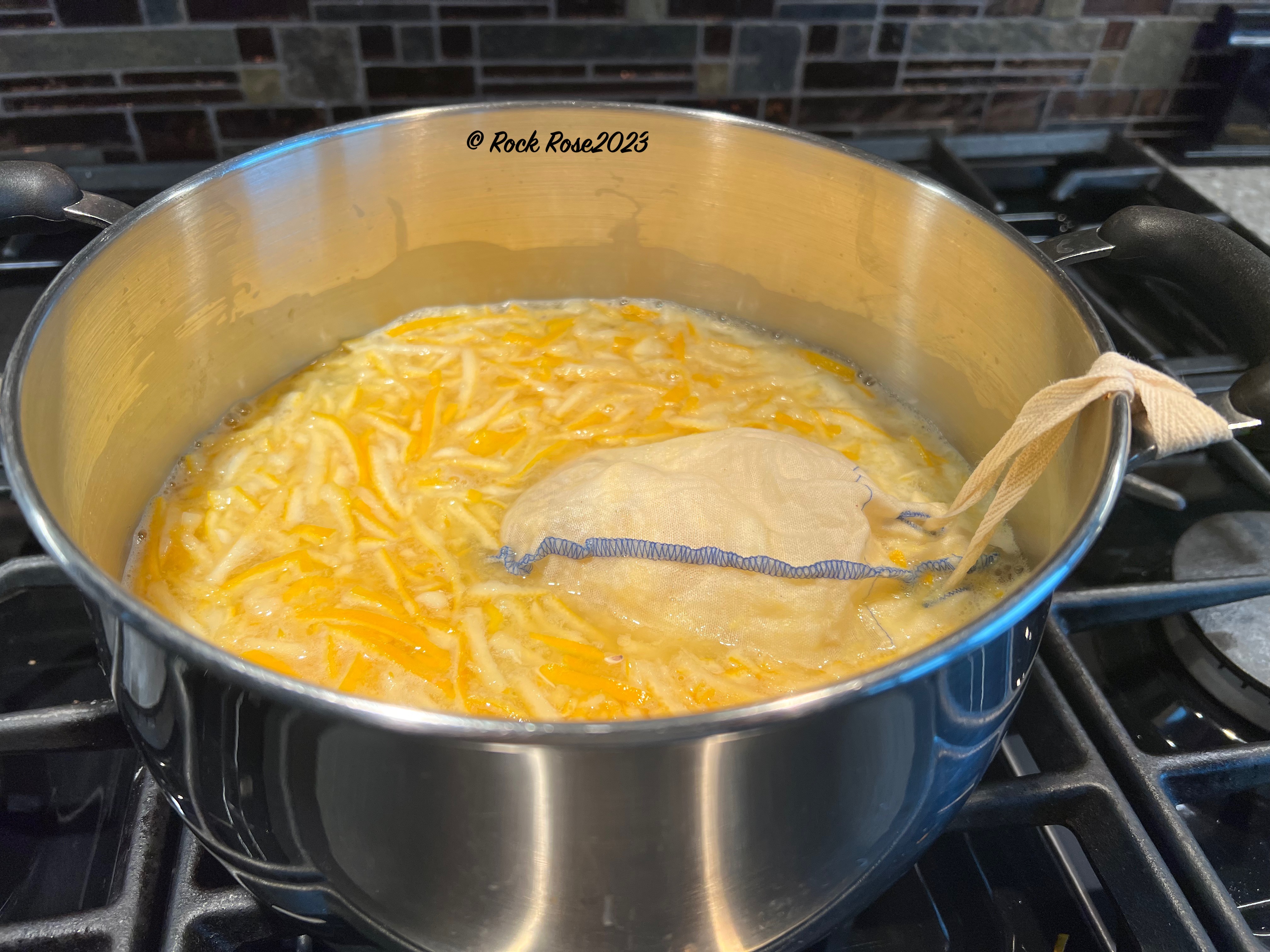
Having been a science major I really like to work with definite quantities. 3lbs lemons, and 6 pints is fine but then to have reduced to 4½lbs of liquid! Or did they mean pints. Confusing. Right from the start I am gambling on getting this right as I am working with cups. I should have looked elsewhere for a recipe. The electric lemon squeezer made light work of getting out the juice and scraping the pith from the peels is very easy with Meyer lemons.  Pips and pith went in to a cotton bag to ensure plenty of pectin. The peel was shredded quickly using these herb scissors. Thanks to my garden friend Barbara Segall for this suggestion. I measured the juice and peels and added water per the recipe and boiled down for 1½hrs until the peels were soft. Left overnight to make the following morning.

I added sugar at one cup for each cup of juice/peels and boiled until the setting point was reached.

 That setting point always seems to be a gamble. There are several methods to use and I find it best to use a combination. A jelly thermometer, the cold plate and the spoon drop. The suggested temperature is 220° but what do you do when your two thermometers read differently? Then you use the cold plate test. And if you can't get a good fix from that then drop some from a spoon and see if it forms a flake. The ultimate test is when a few hours later you dip a spoon into the small test pot and are delighted to find it has set to the perfect consistency and tastes pretty good.


The rain is due to end soon but there is bad news on the horizon. They are forecasting some night time temperatures in the 20s next week. In will come the plants and out come all the blankets again.

Saturday, March 13, 2021

THE BEES AND I

 The bees and I had a lot in common today. We were both out hunting for flowers. Looking for what had made it though the freeze.

 Gopher plant

Flowers have been few and far between since the freeze. The first blooms to appear were those of the muscari and the bees were very adept at finding them hidden among their strappy foliage. The lemon trees are full of flowers but few have yet opened. It doesn't seem to deter the bees from flying around and even trying to poke their proboscis in the half-opened buds. 

No surprise to see a Juniper Hairstreak, Callophrys grynius, getting in on the action too.


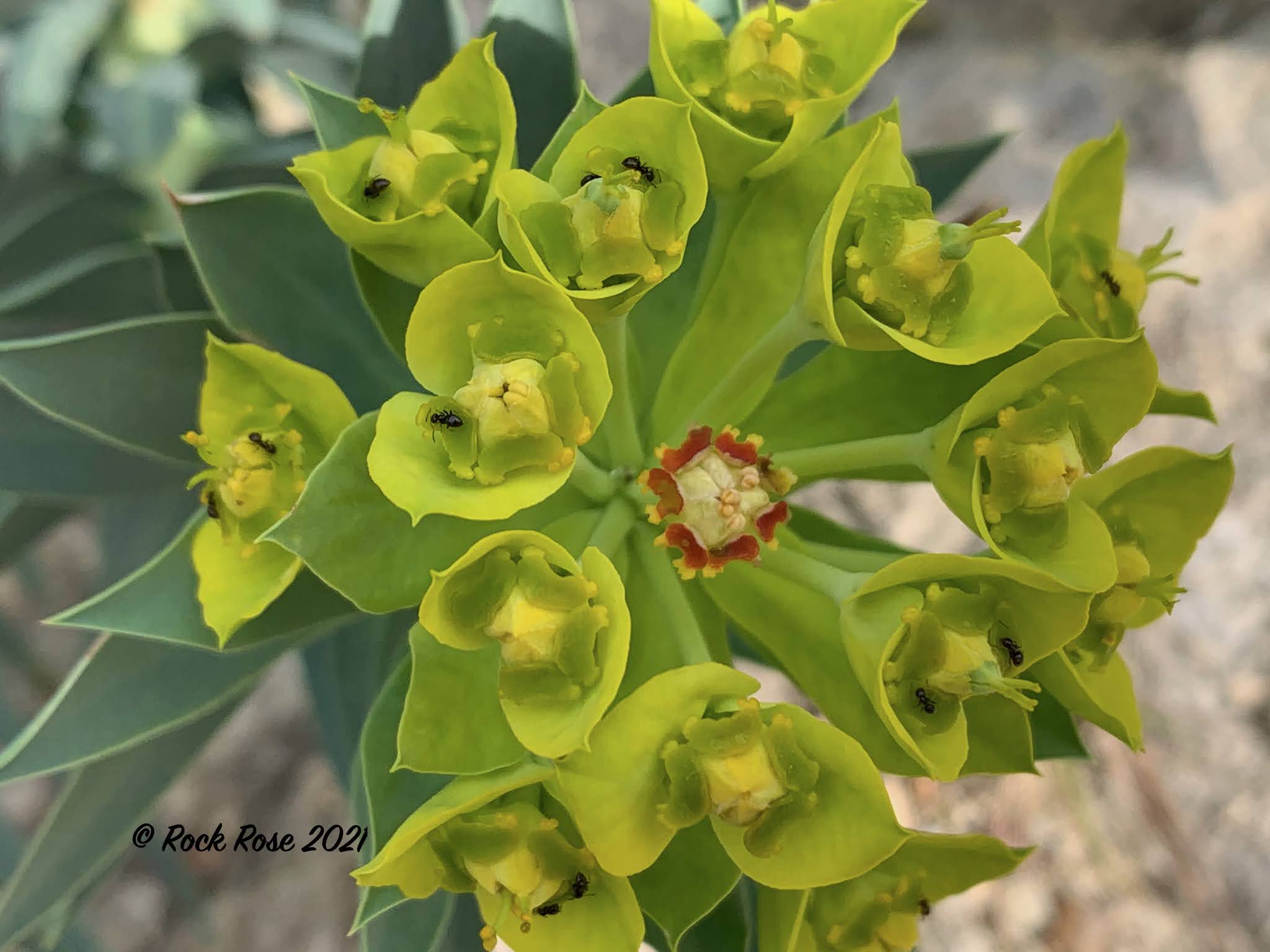
 And there were lots of little pollinators on the gopher plant, Euphorbia rigida. Much as I love this plant, and the bees do too, it is more of a love/hate relationship for me. Loved when in flower and sending out the newly formed shoots, but at other times of the year disliked as it sprawls across the garden with many dead leaves.  It does not seem to do well in our hot and humid summers. In fact last year I said it would probably be their last year. And this year they look even worse because the freeze did not spare them. But of course I am already relenting because, despite their ugliness, the bees adore them and those new shoots look very attractive. I cut off many of the damaged stems because they were unattractive and were not going to flower.


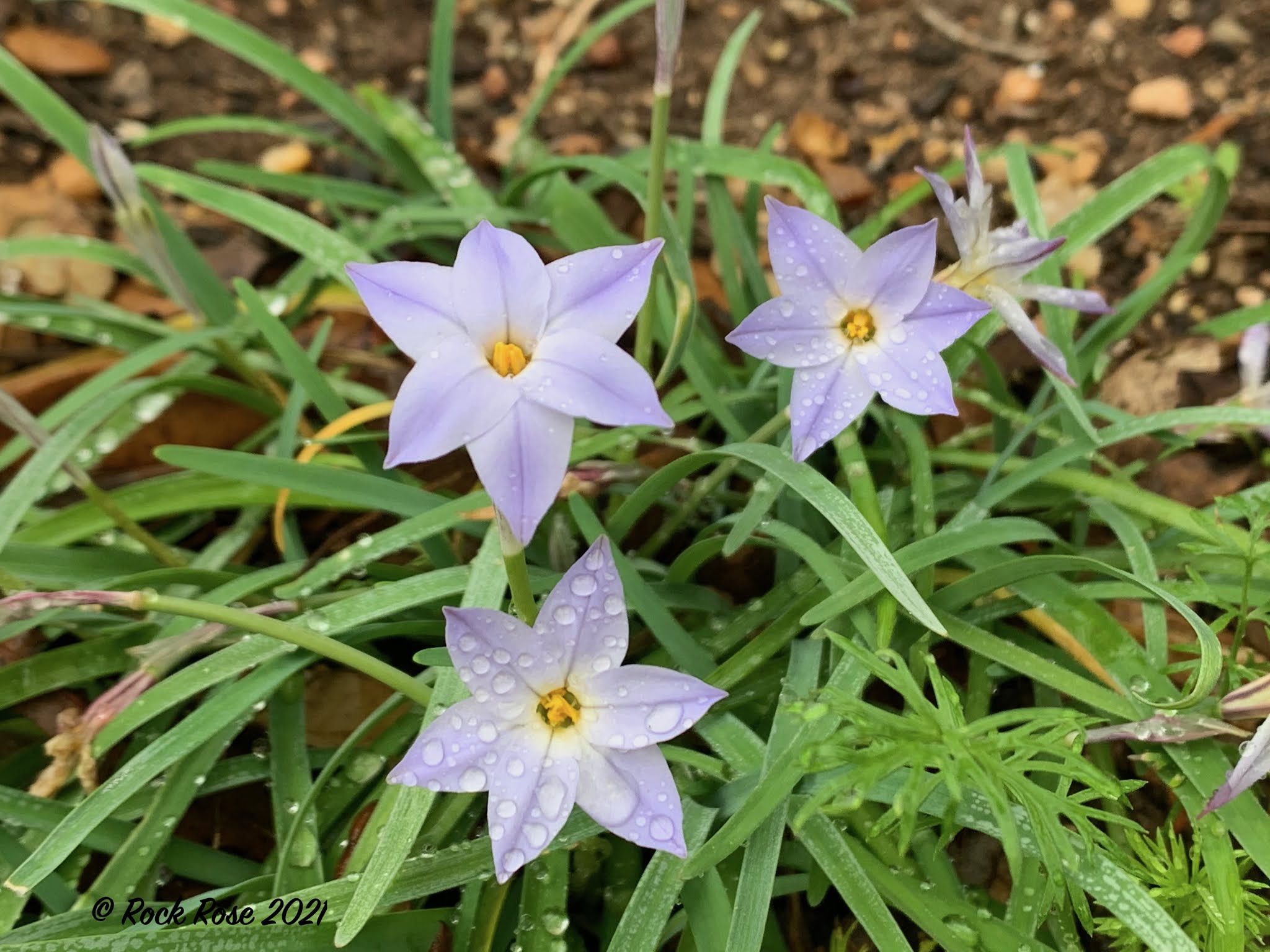
 Fortunately the ipheon. Ipheion uniflorum, were still below ground and have just started blooming. Two shades of blue. I have never seen bees on them so maybe more for my enjoyment than theirs.


And the first of the bluebonnets. Loved as much by the bees as all Texans.

After several warm days the garden is truly coming to life and the first species tulips opened today. And there are several later blooming daffodils showing buds

 Crow Poison, Nothoscordum bivalve! I remember being quite excited about this clump of flowers showing up many years ago. It looked like the perfect rock-garden plant. Now I am careful to remove the heads once they finish flowering but it is too little too late. They are everywhere and impossible to remove as their bulbs go deep beneath the soil. But they do have pretty little flowers. If only it would clump.

But it isn't just flowers that I am searching for on my many walks around the garden. I am also looking for signs of life on some of the larger shrubby plants and those that have gone dormant beneath the soil. I was excited to see that, over the last few days, with warm temperatures, the hybrid musk rose Felicia rose was sending out new shoots  from the base. It really needed a good pruning so I took out my big Fiskars pruners( a raffle prize I won at the Austin Garden Bloggers' Fling) and cut the rose down to the ground. Maybe this time I can do a better job of guiding it onto the pillar. I love this rose for its clusters of pale-pink, fragrant blooms and its habit of blooming several times through the year. 

I also see shoots emerging from the ground on my five Clematis, 2 natives and 3 hybrids. And possibly a couple of seedling Clematis versicolor. A few leaves have appeared on the Philadelphus but nothibng so far on the Philippine violet.

Things are definitely beginning to look up and with the first day of spring just a week away I have new hope for this year's garden. 

Saturday, November 21, 2020

GARDENING IN NOVEMBER

 November is a busy time in the garden. Winter vegetables need to be tended and direct sowing of seeds. And there are seeds to be saved from summer bloomers. November finds my counters littered with saved plastic boxes filled with dried seed heads waiting for a little finger work. Tender plants are already in the greenhouse safe from expected frosts-although so far we have been fortunate. Apart from a few nights of temperatures in the high 30s we are now having Indian summer which is a lot nicer than a Texas summer. Warm dry days and cooler nights. The plants are loving it.

There are many years when the Copper Canyon daisy, Tagetes lemmonii, never gets to bloom. It can be so late that an early frost nips it in the bud. This year, however, it is spectacular.

The same is true of the Gomphrena 'grapes' Because it is a late bloomer it rarely get chance to bloom. In the end I gave the original plant away, but it had left behind some seedlings in the gravel, which I left, and this year the plants are blooming beautifully. They grew like spindles all summer and then about a month ago they started to produce flower heads. Maybe I will try to transplant into a place at the back of the border where they can mingle in among other plants including Verbena bonariensis. It is best grown where it can grow through other plants. 

Ajania pacifica, is another good fall bloomer. It is quite the spreader but easy to pull and performs well in a rock garden setting. 

But it is seed collecting time for many of the fading summer bloomers including the globe gomphrenas, pink and purple although not entirely necessary as they usually naturalize-sometimes a little too vigorously. Gomphrena 'fireworks' gives off a curry smell in the fall. The first year I grew the plant I remember thinking that one of my neighbors was busy making an Indian dinner! Since then it has shown up everywhere although none seems to have escaped the garden. It has a big tap root which often results in it overwintering. All the gomphrenas leave a lot of mess behind when the petals start to fall. Confetti time.

I have so many blanket flower and verbena seedlings that I have to move some of them to places where I would like them. Not in the pathway, although alyssum and daisy fleabane can stay. I will probably pull out the Mexican feather grass that is growing alongside it. 

I have already transplanted a few Larkspur from the vegetable beds to the sunken garden. I just have to make sure that the snails don't eat the seedlings before they are big enough to stand on their own two feet.What's going on in your garden?

Fruit is ripening on the citrus but it will be a few more weeks before I pick the kumquats and the calamondin to make marmalade. Lots of work but so worth the end result. We are terribly finicky about our marmalade and like the sweet/tangy taste when made from these little fruits. 

Kumquat

Calamondin

Improved Meyer lemon

I'm having one of the best winter vegetable garden seasons in quite a while. Already harvested pak choi, chard, peas and beets broccoli and carrots are well on the way to a good harvest. 

It's not often we get a successful pea harvest in the fall unless we protect the crop from frosts. This year, so far, no frost but then no rain either.

This variety is Cascadia which I have the best success with in spring. It produces tender posts that can be eaten at all stages from snap to full pod. They remain crisp and stringless. 

I don't know what I would do without my garden as it has kept me busy during these difficult stay-at-home days. 


Tuesday, February 13, 2018

SHROVE TUESDAY

Dessert tonight will be pancakes because it is Shrove Tuesday. I just went outside to pick a few lemons from my Meyer lemon tree.


But what do pancakes and lemons have to do with Shrove Tuesday? Here is my post from 3 years ago which tells the story of the pancake and why it is eaten on this day.

At our house we could never let Shrove Tuesday go by without having our favorite dessert. Forget the trifle, sticky toffee pudding and Christmas pudding. Our favorite is pancakes. No, not American breakfast pancakes smothered in all kinds of gooey, strawberry, whipped cream concoctions or with a dose of pancake syrup. But those deliciously thin, rolled crêpes sprinkled with sugar and a squeeze of lemon juice. We have been eating them on this day since childhood.


Shrove Tuesday is the last day before the beginning of Lent and pancakes were a way to use up those forbidden foods such as eggs and butter. Pancake races take place all over England, the most famous of all being in the town of Olney in Buckinghamshire. The race has been run there since 1445. Shrove Tuesday was a half day holiday and the 'Shriving Bell' would ring out from the church to call people to the service. Legend has it that a lady was in the middle of making her pancakes when the bell rang and she ran to the church pan in hand. Today the ladies of the town wearing apron and scarf start the race by tossing their pancake, run the 380 meters from the market square to the church, then toss the pancake again. The winner gets a kiss from the verger. Men can participate too but they must wear the apron and scarf.


I'm pleased to say that we have passed on pancake making through two generations. It wasn't Shrove Tuesday but while we were in Taipei at Christmas in 2013 our 9 year old granddaughter made pancakes for us one night. We were busy discussing what we should have for dessert when the subject of pancakes came up. Vivian went into the kitchen, got out her recipe book, and measured out the ingredients.


She didn't toss the pancakes but used chopsticks to turn them.


Then made this lovely presentation. We ate them the same way we always do with sugar and lemon and they were delicious.
And we will be doing exactly that tonight.


Tuesday, December 19, 2017

LEMONY GOODNESS

It has not been my best Meyer lemon crop this year, but it has certainly been my earliest. The mild fall with warm temperatures has meant the lemons have ripened at least 2 months ahead of normal. Many years I am still picking them in March. I like to leave them on the tree until I need them but as we moved the trees into the potting shed for the winter several lemons fell off.


 I had to quickly think of what I was going to do with them. Lemonade? I made a big jug of that at Thanksgiving when the grandchildren were over. I could certainly freeze the juice and rind for later use. Lemon curd? that's a favorite. Preserved lemons? I have several recipes that call for that ingredient. What about lemon marmalade? I quickly sought out a recipe from one of my English cookbooks.


It called for 3 lb of lemons which required me to pick just one more to make up the weight. One of the great things about the Meyers is their thin skin with very little pith. The recipe called for juicing the lemons and removing all the flesh and pips and tying in a muslin bag. I decided just to follow the same procedure as when I make Calamondin marmalade. I halved and juiced the lemons into a bowl saving the pips and tying in a muslin bag.


Then I sliced the remaining peel and flesh.


I measured the mixture into a large pan adding 1 cup of water for every cup of mixture. I tied a string around the bag of pips and lowered into the pan, then boiled down until the peel was soft- about 30 minutes. When cool the pan went into the fridge overnight to develop the pectin.

Next day I remeasured and added 1 cup of sugar for every cup of mixture and boiled until the temperature reached 220.


I sterilized the jars in the oven and then allowed them to cool slightly before adding the hot mixture, capping immediately.


Breakfast wouldn't be breakfast without marmalade on our toast. Now to look for a recipe for preserved lemons.