My Blog List

Showing posts with label Species tulips. Show all posts

Saturday, March 13, 2021

THE BEES AND I

 The bees and I had a lot in common today. We were both out hunting for flowers. Looking for what had made it though the freeze.

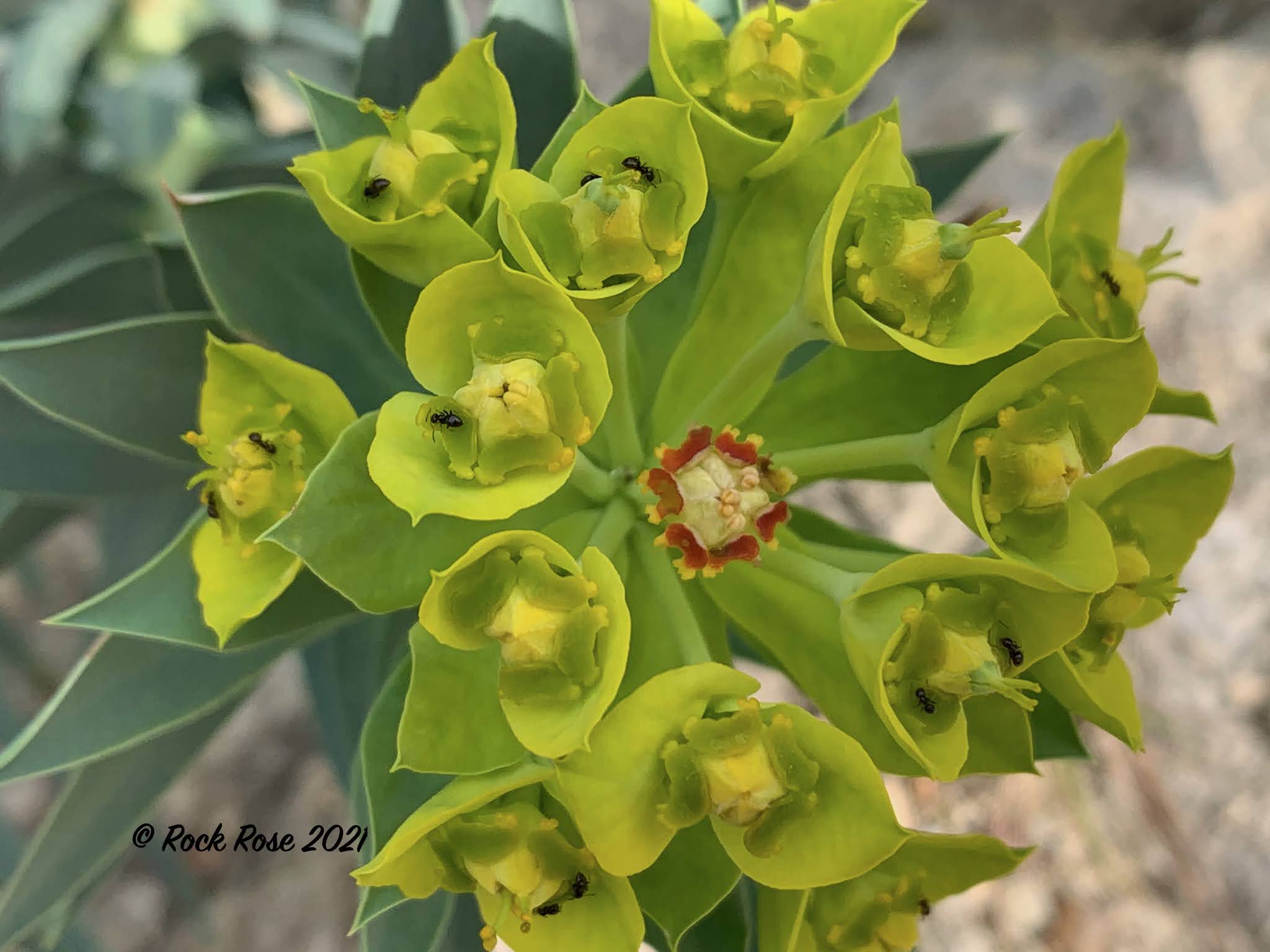
 Gopher plant

Flowers have been few and far between since the freeze. The first blooms to appear were those of the muscari and the bees were very adept at finding them hidden among their strappy foliage. The lemon trees are full of flowers but few have yet opened. It doesn't seem to deter the bees from flying around and even trying to poke their proboscis in the half-opened buds. 

No surprise to see a Juniper Hairstreak, Callophrys grynius, getting in on the action too.


 And there were lots of little pollinators on the gopher plant, Euphorbia rigida. Much as I love this plant, and the bees do too, it is more of a love/hate relationship for me. Loved when in flower and sending out the newly formed shoots, but at other times of the year disliked as it sprawls across the garden with many dead leaves.  It does not seem to do well in our hot and humid summers. In fact last year I said it would probably be their last year. And this year they look even worse because the freeze did not spare them. But of course I am already relenting because, despite their ugliness, the bees adore them and those new shoots look very attractive. I cut off many of the damaged stems because they were unattractive and were not going to flower.


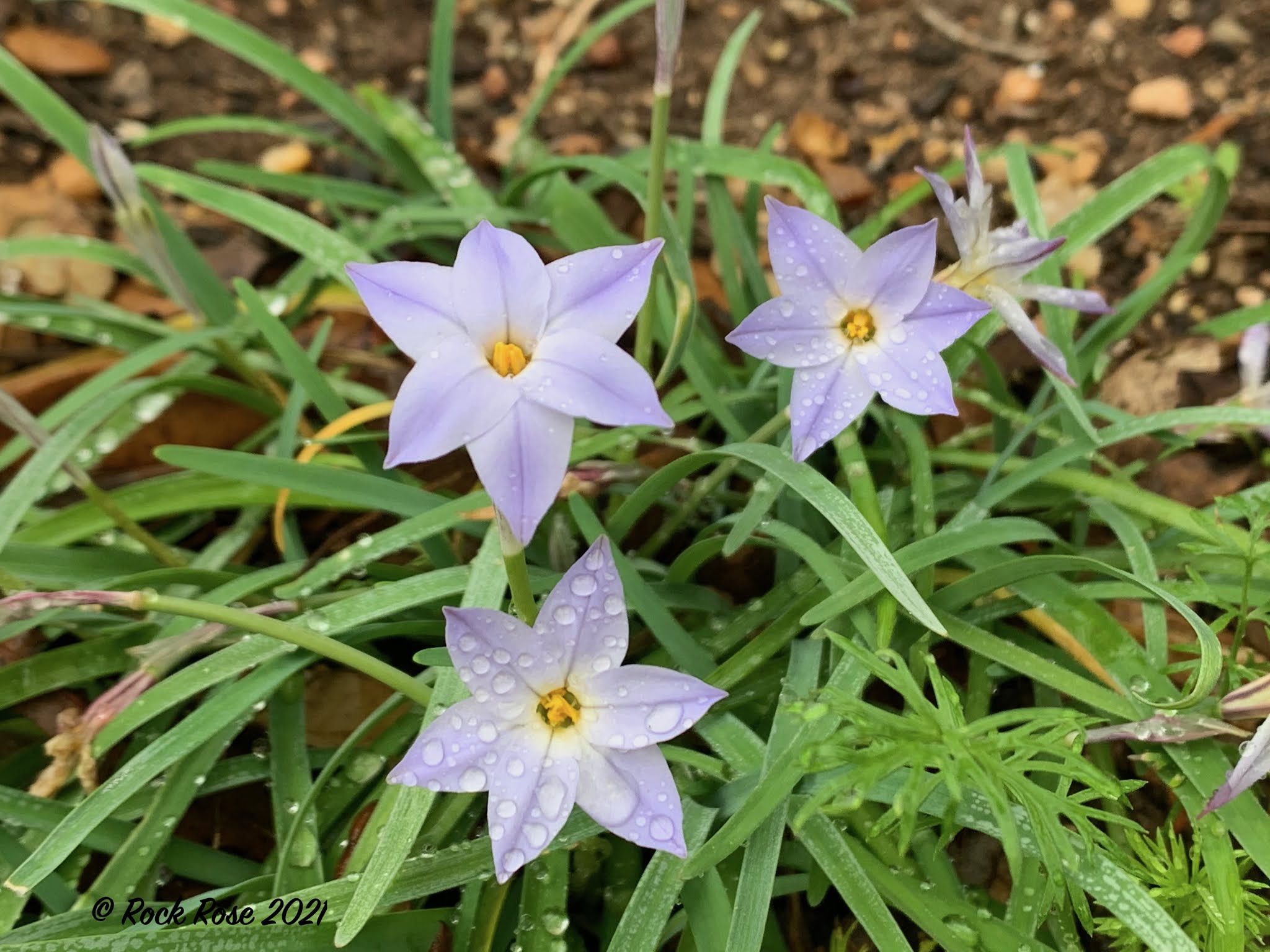
 Fortunately the ipheon. Ipheion uniflorum, were still below ground and have just started blooming. Two shades of blue. I have never seen bees on them so maybe more for my enjoyment than theirs.

And the first of the bluebonnets. Loved as much by the bees as all Texans.

After several warm days the garden is truly coming to life and the first species tulips opened today. And there are several later blooming daffodils showing buds

 Crow Poison, Nothoscordum bivalve! I remember being quite excited about this clump of flowers showing up many years ago. It looked like the perfect rock-garden plant. Now I am careful to remove the heads once they finish flowering but it is too little too late. They are everywhere and impossible to remove as their bulbs go deep beneath the soil. But they do have pretty little flowers. If only it would clump.

But it isn't just flowers that I am searching for on my many walks around the garden. I am also looking for signs of life on some of the larger shrubby plants and those that have gone dormant beneath the soil. I was excited to see that, over the last few days, with warm temperatures, the hybrid musk rose Felicia rose was sending out new shoots  from the base. It really needed a good pruning so I took out my big Fiskars pruners( a raffle prize I won at the Austin Garden Bloggers' Fling) and cut the rose down to the ground. Maybe this time I can do a better job of guiding it onto the pillar. I love this rose for its clusters of pale-pink, fragrant blooms and its habit of blooming several times through the year. 

I also see shoots emerging from the ground on my five Clematis, 2 natives and 3 hybrids. And possibly a couple of seedling Clematis versicolor. A few leaves have appeared on the Philadelphus but nothibng so far on the Philippine violet.

Things are definitely beginning to look up and with the first day of spring just a week away I have new hope for this year's garden. 

Sunday, March 15, 2020

WORTH THE WAIT

There are lots of plants whose flowers are ephemeral. I'm thinking of the flowers on my cactus which bloom for just one day. I wouldn't give up that moment for anything. And then there are flowers that give us a few more days to enjoy their beauty. Among these are the Spring flowering daffodils, grape hyacinths and tulips. Even those few days of flowering are worth the year-long wait.
Living in the south we enjoy a good selection of spring bulbs that come back year after year but when it comes to longevity only the species tulips do well in the southern garden.


Tulipa clusiana Lady Jane, returns year after year if given the right conditions. Fast draining, poor soil. If it finds a happy place it will spread over the years producing nice clump of flowers to brighten the early spring garden. When the flowers close at night they show off their pink underbelly.


One of the reasons I like the clusiana tulips is because they have elegant seed heads which I look attractive even after they have dried. I scatter the seeds in different places. The leaves die back at about the same time as the seed heads.

Another member of the clusiana family is Tulipa clusiana 'Tinka" Lemony yellow when fully opened with pink underbelly when closed.


Planted in 2016 the package was labeled  Tulips humilis 'Persian Pearl' but I learn that one has a yellow center. It is more likely to be Tulipa humilis 'Little beauty' which has a bluish center. Either way the plant is a beauty and perfect for rock gardens as the flowers only stand about 4" tall.


On this rainy the petals are closed up. I am thrilled to see more blooms this year. One year there were no blooms, the plants lying dormant under the gravel until they got just the right conditions.


Originating in the hills of Turkey, these tulips were brought to Europe in the mid 1500s. There they were bred to be the tulips we find today. For us in the south those tulips must be planted every year. These tulips can be left in the ground. They love the baking heat because that is the conditions under which they grew in the wild. So much easy to care for, forget and then enjoy every spring.
Look for these bulbs in the fall when they arrive at the nurseries or order them on line. And remember to plant in fast draining soils to prevent rot.

Sunday, March 17, 2019

EARLY SPRING BLOOMS

Our mild winter has been kind to many of my flowering blooms, although I have to admit I did protect the freesias during some recent nights when the temperatures fell in to the 20s. The same with some of the iris because they were in bud.


The purple iris were a passalong and came without a name which is often the case in my garden. The pretty little narcissus alongside this clump is also without a name, much to my regret.


Another passalong iris, known only as Peach, lives up to its name. It smells of peaches.


The naturalizing species tulips, or lady tulips, Tulipa clusiana, have not disappointed this year. Some years ago I read that the seed were not viable and I would pick off the seed heads after flowering. Then I discovered that the seed pots were attractive in themselves and allowed the seed to fall. Now there are many new plants forming.

Tulipa clusiana Lady Jane

Tulipa clusiana, Lady Jane with petals closed
Tulipa clusiana var. chrysantha, has yellow petals with red markings on the underside.


The species tulips, Tulipa humilis, Persian pearl was planted several years ago. It bloomed the first year and then nothing for 2 years. Now once again it is going to bloom. This is one of the shortest stemmed tulips, just a few inches tall.


I took the upper photo this morning and this one when the petals opened up when the sun came out.


All these tulips are perfect for the rock garden where they will receive good drainage.

The freesias have been magnificent, whether in pot or in the ground. They did receive addition protection from freezes but worth every cover I brought in and out.


And the same with pots of anemones.


I just wish they would all last just a little longer.