My Blog List

Showing posts with label Front courtyard. Show all posts

Friday, April 3, 2020

HOW TO DO IT WITH WILDFLOWERS

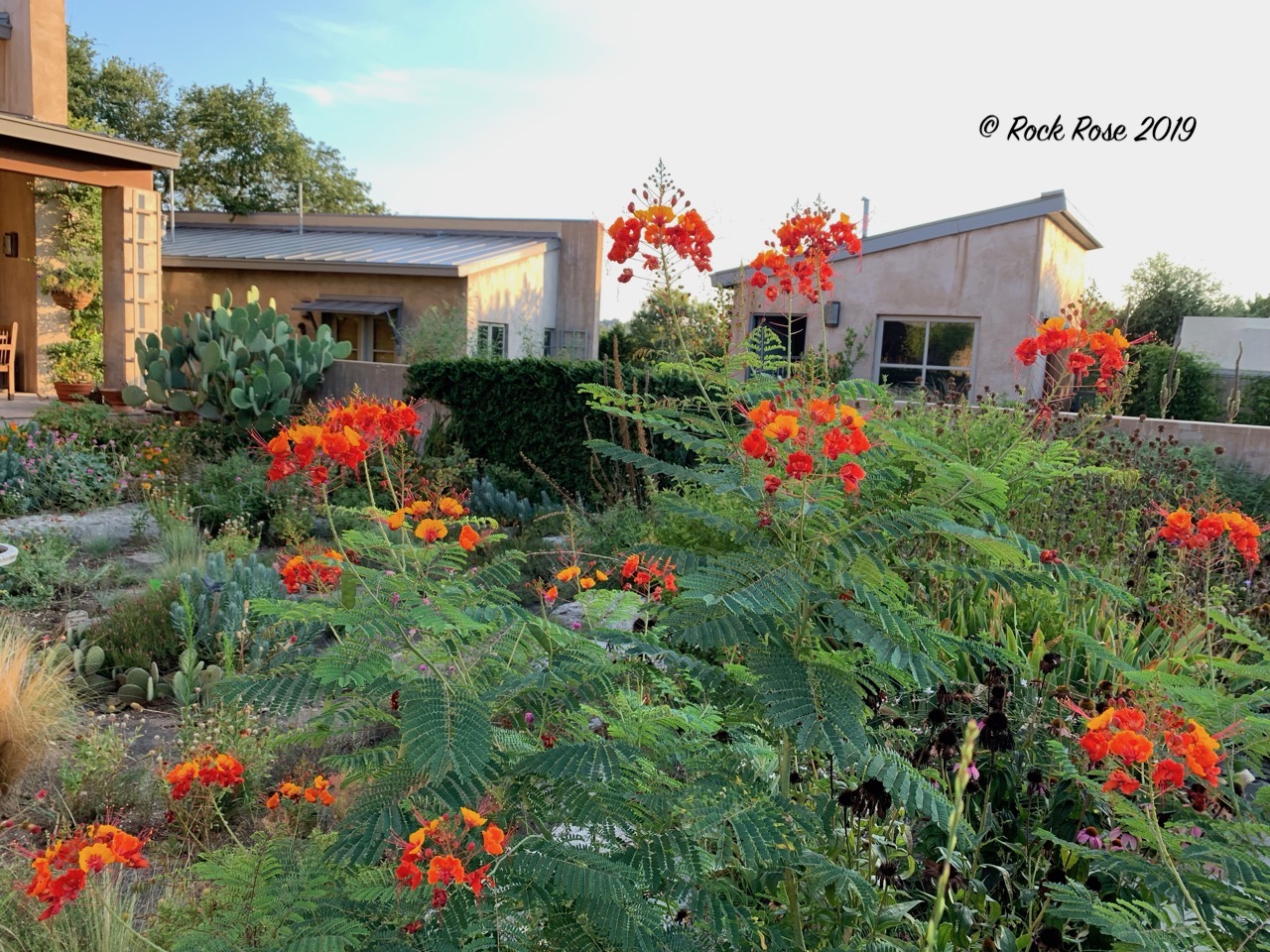
The front courtyard garden is blooming with Texas native wildflowers and has entered its most floriferous season. Using short season wildflowers in the landscape requires some structural specimens as well as hardscape. We are fortunate to have some great agaves that do the job well.


Under the whales tongue agave, A. ovatifolia, the once blooming flowers of Tulipa hummilis, have been replaced by flowering purple skullcap, Scutellaria wrightii, and yellow blooming square bud primrose, Calylophus berlandieri. The skull caps will bloom all summer if given a trim back after flowering.


And on the other side beyond the Mexican feather grass is the damianita, Chrysactinia mexicana with its aromatic, fine-leaved shrubby foliage.


Of course the bluebonnets, Lupinus texensis, being an annual will soon be gone but the accompanying blackfoot daisies, Melampodium leucanthum, will bloom all summer and will be at their best in the fall.


Blackfoot daisy
The claret cup cactus flower, Echinocereus triglochidiatus, is one of my favorite. The flower is longer lasting than many cactus flowers.


In a shady corner, and there aren't many in this garden, baby blue eyes, Nemophila phaceliodes.


A few seeds gathered from some flowers on an unbuilt lot and I now have several clumps of Barbara's buttons, Marshallia caespitosa. They are perennial but when summer comes the foliage dies back only to appear again in late winter.


Lyre leaf sage, Salvia lyrata, pops up all over the garden and would make a great ground cover with its attractively pattered leaves.


One of my favorite places to sit in the garden is in the breezeway between the garage and house There I can enjoy the view of this part of the garden with flowers and bubbling water feature. Yesterday I watched the wrens flying back and forward building a nest in-between the pots on the top shelf of the cactus theater.


Such messy builders but such fun to watch.


I hope you are enjoying spring in your garden wherever you are.


Monday, August 12, 2019

HOME IS WHERE THE GARDEN IS

After visiting a wealth of gardens in temperate zones it was time to come back down to earth 10 days ago, when we returned from our nine-week trip. Once again I had to get on, what I call, my Texas Eyes. I wonder what others think when they come from those lush, green gardens of England to the burnt up landscape of Central Texas in August. Does it take their eyes time to adjust?


Much had died in my absence so that was the first job. I am still not finished with removing weeds, and spent annuals. 12 bins so far. And there is much cutting back to do...the lantanas, salvias and roses. We still have a long season ahead of us and I must prepare for the cooler times in October.
The front garden is not under irrigation so I spent some time with hose in hand. The sennas are just starting to grow. One of the toughest plants I grow.


I ahd to remove almost all the blanket flowers. They had been attacked by some sap-sucking bug. But  ave no doubt that as the weather cools I will begin to see seedlings develop.


This is a garden with little shade. But the sentinel Yucca rostrata does offer a little respite for some plants from the mid-day sun.


Even so the plumbago is bleached out. I am grateful for that little patch of color.


The only other color in the garden is from the Pride of Barbados, Caesalpinia pulcherimma.


There is only a short window in the morning when I can work outside comfortably. Daytime temperatures are starting off at 80° and soon climb above 90° We are in for a full week of temperatures in the triple digits. I set myself a couple of jobs every day but much is left undone. It has taken me a week to getting round to fill up the bird bath. Tomorrow I plan to cut back the roses so that they will bloom again in October.


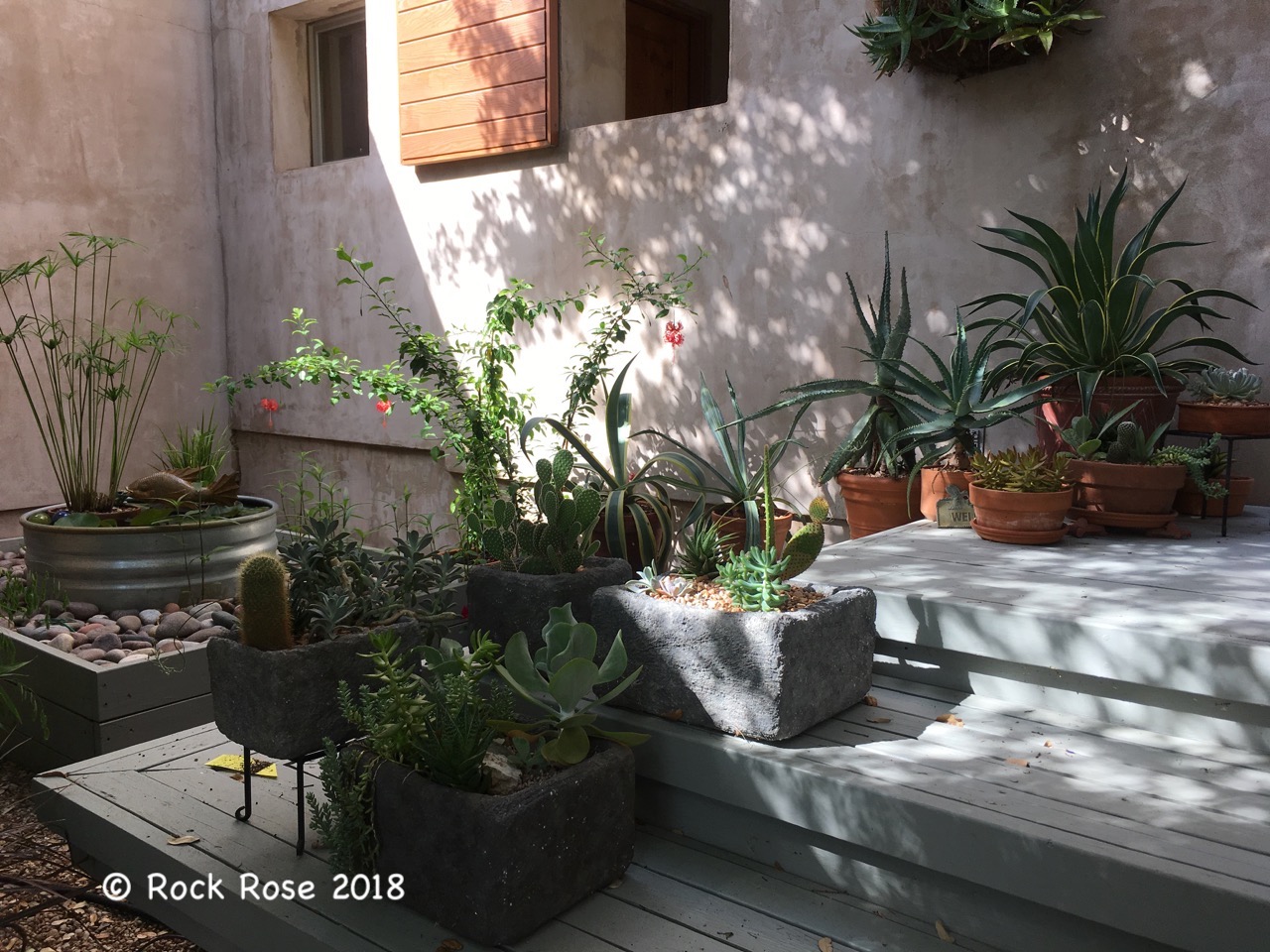
I have moved many of my cactus and succulents into the shade of the patio, and away from the brutal afternoon sun.

Sunday, May 5, 2019

THE FRONT COURTYARD GARDEN

It may seem strange that in my front courtyard garden, protected from deer by walls, I have mainly native plants. This is partly due to the way we had to design the garden for rain water run off, by creating a wet-weather creek, raised beds and areas of gravel. These gravel areas are ideally suited to native plants.


Large feathery stands of gayfeather, Liatris sp. prepare for a fall flowering. It would be easy to have a garden full of these as they are aggressive seeders. Their current competition for height is the Engelmann's daisy, Engelmannia peristenia, whose petals, characteristically,  curve downwards during the heat of the day.


There are good stands of Barbara's buttons, Marshallia caespitosa, with their sweetly fragrant flowers.

They spread quite readily from seed. This clump is three years from seed sown in place.


A happy accident 3 years ago was the  introduction of Colorado Venus' Looking Glass, Triodanis coloradoënsis, a member of the bluebell family.  The seed must have been in a hole inside a rock I brought in and one day I noticed this blue flower. The numbers have increased until this year they have shown up in multiple places.


Texas betony, Stachy coccinea, is a favorite of humming birds. This perennial native would be just as happy outside the walls as it is deer proof.

Artichoke agave, Aloe desmettiana Blue Boy and Texas betony.

You might not appreciate its flowers unless you look really closely.


Somehow these plants just fit together well in the landscape along with a few hardy, spikey agaves for structure.


The Asiatic jasmine, Trachelospermum asiaticum, similar to the Confederate jasmine, may not be native to Texas but its hardiness makes it a better option for a fragrant vine by my front door.


A good trimming one in a while keeps its wandering tendrils in check as it reaches around the other side of the wall.


Undoubtedly the mocking bird planted this Yaupon on the corner of the wall. It has grown into a fine tree which provides winter food for the returning cedar wax wings and shade for a corner of the garden.

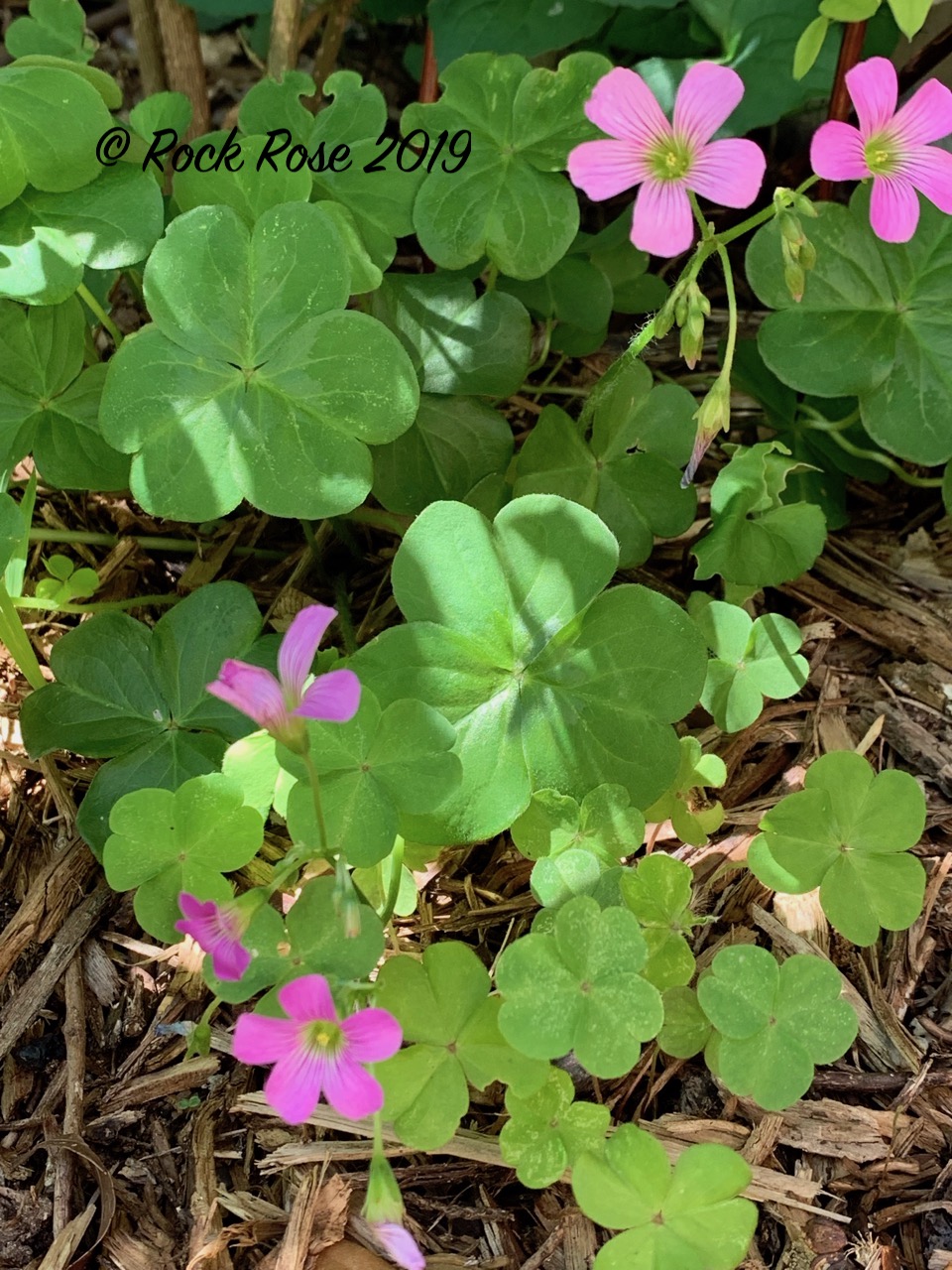
I have flowers on the pink Oxalis sp. I am more than happy to have it in this shady corner.


Along with the Mahonia in its fruiting stage.


The larger raised bed, created by using large ledge stones from the foundation needs a little work to make it more manageable. I regret that I lost a white Texas sage this winter. It came as a shock because ti flowered twice in succession in the fall. It's last hurrah. But when I took it out it made me realize I could live without it. Friends convinced me to leave the opuntia in place and a passalong Salvia 'Amistad' seemed like the best plant to put in there to take its place. In the corner a crape myrtle seeded and in the center a tree-shaped Texas Mountain Laurel. I seem to be very lucky with plants seeding in my garden although there are many more that seed and are removed.


On the trellis in the back corner climbs the native Clematis versicolor. One bonus from removing the sage was finding several seedlings of the clematis. I will try to rehouse them over the winter.


Along the front edge are several agaves, including A. parryi and A. lopthantha 'quadricolor'


Beneath the large Ladybanks rose is an area of morning sun and shady afternoons where a few shade lovers survive.
And always my favorite picture off the garden as I walk from garage to house. The reflection in the dining room window.


Saturday, June 16, 2018

THERE'S A DRAGON IN THE GARDEN

There's a dragon in the garden and he's breathing his fiery breath over my plants.


The dragon was a chance find at an estate sale and as things are at the moment I thought he deserved a place over here.

Can it just be a 6 weeks ago that I was lamenting that 3" downpour on the day of the Fling visit to my garden. Since then we have been completely dry. While other gardeners were recently blessed with another 3" downpour, the storm passed to the north and left nothing here. My stock tanks are empty. This summer is wearing thin-wait a minute it isn't even summer yet. High nineties have been the order of the day for weeks now with a few 100s thrown in. The second flush of flowers, Monarda, Echinacea, Rudbeckia, day lilies have all had a pitifully short season this year. I'm sure I am partly to blame because the soil is poor and drip irrigation has minimal impact when it is so dry.

Who needs flowers anyway? Rocks look pretty good.


and there are plenty of the tough green plants.


The Liatris doesn't seem to need any additional water. In some places it is growing out of the rocks. It is growing everywhere in the front courtyard, having seeded freely, and will bloom with incredible purple spires in the fall........or will that be sooner this year.


Everything has gone quiet in the front courtyard. But that's OK. Less work for me.


Thank goodness for some very tough plants out in the front. These are the plants that manage without additional water although they may not look their absolute best.


And I have moved a few plants into the only shade I have in the side entry courtyard. Even cactus and succulents need a break and I shall be ready for one myself soon.


I have added a battery powered drip irrigation system in here for the summer to water a few plants that need a daily water when I can't be there to do it.


Including the asparagus fern by the garage door. Even the fish have moved into the shade.


There is rain in the forecast for this next week but then we know how that goes.

Monday, October 9, 2017

A NEGLECTED CORNER

There are parts of my garden that are high on the list of neglect. This little corner of the front courtyard is one. You wouldn't think I would let it get that way because I glance at it every time I walk towards the bedroom, always muttering to myself something about having a good go out there. There are two trees that are either self or bird sown; a flowering senna and a yaupon holly. Both had become horribly overgrown and were in need of a really good prune. This past weekend I dealt with them.


I really hated to do too much pruning of the yaupon because it was loaded with berries, but have to admit to feeling much happier now I can, once again, see the birdbath.


The next job was to clean out all the dead leaves from the dry creek..


For years I balked at using one of those power blowers, but I now have to admit that using one makes reasonably quick work of cleaning the creek. I use either my foot or a piece of rebar to move the rocks around as I blow everything towards the house. Then I pick it up and deposit on the compost pile. All that noise of a few minutes certainly beats the laborious job of removing all the rocks in order to clean out the bed.


The next job involved removal of all the violets and seedling inland sea oats. What was I thinking when I bought a violet many years ago? I was thinking the England of my childhood with roadside banks filled with primroses and violets. They certainly weren't this kind. Pretty enough as a green clumping plant but rarely a true flower.


Instead hundreds of these cleistogamous flowers. That's a flower with no petals, self pollinating within the capsule and producing hundreds of seeds which go on to produce hundreds of plants. Enough! What would the world be like if all plants did this? It doesn't bear thinking about.


I have another plant that does the same thing. It is a native mallow with sweet little orange flowers when it chooses to flower and not produce those cleistogamous seed pods.

Mallow flower

Mallow, cleistogamous seed pods
A little pile of gravel which has been sitting on the driveway for nearly a year was used to refresh the area. I have treated this gravel like gold because it is brown pea gravel and not available in Austin. I wouldn't have used it only we are planning to go and get another load this coming weekend.

Strike one job of the list of hundreds.