My Blog List

Showing posts with label wild garlic. Show all posts

Sunday, March 19, 2017

THE GREENING OF THE SUNKEN GARDEN

David commented on a marked change in the sunken garden following rain and warm temperatures. If I don't get around to doing some culling we won't even know the sunken garden is there. But what would I do without all my little self seeders.


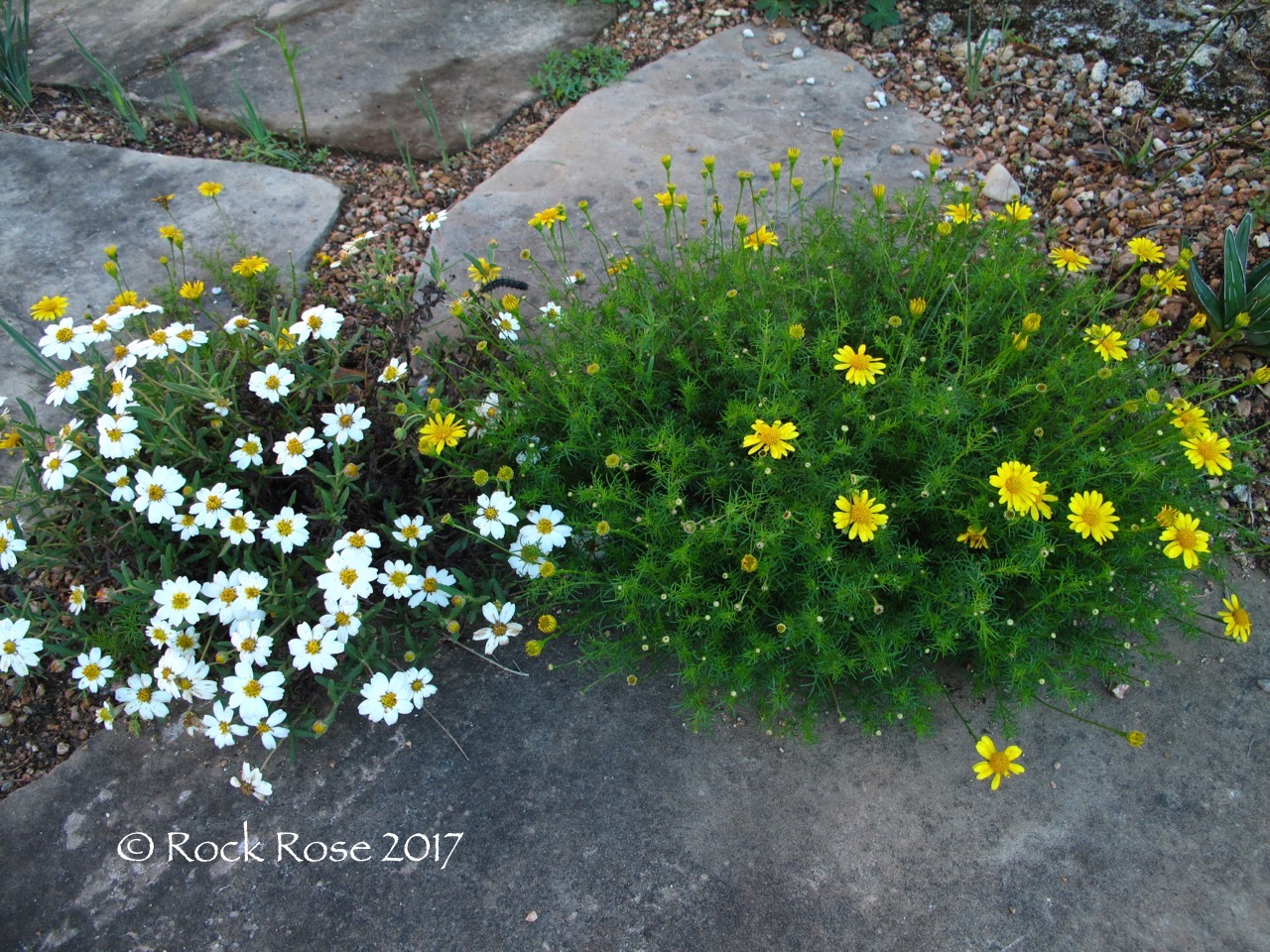
The blackfoot daisies,  Melampodium leucanthum, and the dahlberg daisies, Thymophylla tenuiloba.

The Indian blanket flowers, Gaillardia pulchella,   and the sedum, Sedum potosinum.


the gopher plant, Euphorbia rigida. I didn't really want it down below in the sunken area but here it will stay.


The blue eyed grass, Sisyrinchium angustifolium.


The chocolate daisy, Berlandiera lyrata. This one has been here for years enjoying a cool root run under the sandstone pavers.


The California poppies. I am so glad this white one is back again this year. Eschscholzia californica.


But there are plenty of orange ones too.


And the first of the corn poppies, Papaver rhoeas.


There are a few seeders who can be a little annoying. The false garlic, Nothoscordum bivalve, with the white flowers and yellow centers and wild onion, Allium canadense, with pale purple flowers. Both are pretty but are the devil at seeding themselves and once the bulb forms they are not so easy to root out as the bulb works its way deep into the soil. This year I struck a deal with them. They can flower but they can't set seed!


We may not be able to grow those lovely pom-pom alliums but we have our own and I love the flowers.

Nothoscordum bivalve


Allium canadense
They make a pretty addition to a rock garden. All these plants seed freely in the sunken area of the garden. Because the specs between the pavers are less than 1" it would be difficult to plant without self sowing plants.

Wednesday, April 1, 2015

A COMPRESSED SEASON

I have decided that we are having a compressed season this year. I noticed that flowers that normally bloom in February did not bloom until March. I can't speak for the weather in January because we were traveling but February was much colder than usual, especially the later part. We had plenty of fall rain which germinated the wildflowers but that cold February brought an abundance of vegetative growth. My bluebonnets are much taller than usual.


You wouldn't believe that a dry creek runs through here and there are stepping stones leading to the front gate. The bluebonnets are hiding the downed live oak leaves for now!
And I definitely remember saying "No bluebonnets in the sunken garden next year" I daren't even show you a picture of the English Garden! Yes, you can have too many bluebonnets.


Or that the walkway around the side of the house to the side gate is impenetrable. That's Lady Banks' rose hanging over the wall.


Early March came brought a lot of weather ups and downs. Warm days followed by a killing frost, for those of us who garden on the edges of the hill country. Tender new growth, on lots of plants, was zapped overnight. No Mountain Laurel blooms over here this year and probably no pomegranates. But mother nature was ready to make up for it with a nice rain followed by day after day of 80° temperatures. All at once everything wants to bloom. Daffodils bloomed, were buffeted by winds and heat. They lasted only a few days.


These tiny rock garden daffs, with their string-like foliage are having a great bloom season but it is cut short by the heat.


Clumps of Crow Poison ( False Garlic) Nothoscordum bivalve, are attractive when in clumps but an intruder when they come up among other plants. Because they grow from a bulb they are difficult to eradicate.


Here's a new visitor to the garden. Scarlet flax, Linum grandiflorum. It's an annual but it is putting on a stunning display. I bought 3 small plants in the fall but only one has really thrived.


Here's its native cousin, the prairie flax, Linum lewisii.


Large clumps of Texas beargrass, basket grass, Nolina texana, are also flowering. Their creamy white blooms attract lots of bees.


Iris, California poppies, blue eyed grass, columbines, gaura, pink primroses are just a few of my later blooms making an earlier appearance. I just hope we get a little rain this weekend to extend the bloom time.