My Blog List

Showing posts with label Larkspur. Show all posts

Saturday, January 23, 2021

MY GARDEN HAS INSOMNIA

When I lived in Eastern Canada gardeners were well assured of having a respite during the winter. It was a time when browsing through seed catalogues and placing an order was the highlight of winter gardening. Seed starting came next, geared towards being able to plant frost sensitive flowers and vegetables outside by May 24th. The garden slumbered under a thick layer of snow.

Now here I am in Texas with its unpredictable climate and often mild winters. Because I knew there was to be no winter travel this year it gave me the opportunity to be more diligent about planting a winter vegetable garden. It has been a great success.

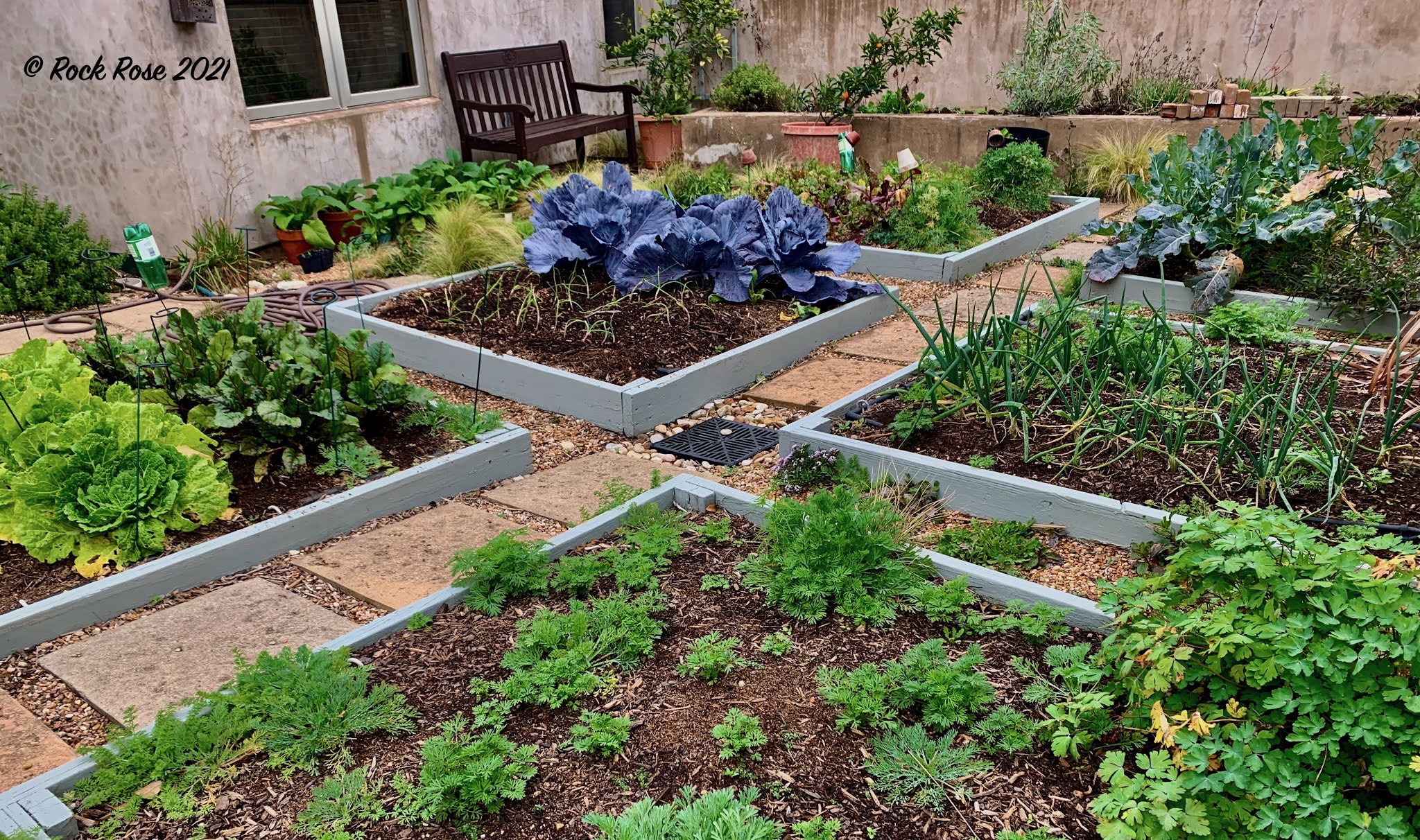


We have had an unusually mild fall, although frost has made an appearance on several occasions necessitating the covering of my peas.  I was  determined to keep them going in order to get an early spring crop, but because of mild weather was rewarded with a winter crop. 
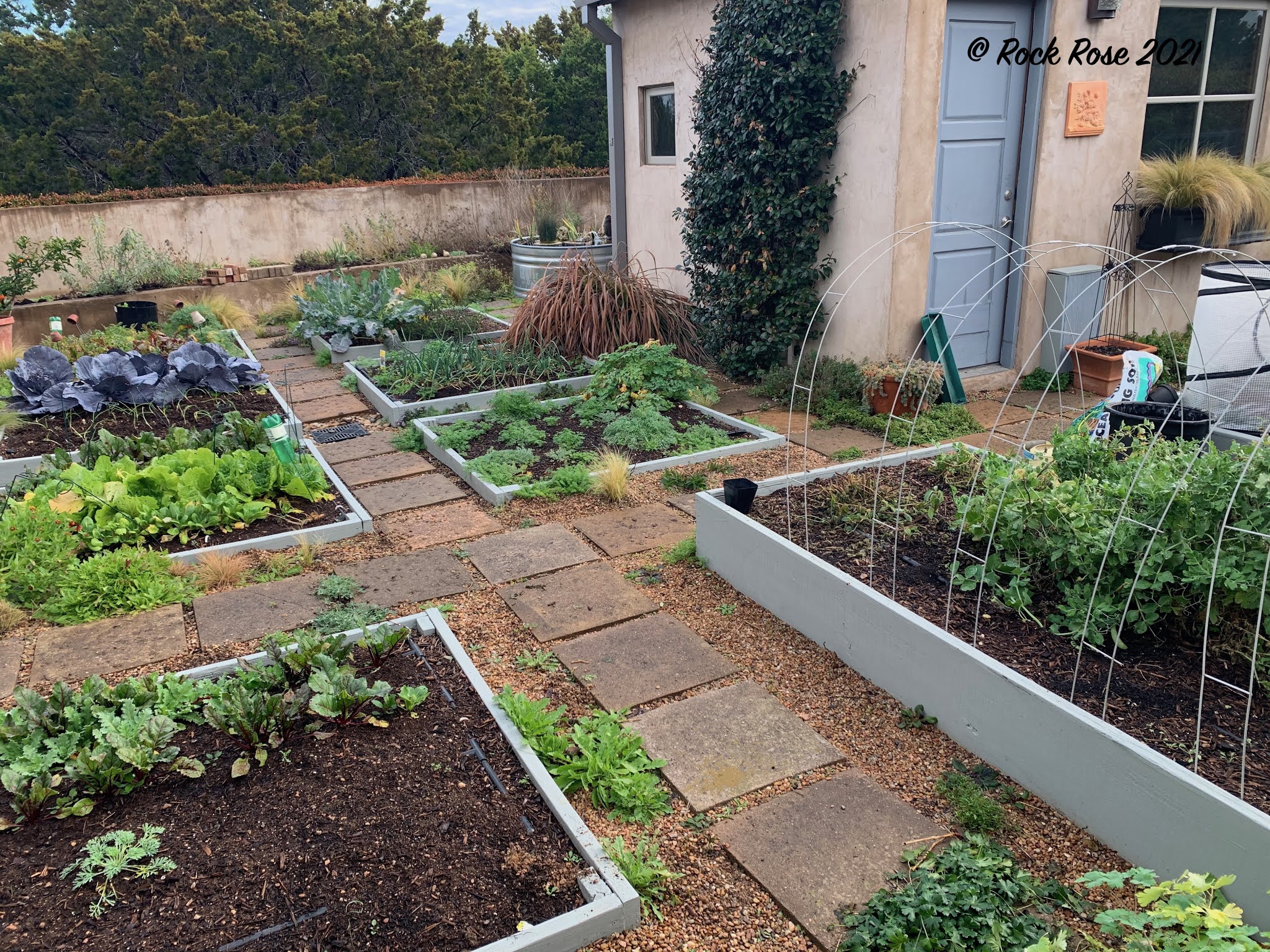
 

We have already devoured two crops of broccoli, pak choi and a succession of chard and kale not to mention peas, carrots and beets. All these plants are contained in beds in my vegetable garden. Even so there are many intruders in those beds chiefly larkspur, California poppies and the most successful seeder of all Love-in-a-mist. Known as hardy annuals this is their time to germinate, growing over the winter in time to flower in the early spring. I regret I have allowed them to take over. 


Those spaces between the pavers create an ideal spot in which seeds from last years flowers settle and particularly with Love-in-a-mist it seems every one germinates.  

And they found an even better home in the vegetable beds among the cilantro.

And poppies too.


And bluebonnets. Knowing how they can cover a diameter of 3' I may need to remove the one in the center of the path.

Every year I vow to keep those paths free of these opportunists and every year I relent which means even more will arrive every year. 

Blanket flowers, Gaillardia pulchella give me great difficulty. That is because they behave like perennials and these rather shop-worn plants are beginning to flower again. Soon they will have to go because they make a tripping hazard but I will leave them in case the bees come by looking for nectar or pollen. There are hundreds of seedlings just getting going.

It is my firm intention this year to reduce their numbers before they make it impossible to walk down the paths. 

Some plants don't seed quite so prolifically  so I am happy to see a few rose campion, Lychnis coronaria, just beginning to develop. I plan to remove them from where they are growing at the edge of the path to a more prominent position.
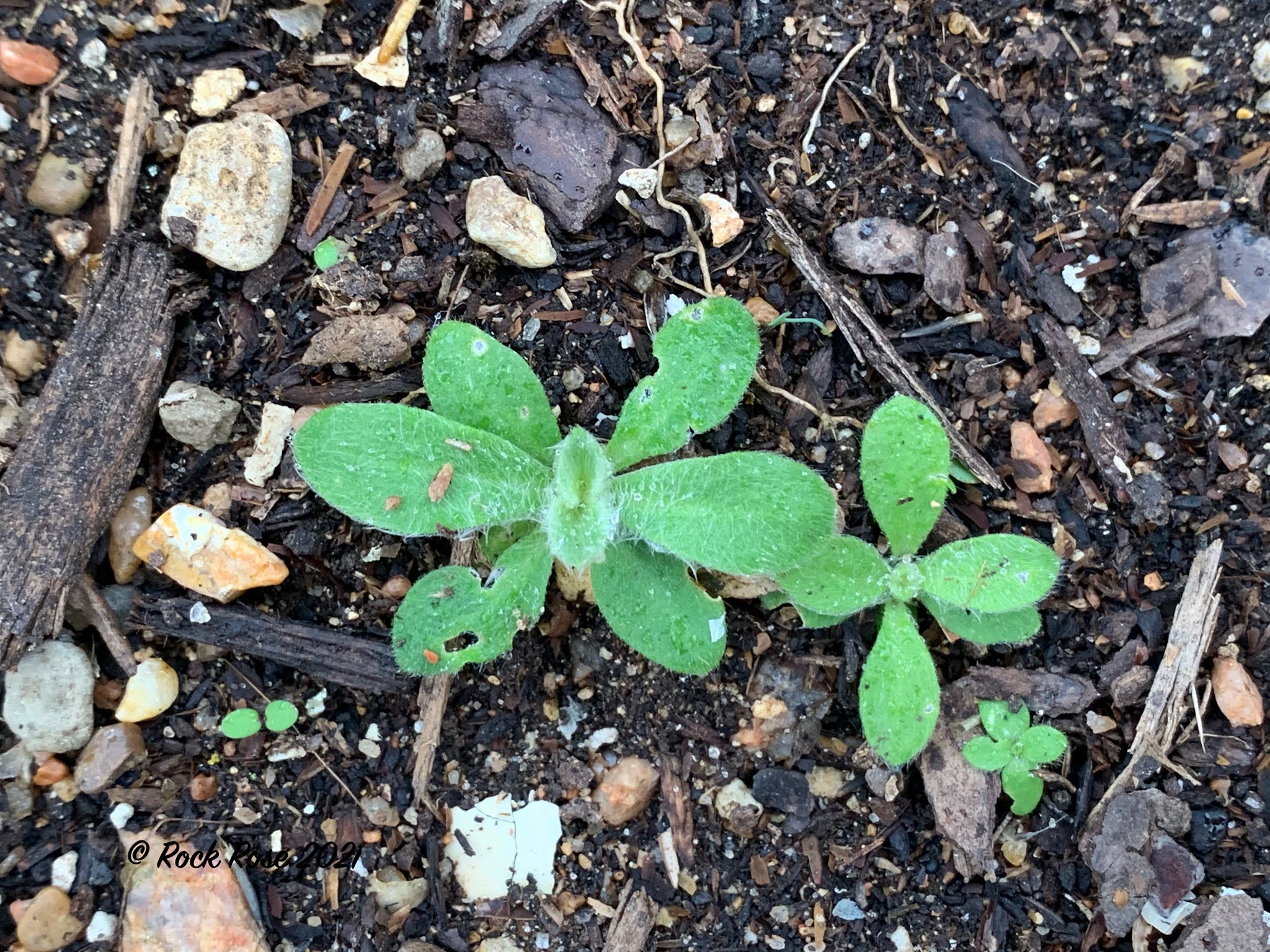
 Those that are a little larger will have to stay. A happy trio of rose campion, Lychnis coronaria, Gulf coast penstemon Penstemon tennuis,  and alyssum, Lobularia maritima. They are in the herb garden and will stay there.

Verbena bonariensis by the hundreds! I have already shared many and have potted some up in case of a some weather mishap. Last year's plants are looking strong and healthy but there is much winter to come yet. 

 Larkspur seedlings in the sunken garden. A little thinning required. They won't grow as large as the ones in the beds because the soil is poor. The same being true of love-in-a-mist.
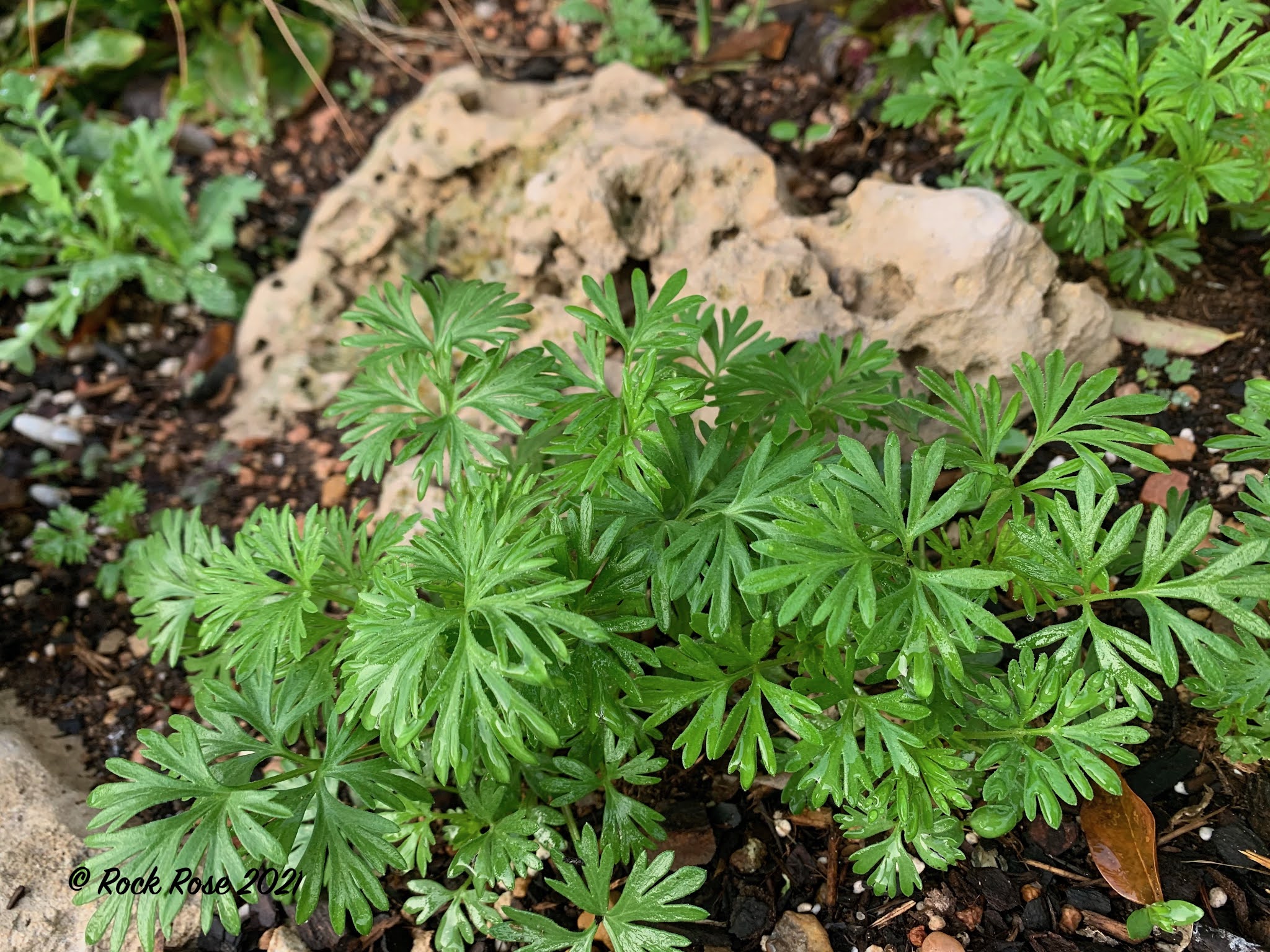
Here is a plant that hasn't slept in 2 years, Scabiosa. One of my favorites in the rock garden becaseu its foliage is never touched by insects.

Someone once said my weeds were a lot different from theirs. The fact is a weed remains something that is growing in the wrong place and I have plenty of those.


Monday, May 5, 2014

WHITE IS A COLOR TOO

I didn't realize how many white flowers I had int he garden until I went out to photograph them today.


The mock orange, Philadelphus sp Natchez is putting on the biggest white show.


Followed by the Anacacho orchid tree, Bauhinia lunariodes.


There's even a single rain lily, Cooperia drummondii, coaxed into blooming by the recent rains.


In the English garden the white knockout rose puts on her first full flush of blooms.


The native blackfoot daisy, Melampodium leucanthum.


Love-in-a-mist, Nigella sativa, with the spiky foliage. A faithful spring returner.


Larkspur,

A single white Shirley poppy.


The multiplying onions, Allium sepa, making a great stand. I think I may mix them in with my other garden flowers next year.


The potatoes are flowering.


And the snow pea flowers mean lots of peas over the next few weeks. I always plant Pisum sativum 'Cascadia' because they are open pollinated and I can save the seeds for next year.


The first pods.


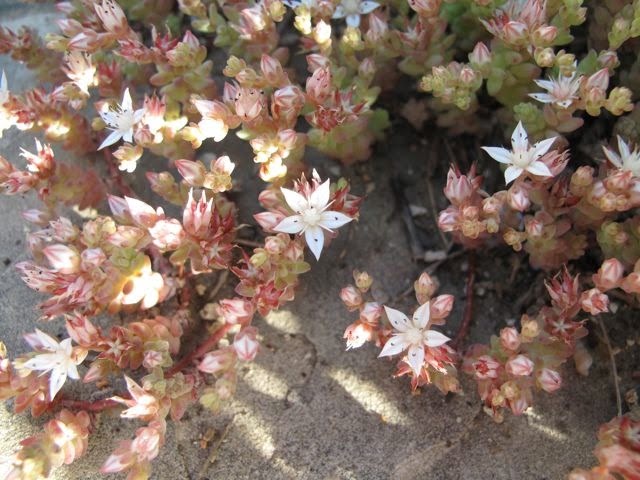
And the tiny star flowered sedum, Sedum potosinum.

Wednesday, February 5, 2014

IT'S A SMALL MIRACLE

Today I turned my attention towards the garden. My poor neglected garden. How could I have left it for so many weeks to endure one of the coldest winters we have had in a long time. The blankets that I use to cover cold sensitive plants lay in a pile in the potting shed. I had to trust my greenhouse heater to a never-yet-tested thermocube which is supposed to switch on the heater when the temperature dips to 34°


Maybe it did switch on because the Kalanchoe, Mother of Thousands is in bloom. Admittedly it is growing in the cactus bowl and was sorely in need of water, but after a day the flowers have perked up and I can enjoy their welcome burst of color for a few days.


There are, however, many losses in the garden. This Agave desmettiana, for instance, is only hardy to 25° and I know it went way lower than that.


There is damage on the Mangave, 'macho mocha' which is a surprise as it is in a sheltered part of the front courtyard. Hopefully new growth in the summer will hide the damage.


But I am even more surprised to see frost damage on Agave parryi.


I never have known the name of this agave but apparently it shrugged off the winter cold. I have a larger one in a pot that I will plant in the ground this spring.
But casting aside the damage there is much to look forward to. I see seedlings popping up everywhere.
Outside the potting-shed door I have a seedling nursery with Rose campion, Lychoris radiata.


They are now potted up so they can grow on ready for planting in the garden.


And there are larkspur,


bluebonnets,


California poppies,


columbine,


snapdragon vine, all waiting for someone to move them into a garden bed!


and today a real sign that spring might be on the way after yet another sub 32° temperature tonight.


Thursday, May 20, 2010

THEY HAVE TO GO

This week I have been at my most gardening ruthless, and it wasn't easy. I had allowed this area of the herb garden to become over run with larkspur, crowding out the santolina, variegated creeping oregano and dittany of Crete. Yesterday I pulled the lot. The patch looks very bare but I think I may have learnt my lesson. All too often in my garden the bullies take over and crowd out the smaller plants.

This is a herb garden! It looks more like wildflower meadow. Years ago I stopped by the roadside and picked some Coreopsis tinctoria seeds, to sow on the septic field. For some reason they prefer to be in my garden. I do love the way they waft in the breeze but oh how they seed themselves everywhere, except on the septic, of course. The deer eat them.

I left the coreopsis and moved on into the sunken garden, removing vast swaths of trailing wine cups. It really was getting too much. They had seeded in enormous numbers and were taking over. Seeds were already spilling out onto the stones and I made sure I picked up every one. I still have one plant to remove from the center but am waiting for a replacement idea before I do so.

The problem with the red corn poppies is that they greet me every morning. The bees are busy collecting pollen and I can't possibly pull them out. By evening they are gone but it is far to hot to be working outside and they always get to stay another day.

Trying to find low growing plants for my rock garden is not easy. It certainly isn't Englemann's daisy, cut leaf daisy, Engelmannia pinnatifida. Nice plant, great cut flowers, wonderful at hiding the daffodil leaves but too big and starting to spread like wildfire. I cut two of them back and removed the large clump.
All I have to do now is find some well mannered replacements.