My Blog List

Showing posts with label Flanders or corn poppies. Show all posts

Tuesday, April 27, 2021

SPRING IN THE SUNKEN GARDEN

 The area between the house and the pool was a blank canvas and perfect to create a sunken garden. The inspiration was partly inspired by the many sunken gardens I have visited in England, my grandfather's garden where I spent my teenage years and the sunken courtyard at the Lady Bird Johnson Wildflower Center. Many of the rocks dug up during the building of the house were saved in order to create a foundation wall around the sunken area. The floor is Arizona sandstone over decomposed granite. I'm sure the builder was happy not to have to cart those rocks away. Nature has done much of the planting and I am happy for that although it does create considerable work keeping it under control. But, both David and I delight in all the blooms that appear-as if from nowhere. The scene changes from week to week and from year to year. Spring is the most floriferous time.
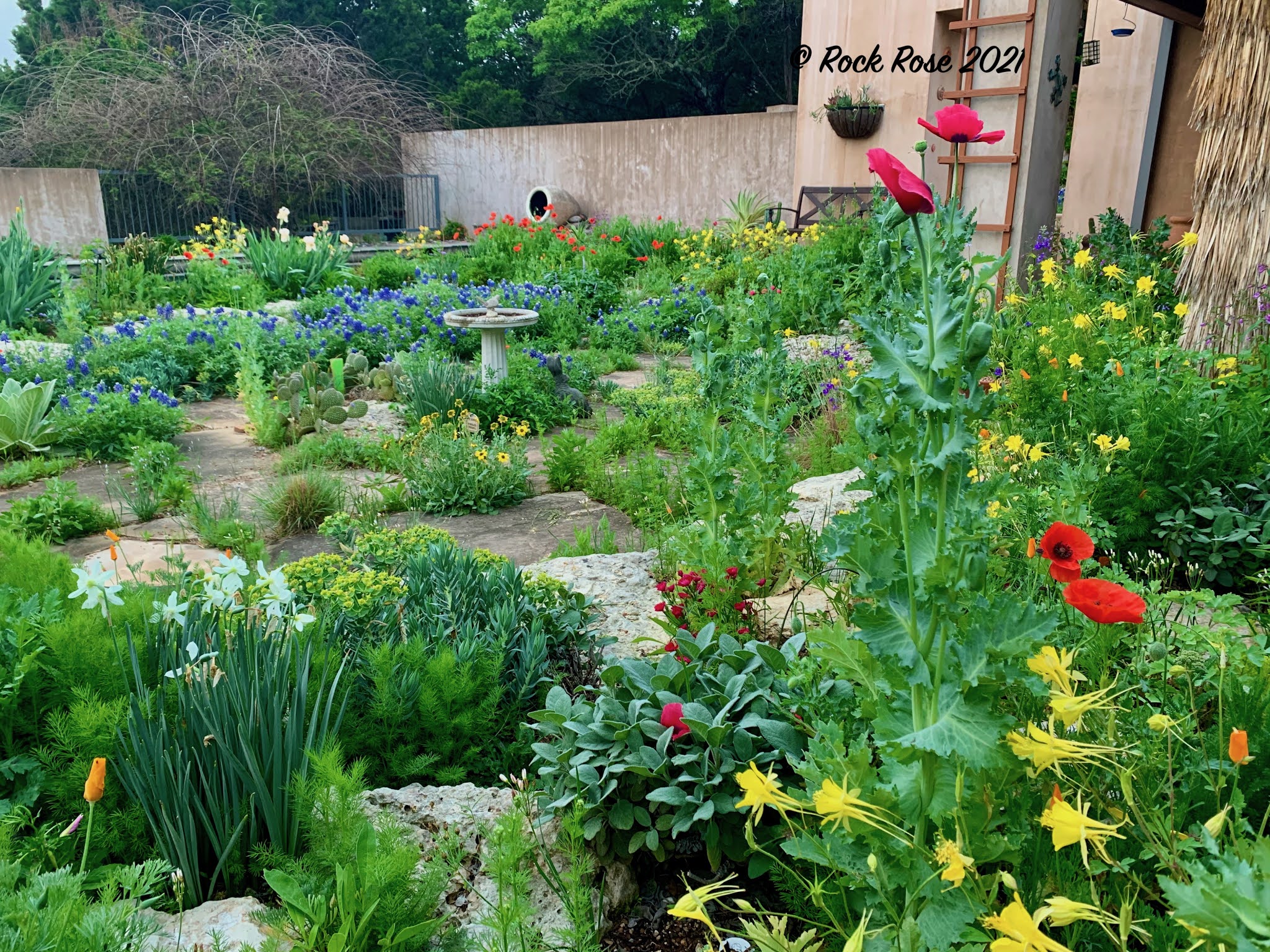
The only step down is along the front and even here it requires some agility as a Gulf Coast penstemon, Penstemon tennuis, has seeded right in the middle of the two stones. How could I possibly pull it when it was so happy there. I love this penstemon but it is prone to root aphids, placed there by ants who farm its honeydew. They are not easy to control and will kill the plant.

A few plants have been with me since the beginning and one is the chocolate daisy, Berlandiera lyrata, 

Compact in the early weeks it does eventually become rather rangy. It has only seeded in one other place and I suspect this is because I usually cut it back part way through the season and the new seed heads may not have time to mature. 

Mullein, may be considered a weed by many but I love its beautiful form over the winter before sending up a tall flower spike with yellow flowers. It is also a favorite of the bees. Many may seed but only a few will be chosen. This was a lucky one on the lower level.


In early spring bluebonnets can really take over and I'm afraid this year I have let rather too many and some of the plants growing beneath have suffered. A single bluebonnet plant can spread to cover 3' and is better suited to a meadow setting.


Hinckley's yellow columbine. Here there and everywhere as usual.


 It is always interesting to watch how plants grow and move. A large cluster of bee balm was gradually evicted by this yellow iris, so that now there are only a few plants left. Time for the iris to be divided and passed along nd maybe the bee balm will move back in.


 I always let the corn poppies grow wherever they wish. Easy to pull out and something will always take their place later.
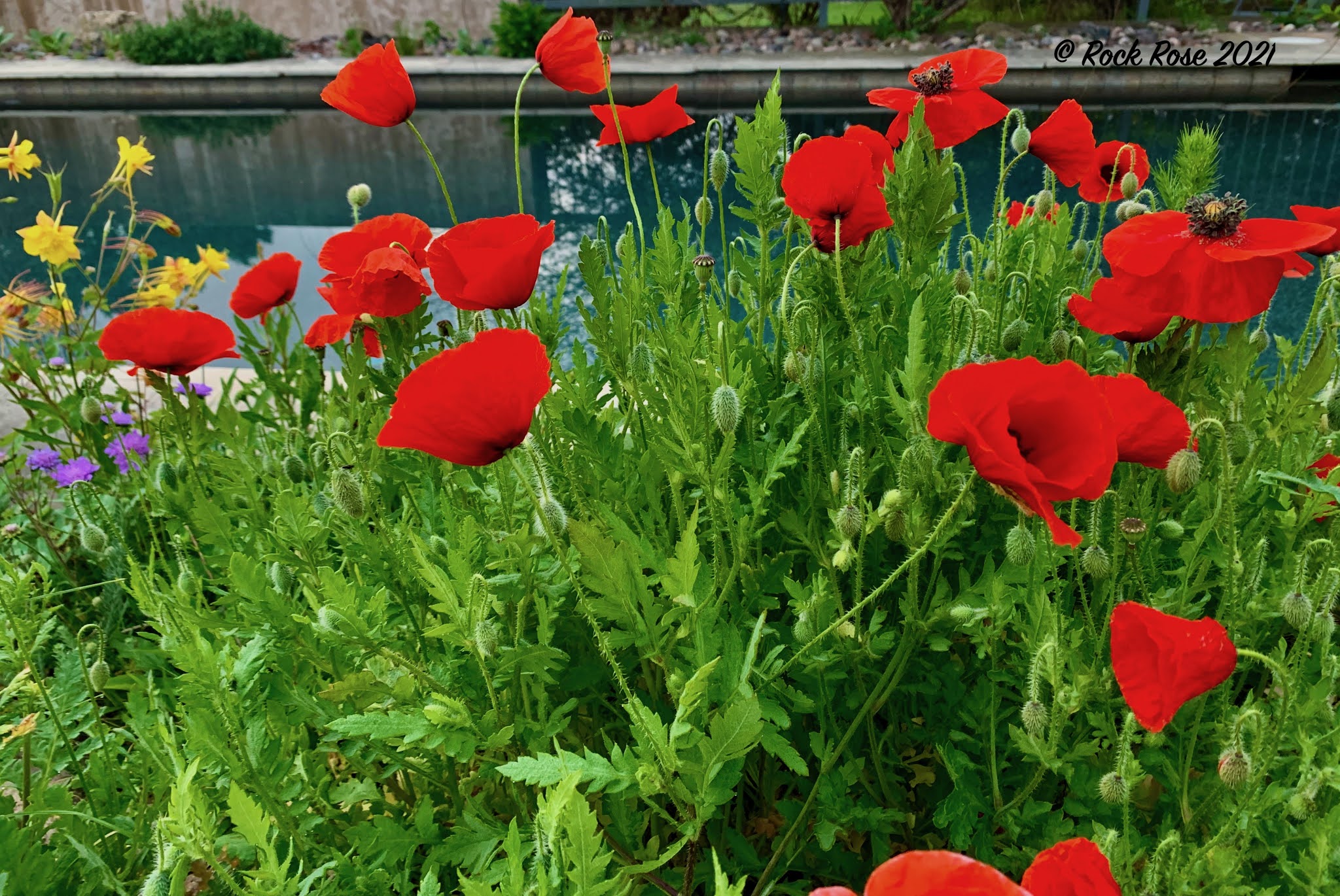
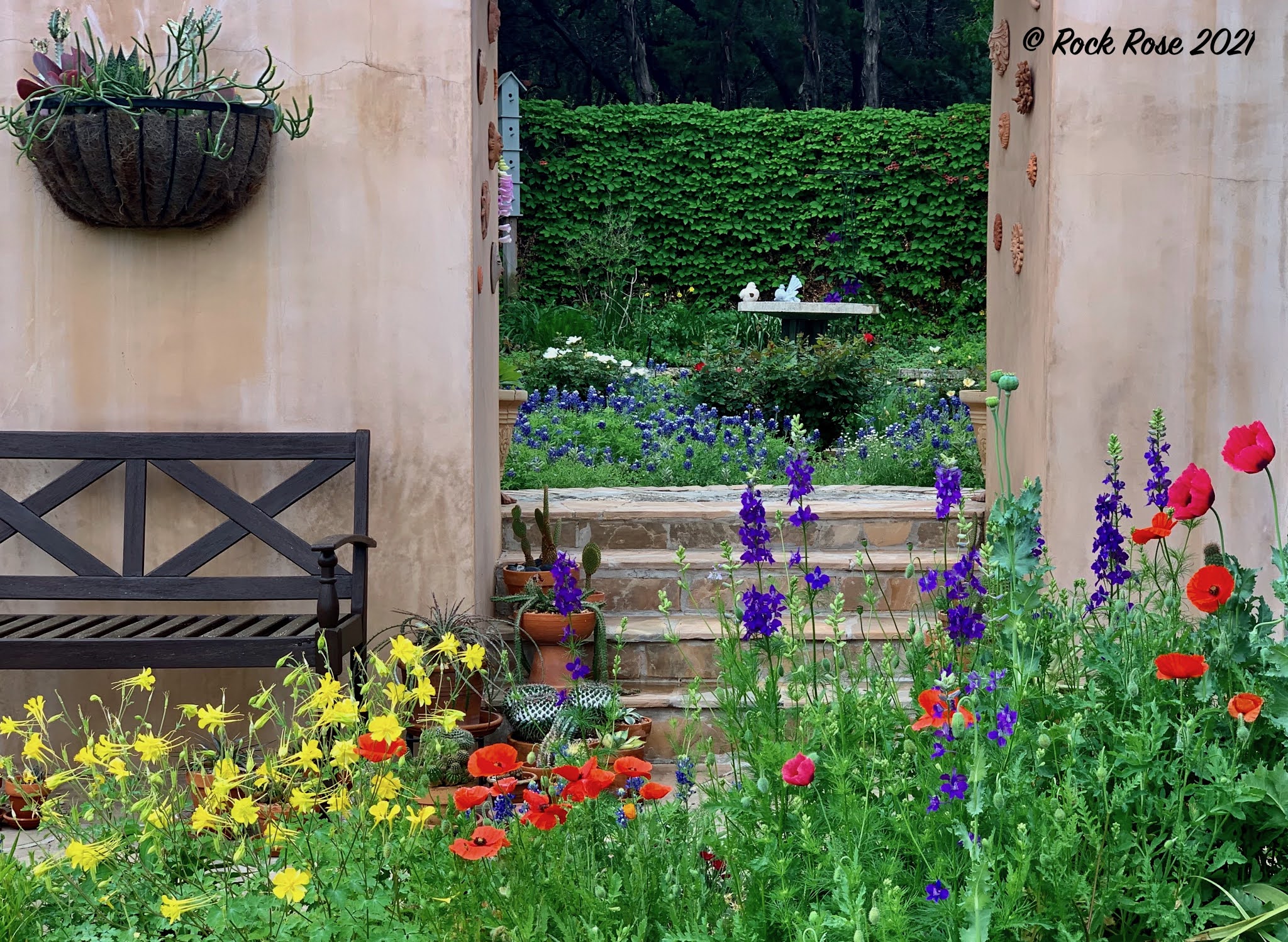
One of my favorite views is standing in the sunken garden and looking up to the Sun and Moon Archway. A mix of columbine, larkspur and poppies.
 

The gopher plant, Euphorbia rigida, has flowered and gone to seed. Some of the longer leaves have been removed to leave a small cluster of seed heads for seed saving. Nigella hides the leaves of the faded daffodils above the  mealy blue sage and larkspur.
 

Late April and the wine cups begin to bloom and spread, and spread and spread! Frequent trims will keep them in order. 

There will be a few plants missing this year and they will be missed. Two beautiful Pride of Barbados were lost to the freeze. The seed had appeared from nowhere and we had several years of their summer blooms. There is however, a very small one growing between two of the ledgestones and possibly in a more favorable place. 


It's time to get out there and remove some of the more boisterous residents in the sunken garden.

Tuesday, May 21, 2019

THE TEXAS TWO STEP AND THE CHELSEA CHOP

Having a cottage-style garden is one of the most difficult gardens to have even though many say it is the easiest. It isn't just a matter of throwing out a few seeds and waiting for them to flower. It is trying to create a balance between those annual plants and perennials which carry the garden through the remaining months of the year. In Texas, because we have such a long growing season, a cottage garden will go through many changes and must be helped along at every step.  Texas Two Step is my term for that time when annuals have done their thing, set their seed and must now be pulled for tidiness sake. You sow them, you gather them.
Take this area of bluebonnets, a beautiful sight back in March.


Not looking quite so attractive by mid-May. This annual plant has made and thrown its seed and the dried, crispy remains of the plant must be removed for neatness sake. It's time for the Texas two step.


Having bluebonnets is a labor of love, but isn't all gardening. I have at least 8 areas of dried bluebonnets that I need to work on over the next week or so-if the weather would just cooperate. A stroll around the garden this morning made me realize that I won't be doing much of that today unless the sun comes out and pops those seed heads. But, I will be snipping some of the almost ready heads and storing in a brown paper bags or boxes until the fall.
But first up for the two step this week were the poppies. Those of ten thousand seeds. I'm guessing that like many wildflowers their seeds lie dormant in the ground waiting for me to disturb the soil, just like the poppies in the Flanders fields following WW1, so despite the fact that I have plums to reduce their numbers next year I am sure they will be back.
If you want these, and I do.


Then you must wait for this and hope to catch a few of them. Brown paper bags at the ready!


I am serious about collecting some of these this year because of a long term project we began two years ago. That of converting our septic field into a wildflower meadow. When the field was originally done I ordered 2 bags of wildflower seeds from Native American Seed with instruction for them to be added to the spray mix they use to cover the field. It wasn't enough to tell my builder and give him the bags with instruction for them to be put in the tank before they spread. It was never done.  I would plant seeds in the fall but nothing ever grew and then I discovered that the soil was probably to rich for them. For the past 3 years we have mowed and bagged and last fall I threw out blanket flowers and bluebonnets. It worked. These and so many more wildflowers showed up this year.

May 2019 on the septic field
The next Two-Step with be with Nigella,  Love-in-a mist. A cottage garden must have these.


Their seed pods put on a pretty good show too, but....


But there comes a time when they must be pulled too.

And the herb garden will hopefully take on a tidier appearance as I remove the parsley and cilantro once the seeds are ripe.


It's Chelsea Flower Show week and many gardeners in England adhere to the old rule of cutting back perennials by half at this time. The practice is known as The Chelsea Chop. I have quite a few plants that will get this treatment over the next couple of weeks. The roses, salvias, Mexican marigold mint, Copper Canyon daisy, mealy blue sage, the mint-I may even pull that out completely, oregano, basil, All of theses if left to continue growing will swamp the garden. I want them to look good right through to the fall. A little cut back will help them do that-and some summer rain.


Saturday, April 13, 2019

I COULDN'T DO IT WITHOUT HER

It is often said that mother nature is no gardener but today I will sing her praises as I share with you some of the things she gets right. Just look how she planted this mullein , Verbascum thapsus, in my English garden. It's as though she thought the expanses of gravel needed just a little dressing up. How about a few bluebonnets sprinkled here and there and a grass or two. Isn't that better?


And another fine specimen at the bottom of the vegetable garden steps. What is not to love about those beautiful sage-colored velvety leaves.


I will admit that she tries to have me grow more than I actually need and I am choosy. They must meet a certain criteria if they are to stay, like a  nice even rosette of leaves with few blemishes.
Mullein were introduced into he USA in the 1700s and are pretty widespread throughout the country. They also appear on the invasive list although I rarely see more than a few scattered around where I live. In the 80s we hiked with a Navaho guide into the ruins of Betatakin, and she told us that Native Americans used the leaves as baby diapers. In Texas it is known as cowboy toilet paper. As a biennial it reaches the rosette stage during the first year of its cycle and then sends up a tall flower stalk with pretty yellow flowers. Although, some time in Texas it achieves both stages within a year.


There is no better place to see her handiwork than in my sunken garden. Toadflax, Nuttallanthus texanus, is everywhere this year and one special clump has me won over that this is a worthwhile plant to have in the cottage garden, particularly if you can get it to seed en masse.


There are so many plants in this area that have self seeded, poppies, mealy blue sage, Brazos penstemon, columbine, grasses, skullcaps and even the delicious chocolate daisy. I never know from one year to the next what will be where, but rest assured, they will be there.


A visitor to the garden this past weekend commented to David, out of my earshot, that there didn't seem to be very many vegetables in my vegetable garden. I could have put him straight about the change-over season, when winter crops such as kale, cabbage, broccoli and peas reach the end their lives, to be replaced by the summer vegetables. So far I had only planted some tomatoes and peppers. But he did have a point as many of my beds are filled with those same poppies as grow in the sunken garden.


And then there are the cilantros and parsley plants which I allow to go to seed every year and repay me by filling in the beds with new plants each winter.


I rather like the way she planted the pink primrose at the corner of one of the vegetable beds. Most would rip this plant out immediately because it does have a tendency to spread everywhere. I'm that different kind of gardener.


and this blanket flower in the pathway between vegetable beds.


In the front courtyard I will have to take some action against the numbers of liatris that are showing up everywhere. I tried to gather the seed in the fall but much escaped and is now seeding heavily in the gravel. Most of them will be removed but this is one of the lucky ones which, in a previous year, found a permanent home.


But I am truly excited to see many seedlings of this little plant, Colorado Venus' Looking Glass, Triodanis coloradoënsis. Two years ago the flower showed up in a hole in a rock I had brought in from another area of the lot, and is now starting to spread itself around the garden. It is a member of the bluebell family and endemic to the Hill Country fo Central Texas. A delicate little beauty which I am sure to blog about when it starts blooming in a few weeks. A perfect little rock garden plant.


All thanks to Mother Nature.

Friday, November 9, 2018

THE WAR TO END ALL WARS

16 million people died during the First World War. As well as 8 million horses and many mules and donkeys. The 'war to end war', penned by HG Wells, became a familiar catchphrase during the war although we know now that the words of David Lloyd George, "This war, like the next war, is the war to end war" are more appropriate.  Sunday marks 100 years since the end of WW1. At the 11th hour on the 11th day of the 11th month in 1918 French, British and German leaders met in a French field and signed the armistice.


Poppies grew in the disturbed ground of the battlefields and became a symbol of Remembrance. This year, the poppy will be the centerpiece of displays throughout Europe, as well as some areas of the USA.

The 2018 movie, They Shall Not Grow Old, which brings us never before seen footage, is a tribute to all those who served and to those who lost their lives. It tells their story in all its brutality. Lest we forget.


Saturday, April 1, 2017

A POPPYLICIOUS MOMENT

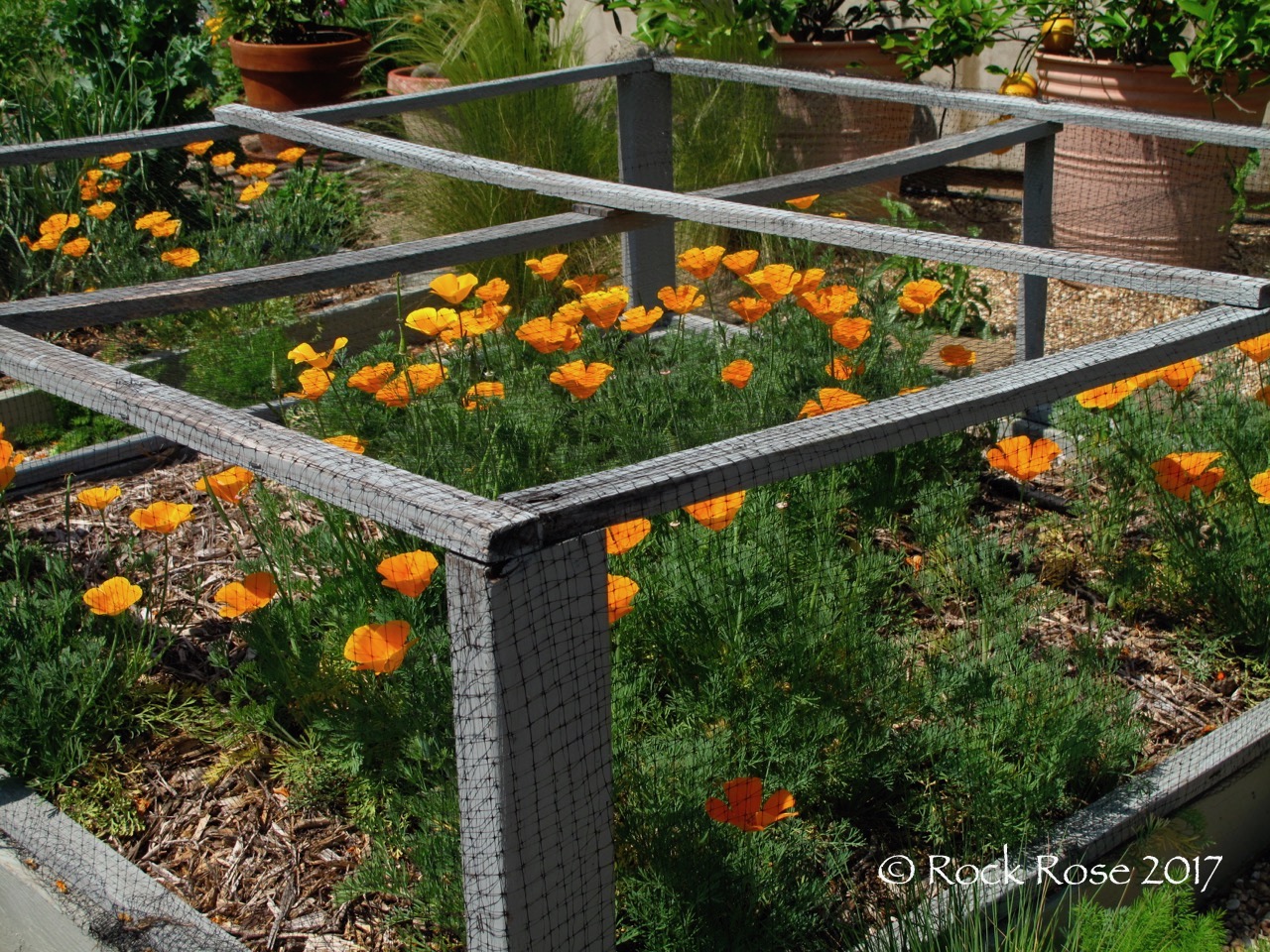
California is not alone in its display of poppies. Look at this clump of California poppies, Eschscholtzia californica, growing in the upper level of my sunken garden. It is probably a seedling of the variety 'white linen' which I purchased many years ago. It still pops up occasionally.


Last year there was a small clump of white poppies in the corner, this year there are even more. It wouldn't be fair to say that I like the white one better than the orange one, but the fact is the orange one seeds with abandon, the white one rarely.
Here they re growing in a fallow bed in the vegetable garden. I shall need that bed soon to plant beans.


But there are plenty more growing in other places, which if I leave, will be enough to insure a fresh crop next year. It will just be a matter of trying to collect the seeds before the seed capsules open.


If you haven't realized already I am very tolerant of plants seeding themselves. So there are always plenty of corn poppies, Papaver rhoeas,  flowering in competition with the California poppies.


And more intruders in the vegetable garden.


But where are the Lauren's Grape poppy I seeded this year. I have tried to grow that variety several times and have always failed.

Sunday, March 19, 2017

THE GREENING OF THE SUNKEN GARDEN

David commented on a marked change in the sunken garden following rain and warm temperatures. If I don't get around to doing some culling we won't even know the sunken garden is there. But what would I do without all my little self seeders.


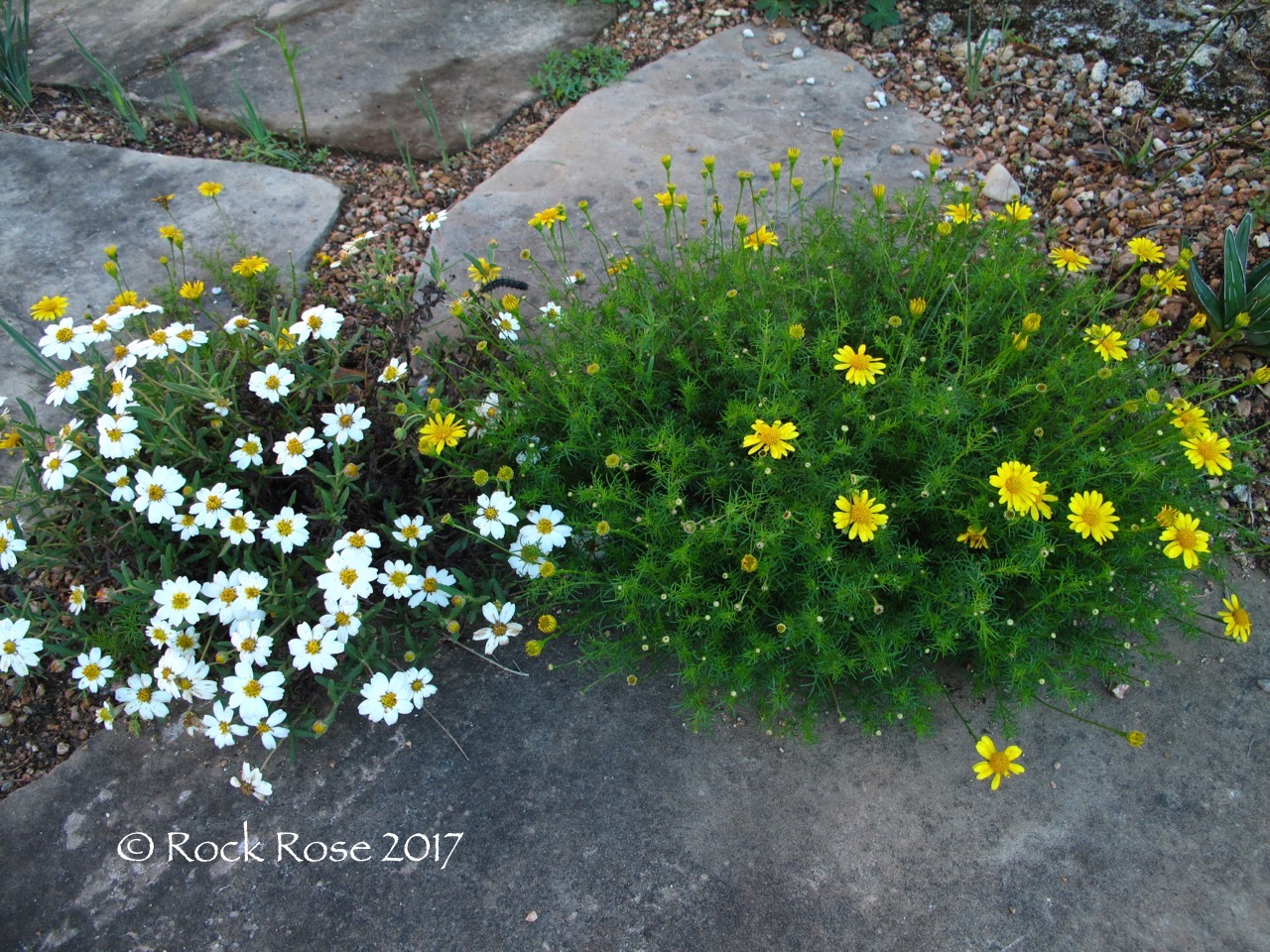
The blackfoot daisies,  Melampodium leucanthum, and the dahlberg daisies, Thymophylla tenuiloba.


The Indian blanket flowers, Gaillardia pulchella,   and the sedum, Sedum potosinum.


the gopher plant, Euphorbia rigida. I didn't really want it down below in the sunken area but here it will stay.


The blue eyed grass, Sisyrinchium angustifolium.


The chocolate daisy, Berlandiera lyrata. This one has been here for years enjoying a cool root run under the sandstone pavers.


The California poppies. I am so glad this white one is back again this year. Eschscholzia californica.


But there are plenty of orange ones too.


And the first of the corn poppies, Papaver rhoeas.


There are a few seeders who can be a little annoying. The false garlic, Nothoscordum bivalve, with the white flowers and yellow centers and wild onion, Allium canadense, with pale purple flowers. Both are pretty but are the devil at seeding themselves and once the bulb forms they are not so easy to root out as the bulb works its way deep into the soil. This year I struck a deal with them. They can flower but they can't set seed!


We may not be able to grow those lovely pom-pom alliums but we have our own and I love the flowers.

Nothoscordum bivalve


Allium canadense
They make a pretty addition to a rock garden. All these plants seed freely in the sunken area of the garden. Because the specs between the pavers are less than 1" it would be difficult to plant without self sowing plants.