My Blog List

Showing posts with label poppies. Show all posts

Tuesday, April 27, 2021

SPRING IN THE SUNKEN GARDEN

 The area between the house and the pool was a blank canvas and perfect to create a sunken garden. The inspiration was partly inspired by the many sunken gardens I have visited in England, my grandfather's garden where I spent my teenage years and the sunken courtyard at the Lady Bird Johnson Wildflower Center. Many of the rocks dug up during the building of the house were saved in order to create a foundation wall around the sunken area. The floor is Arizona sandstone over decomposed granite. I'm sure the builder was happy not to have to cart those rocks away. Nature has done much of the planting and I am happy for that although it does create considerable work keeping it under control. But, both David and I delight in all the blooms that appear-as if from nowhere. The scene changes from week to week and from year to year. Spring is the most floriferous time.
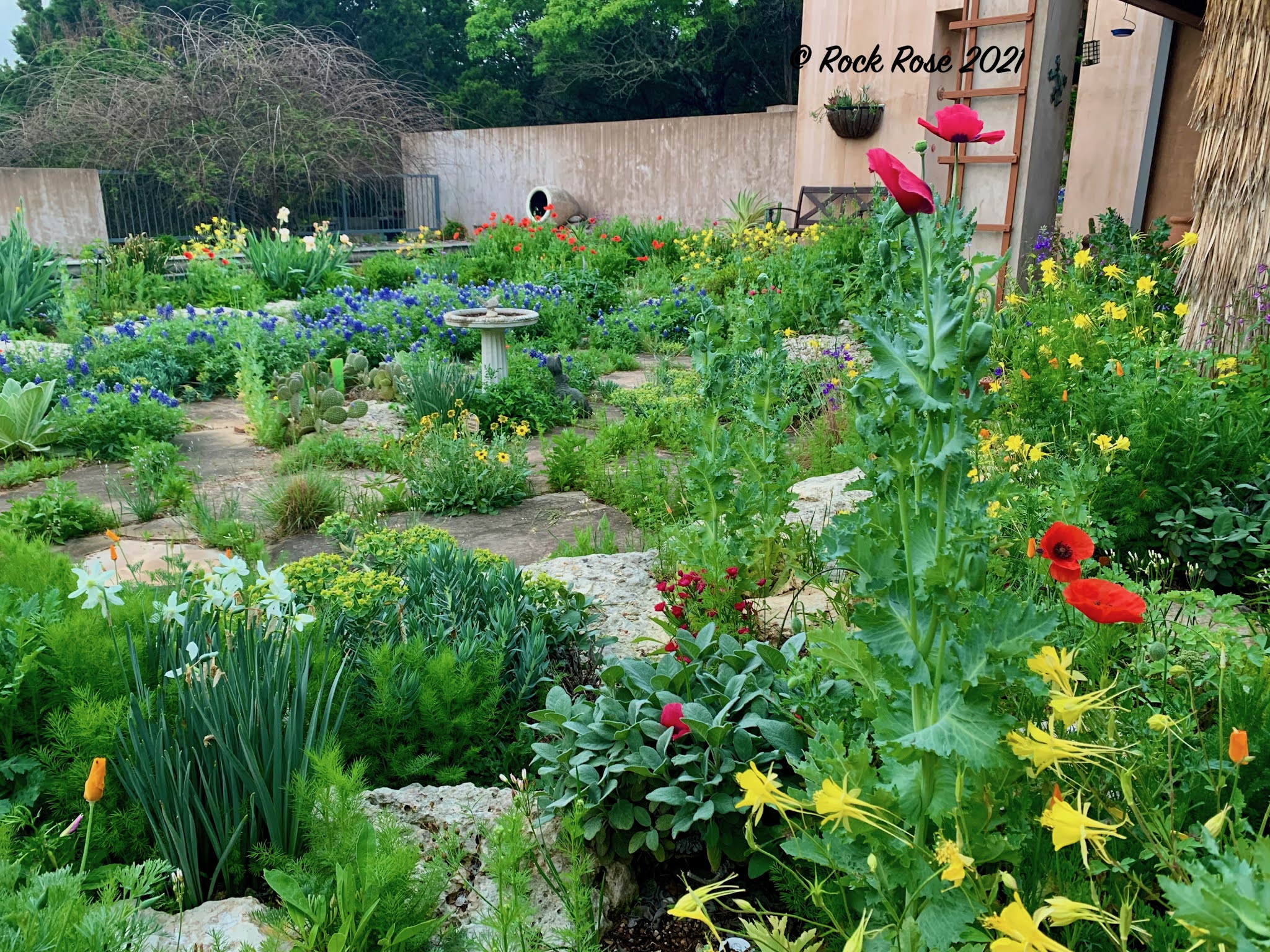
The only step down is along the front and even here it requires some agility as a Gulf Coast penstemon, Penstemon tennuis, has seeded right in the middle of the two stones. How could I possibly pull it when it was so happy there. I love this penstemon but it is prone to root aphids, placed there by ants who farm its honeydew. They are not easy to control and will kill the plant.

A few plants have been with me since the beginning and one is the chocolate daisy, Berlandiera lyrata

Compact in the early weeks it does eventually become rather rangy. It has only seeded in one other place and I suspect this is because I usually cut it back part way through the season and the new seed heads may not have time to mature. 

Mullein, may be considered a weed by many but I love its beautiful form over the winter before sending up a tall flower spike with yellow flowers. It is also a favorite of the bees. Many may seed but only a few will be chosen. This was a lucky one on the lower level.


In early spring bluebonnets can really take over and I'm afraid this year I have let rather too many and some of the plants growing beneath have suffered. A single bluebonnet plant can spread to cover 3' and is better suited to a meadow setting.


Hinckley's yellow columbine. Here there and everywhere as usual.


 It is always interesting to watch how plants grow and move. A large cluster of bee balm was gradually evicted by this yellow iris, so that now there are only a few plants left. Time for the iris to be divided and passed along nd maybe the bee balm will move back in.


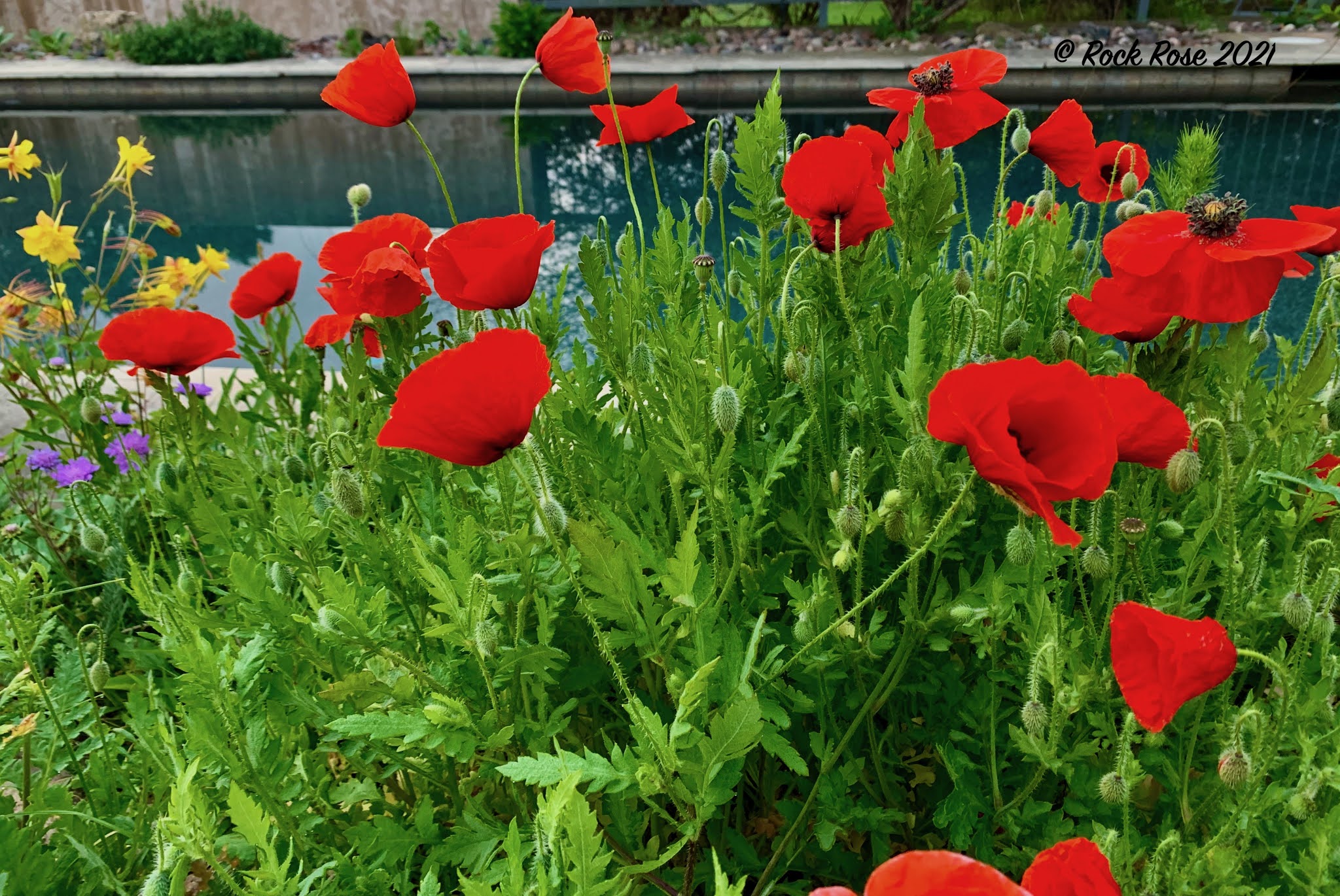
 I always let the corn poppies grow wherever they wish. Easy to pull out and something will always take their place later.
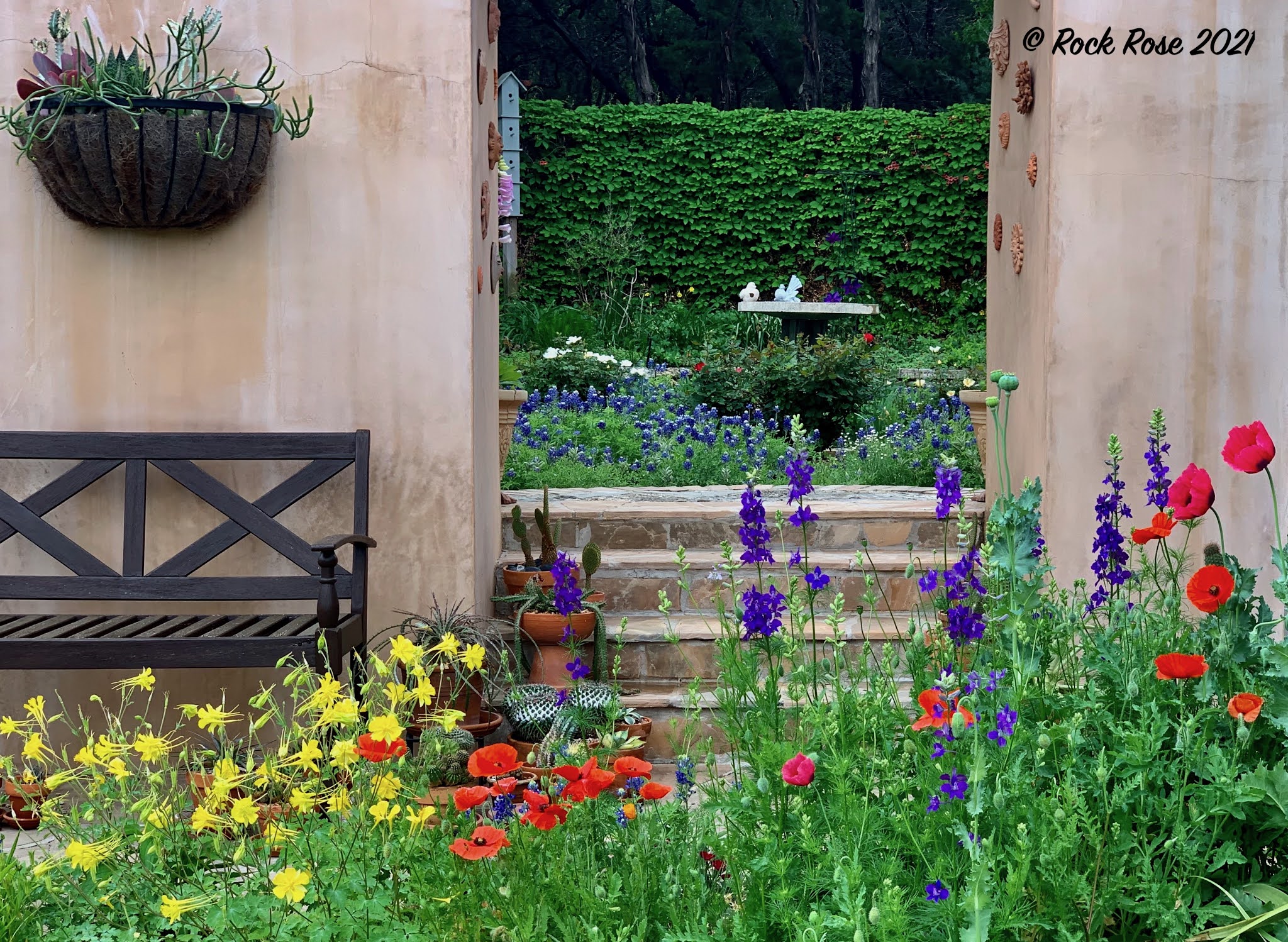
One of my favorite views is standing in the sunken garden and looking up to the Sun and Moon Archway. A mix of columbine, larkspur and poppies.
 

The gopher plant, Euphorbia rigida, has flowered and gone to seed. Some of the longer leaves have been removed to leave a small cluster of seed heads for seed saving. Nigella hides the leaves of the faded daffodils above the  mealy blue sage and larkspur.
 

Late April and the wine cups begin to bloom and spread, and spread and spread! Frequent trims will keep them in order. 

There will be a few plants missing this year and they will be missed. Two beautiful Pride of Barbados were lost to the freeze. The seed had appeared from nowhere and we had several years of their summer blooms. There is however, a very small one growing between two of the ledgestones and possibly in a more favorable place. 


It's time to get out there and remove some of the more boisterous residents in the sunken garden.

Saturday, January 23, 2021

MY GARDEN HAS INSOMNIA

When I lived in Eastern Canada gardeners were well assured of having a respite during the winter. It was a time when browsing through seed catalogues and placing an order was the highlight of winter gardening. Seed starting came next, geared towards being able to plant frost sensitive flowers and vegetables outside by May 24th. The garden slumbered under a thick layer of snow.

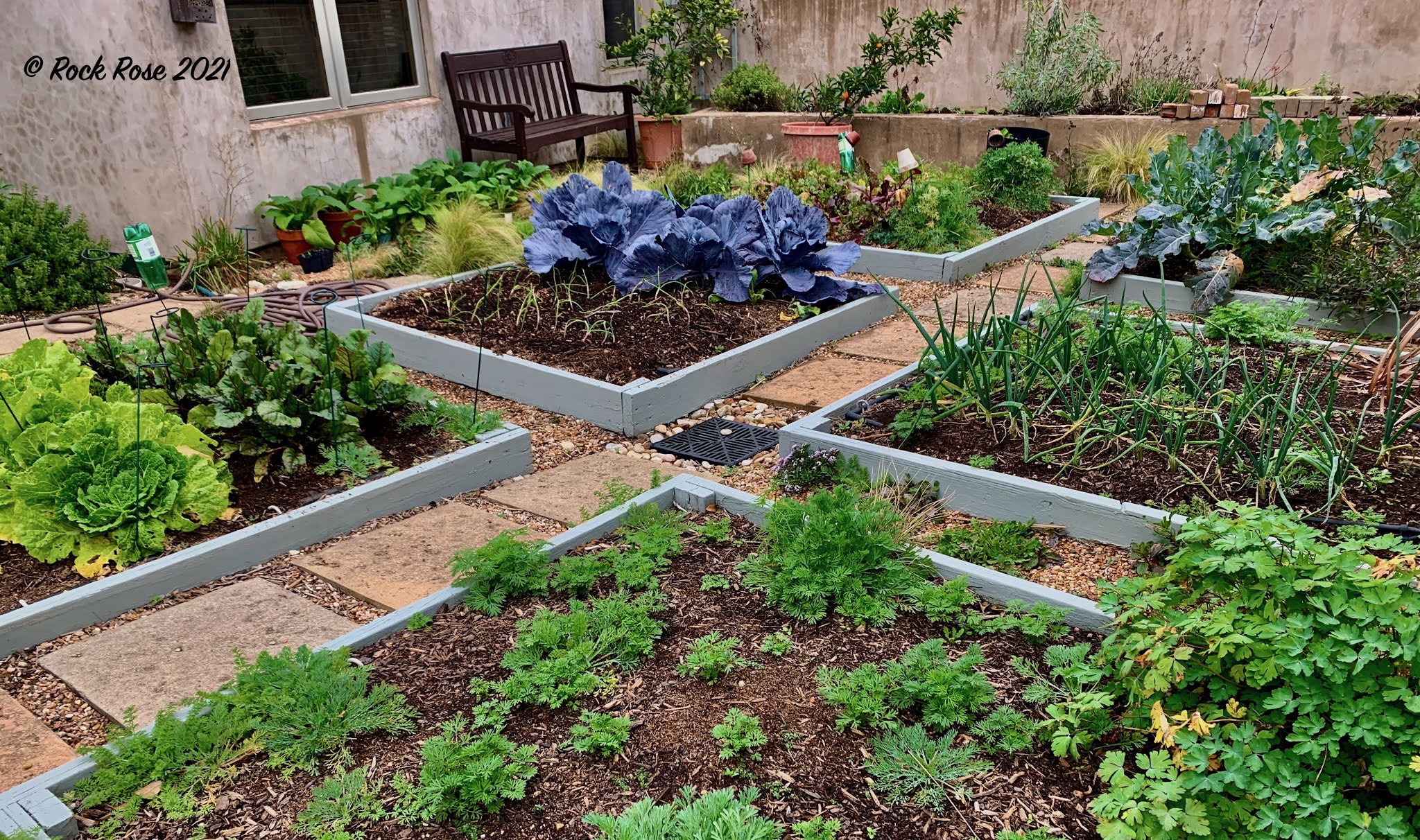
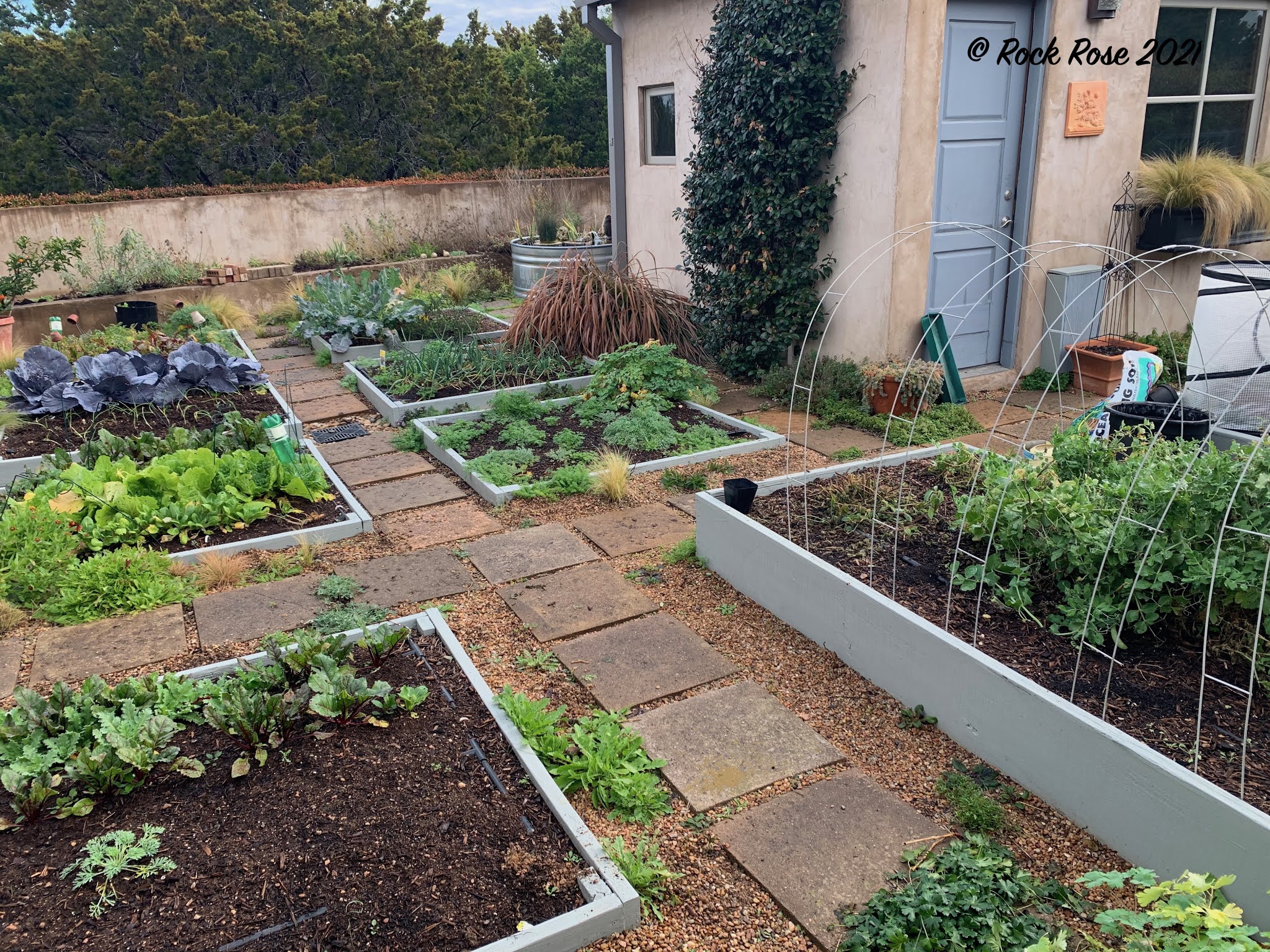
Now here I am in Texas with its unpredictable climate and often mild winters. Because I knew there was to be no winter travel this year it gave me the opportunity to be more diligent about planting a winter vegetable garden. It has been a great success.


We have had an unusually mild fall, although frost has made an appearance on several occasions necessitating the covering of my peas.  I was  determined to keep them going in order to get an early spring crop, but because of mild weather was rewarded with a winter crop. 


We have already devoured two crops of broccoli, pak choi and a succession of chard and kale not to mention peas, carrots and beets. All these plants are contained in beds in my vegetable garden. Even so there are many intruders in those beds chiefly larkspur, California poppies and the most successful seeder of all Love-in-a-mist. Known as hardy annuals this is their time to germinate, growing over the winter in time to flower in the early spring. I regret I have allowed them to take over. 


Those spaces between the pavers create an ideal spot in which seeds from last years flowers settle and particularly with Love-in-a-mist it seems every one germinates.  

And they found an even better home in the vegetable beds among the cilantro.

And poppies too.


And bluebonnets. Knowing how they can cover a diameter of 3' I may need to remove the one in the center of the path.

Every year I vow to keep those paths free of these opportunists and every year I relent which means even more will arrive every year. 

Blanket flowers, Gaillardia pulchella give me great difficulty. That is because they behave like perennials and these rather shop-worn plants are beginning to flower again. Soon they will have to go because they make a tripping hazard but I will leave them in case the bees come by looking for nectar or pollen. There are hundreds of seedlings just getting going.

It is my firm intention this year to reduce their numbers before they make it impossible to walk down the paths. 

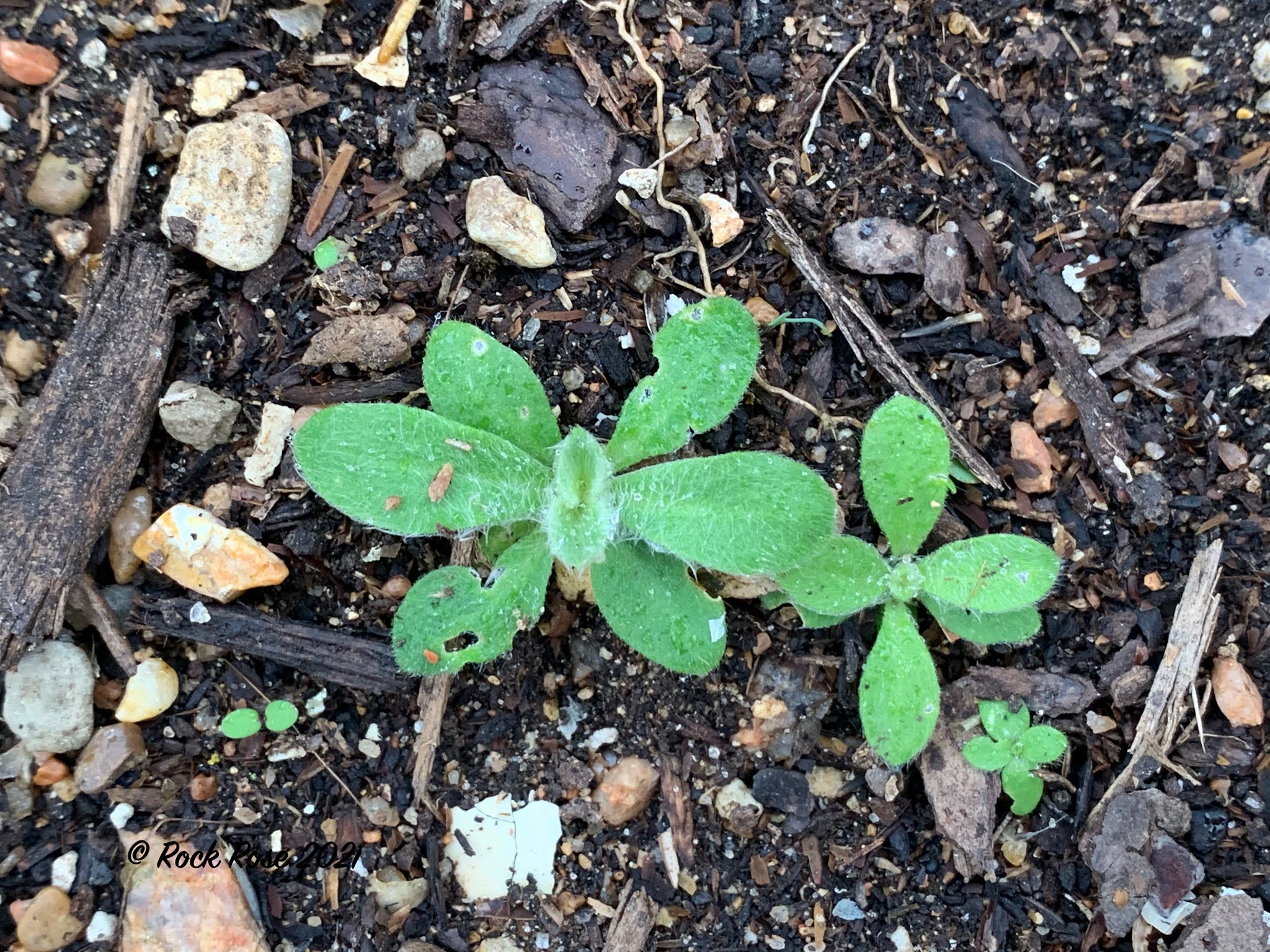
Some plants don't seed quite so prolifically  so I am happy to see a few rose campion, Lychnis coronaria, just beginning to develop. I plan to remove them from where they are growing at the edge of the path to a more prominent position.

 Those that are a little larger will have to stay. A happy trio of rose campion, Lychnis coronaria, Gulf coast penstemon Penstemon tennuis,  and alyssum, Lobularia maritima. They are in the herb garden and will stay there.

Verbena bonariensis by the hundreds! I have already shared many and have potted some up in case of a some weather mishap. Last year's plants are looking strong and healthy but there is much winter to come yet. 

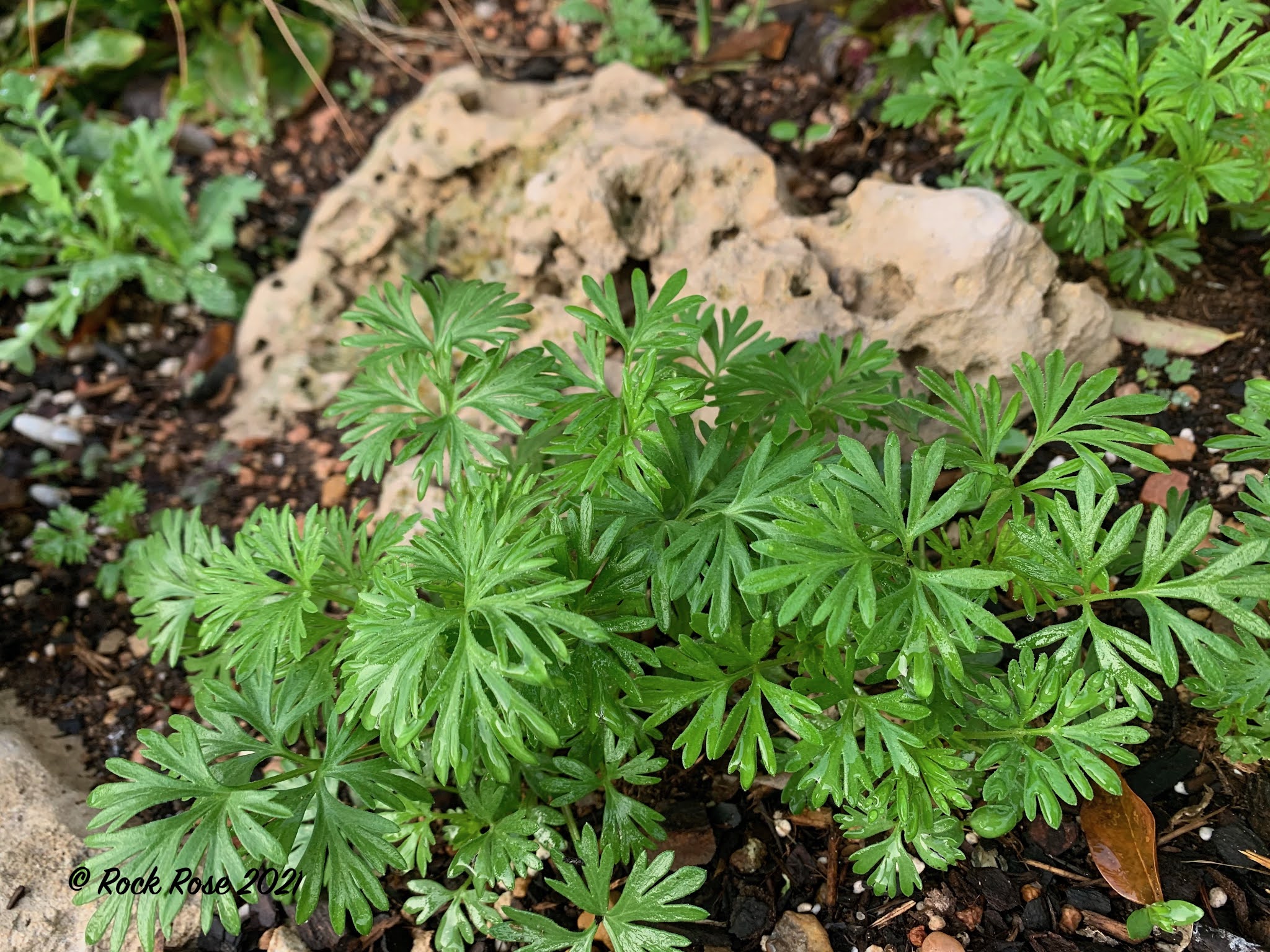
 Larkspur seedlings in the sunken garden. A little thinning required. They won't grow as large as the ones in the beds because the soil is poor. The same being true of love-in-a-mist.

Here is a plant that hasn't slept in 2 years, Scabiosa. One of my favorites in the rock garden becaseu its foliage is never touched by insects.

Someone once said my weeds were a lot different from theirs. The fact is a weed remains something that is growing in the wrong place and I have plenty of those.


Saturday, February 15, 2020

YOUR GARDEN STYLE

I have met people who never look back. Maybe it is a function of age but I think mine was triggered by a box of photographs I inherited and by a sudden interest in genealogy. And, as a life-long gardener, I began to realize my younger self might have influenced my style of gardening.


From a very young age I loved wildflowers. You see me here with a bunch of straw at hay making time. At a similar age, on holiday in Devon, I wanted to pick the big white bindweed flowers growing along hedgerow. My father chastised me telling me I must leave them for others to enjoy! Bindweed? I ask you !! And there was the time my parents thought of taking over the lease on a pub in the countryside and I was thrilled to bits because the bank alongside the pub was full of primroses. It never happened... but I know I would have been thoroughly happy living where I could walk the country lanes. Making daisy chains, searching for four leaf clovers, marveling at the tiny flowers of scarlet pimpernel, the cowslips, buttercups, sucking the honey from the purple clover flowers, celandines and marsh marigolds growing in the brook and the seed heads of shepherd's purse. I have plenty of that on my septic field right now.  It was always about the native flowers growing around me.

Fast forward to arriving in Texas in early February1968, just in time for the wildflower season. This time no one telling me not to pick the flowers!


And I am still that lover of wild flowers today and it is reflected in my gardening style. It is a free-for-all cottage garden style.

The sunken garden May 2019
It's why I love the little puffball flowers of Barbara's buttons, Marshallia caespitosa.

April 2019
 The common corn poppy, Papaver rhoeas,  flowering in profusion.

Sunken graden 2019
 And weedy Love-in-a-Mist, Nigella sp.
And a summer flower of the English hedge row. Foxglove Digitalis purpurea,. I have tried growing them from seed with only modest success so I now buy them in 4" pots,early in the year, potting up as they grow larger until I can finally move them into their larger pots. I think they are going to bloom earlier this year as I see a flower spike starting. What color will they be? I have no idea although they say you can tell by looking at the underside of the leaf. If that is the case they will be all white.

February 2020
Front courtyard April 2019

And the delicate blooms of Blue Gilia Gilia rigidula

March 2019

And of course our state flower the Texas bluebonnet.


And it can all become a little unruly after a while and that is why this year some changes are in order.

Herb garden May 2019
 I must endeavor to keep the pathways clear of all but the smallest and tidiest of plants. And that means alyssum, narrow leaf zinnias and possibly the daisy fleabane. Possibly the odd tidy grass and if there is space enough to walk by, the Verbena bonariensis. And I might just allow a few coreopsis and blanket flowers. This is not going to be easy.
For the moment I am excited to look at photographs from last year's spring and to know what is soon to come.

Sunday, November 9, 2014

NOVEMBER 11 2014, A HUNDRED YEARS OF REMEMBRANCE

We are all too young to remember the First World War, which began 100 years ago in August  1914. An estimated 10 million lives were lost on those battlefields. Every year we mark their sacrifice on November 11, or Armistice day as it was first known, that day on November 11th. 1918 when the cease fire was announced. 10,000 men died or were wounded on that last day of the war.

The red poppy has long been associated with this day. It came as a surprise to me that an American lady was responsible for the idea of the poppy being the symbol of remembrance, which many wear on this day, because I never see I never see poppies being sold here or people wearing them.


Poppies grow all too easily in my garden as they do in the fields of Flanders, long immortalized in the poem, by Canadian physician John McCrae, In Flander's Fields. They can lie dormant in the soil for years and germinate when the soil is disturbed. McCrae wrote his poem after burying his friend, who died at the second battle of Ypres, and where the poppies that grew around the grave made a deep impression on him.

In 1918 an American school teacher, Miss Moina Michael, was a volunteer in the YMCA in New York, when she read McCrae's poem in the Ladies' Home Journal. Inspired by these final words of the poem


'To you from failing hands we throw the torch;
be yours to hold it high.
If ye break faith with us who die, 
we shall not sleep,
though poppies grow in Flander's fields'


and the photograph of ghostly soldiers and poppies, she responded by writing her own poem which included the following lines.

We cherish too the poppy red,
That grows on fields where valour led
It seems to signal to the skies
That blood of heroes never dies.

When other volunteers read her poem, they collected $10, and Moina went out and bought 25 red silk poppies which she pinned on the office staff. When the war ended she campaigned the American Legion for the poppy to be the memorial emblem for American fallen soldiers. A French visitor to the convention determined that the commemorative poppy should not be confined to America. She went home to France and arranged for the making of the poppies by French war widows. 9 million poppies were ordered for the first Poppy Day to be held on November 11 1919. The tradition continues to this day.


 I remember well the selling of the poppies, by service veterans, every year. They were sold by modest donation. Today's poppies are simpler and made of paper.

There have been special observances this year to mark the Centenary year and they will continue until November 2018, the day the war ended.


Blood Swept Lands and Seas of Red. Outside the Tower of London, 888,246 ceramic poppies, representing the number of British who died in WW1, have been planted in ground.


The three photographs, shown here, were taken by Canadian friends who visited London in September. At that time not all the poppies had been added.

Photographs of the completed display can be seen  here Unfortunately copyright prevents me from adding these images to my blog.
I hope as the clock strikes 11 on this day you with think of those who lost their lives in wars everywhere.


Sunday, May 11, 2014

THE VIEW FROM OUTSIDE

This is the view from the bottom of the steps outside the vegetable garden. What's a gardener to do when she has extra plants she can't give away? Why, find a new home outside.


Salvia leucantha has a companion this year, the pink primrose, Oenothera speciosa. Where did she come from I wonder. Well, we all know that little plant. Then there is the spineless prickly pear putting on additional pads this year but no flower buds, as yet. In between there is a galvanized tub with fresh water for the deer. The pink poppies in the foreground were untouched by foraging deer. There's a Mexican mint marigold, Tagetes lucida, just peeking and Mexican feather grass, Nassella tenuissima. They are surrounded by a thick bed of ¼-½" granite gravel. If I was doing a garden again I would create large spaces with this granite with just a few individual plants like this.

Monday, May 5, 2014

WHITE IS A COLOR TOO

I didn't realize how many white flowers I had int he garden until I went out to photograph them today.


The mock orange, Philadelphus sp Natchez is putting on the biggest white show.


Followed by the Anacacho orchid tree, Bauhinia lunariodes.


There's even a single rain lily, Cooperia drummondii, coaxed into blooming by the recent rains.


In the English garden the white knockout rose puts on her first full flush of blooms.


The native blackfoot daisy, Melampodium leucanthum.


Love-in-a-mist, Nigella sativa, with the spiky foliage. A faithful spring returner.


Larkspur,

A single white Shirley poppy.


The multiplying onions, Allium sepa, making a great stand. I think I may mix them in with my other garden flowers next year.


The potatoes are flowering.


And the snow pea flowers mean lots of peas over the next few weeks. I always plant Pisum sativum 'Cascadia' because they are open pollinated and I can save the seeds for next year.


The first pods.


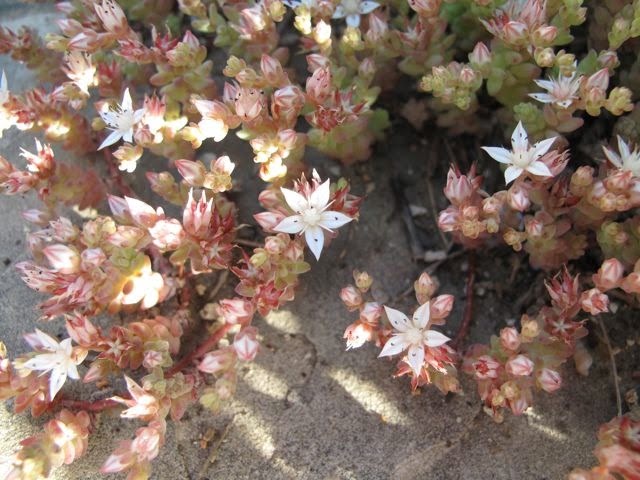
And the tiny star flowered sedum, Sedum potosinum.