My Blog List

Showing posts with label Huernia schneideriana. Show all posts

Friday, October 27, 2023

Ah!! BREATHE. THE GOOD TIMES ARE HERE

 The weather has been a horrible tease this past few weeks. Those of us who live in the desert are anxious for those cool, clear desert mornings and warm afternoons to follow one of the hottest summers on record. We were blessed with a few cool mornings and high temperatures in the 80s and then right back into summer again. Thankfully those 100° days were short-lived and fall is here. I know because my Philippine violet, Barleria cristata, is blooming. The bloom is more to do with shortening days than temperature but the two do go hand in hand.


The Philippine violet is my miracle plant. It was a small seedling from my Austin garden which I potted up in a 4" pot and brought with me. I planted it in the ground 2 years ago tucking it in underneath a Texas Mountain laurel. I thought there it would be spared from the worst of the summer sun and I was right. I wish it had a little more room as it does tend to lean to the east. From one small stem it now has three sturdy branches. every leaf is perfect and a deep shade of green. It does have a drip line to itself so was well watered through the dry summer. 


The stapelias are blooming. This one is Stapelia grandifolia with its rather offensive smell of rotting flesh. Did something die out there in the desert? This is another one of my successful transplants from Austin and it has been having one of the best blooming seasons it has ever had with no fewer than 12 blooms over a period of only two weeks. Who can deny the beauty of the bloom and enjoy for at least a couple of days. The plant hails from South Africa and I was surprised to find it belongs to the milkweed family. Several Tucson gardeners have posted that they grow it outdoors allowing it to scramble along the ground. Away from the house would be a good place for it.

This one is Stapelia leendertziae, also from South Africa. The flower never truly opens but is open enough to emit the familiar odor which attracts flies. Although mine are in pots I think that next spring I will try to establish some cuttings outdoors although I feel they might attract something more than flies. 
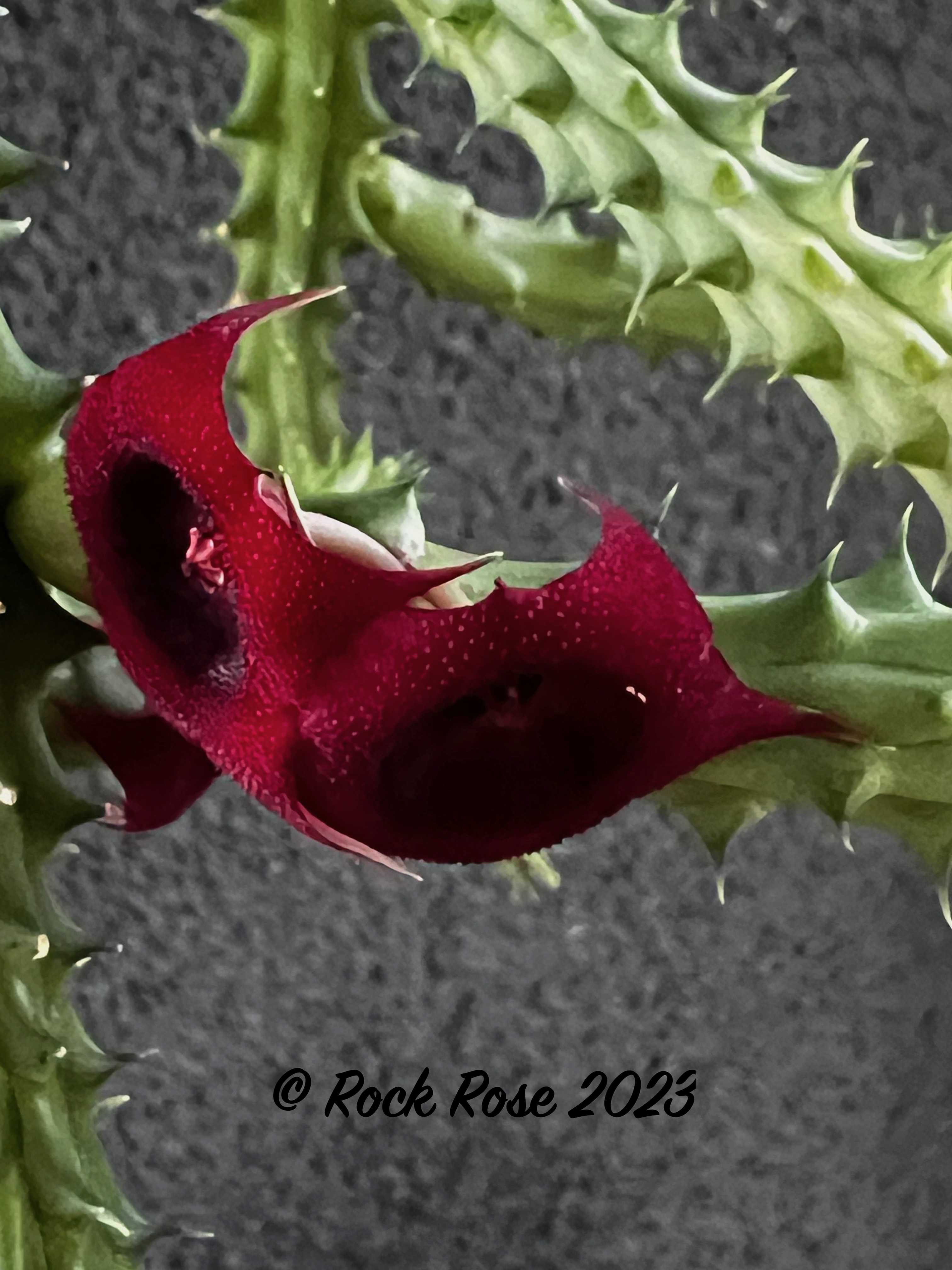
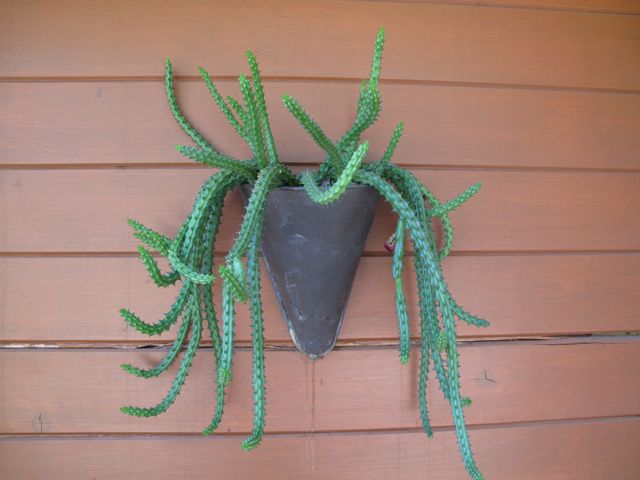
Above is my third carrion flower which is  Huernia schneideriana. Also from South Africa and related to the stapelias. It prefers a similar location being able to scramble along the ground and sending out roots wherever it touches the ground. I have it hanging in pots where it does fairly well although eventually reaching a point where the stems can no longer carry the weight and they begin to shrivel. 


All these plants are propagated easily and can make a great houseplants...until they bloom. 

Some of the aloes are blooming. They are generally the smaller ones grown more for their leaves than flowers. 

The flowers are borne on long slender stems and are rather small. Nevertheless hummingbirds find and visit them.


For gardeners in the desert this is the time when nurseries are bursting with all manner of plants to tempt the gardener. To help them get established we will be praying for our second season of rain, winter rains.

Wednesday, February 10, 2021

A M0RNING IN THE GREENHOUSE

 "I'll just spend a little time in the greenhouse this morning while it is still cold outside" 

That little time turned into a whole day. If only I hadn't let it get so out of hand. I had good intentions when I started to take things inside last fall promising myself that I would keep plenty of space between each pot and nothing on the ground. Suddenly every bit of shelf space was filled, above and below and then the floor started to get crowded out. That pot of dwarf papyrus, the two branches of plumeria, a box of agaves which I had planned to take to Phoenix at Christmas, a bird of paradise I dug out from the edge of the path. Empty pots, pots of soil. No room to move in there. The first job was to move everything outside so I could work on the shelves.

Next was to organize the shelves moving a few things around. There is shade cloth and a cross vine growing over the greenhouse so the only really good sun is at the end. That is where I need to have my winter blooming cactus. Some have already started blooming and some are now making buds. I think they are going to be earlier this year than any before. 


I have several pots of lady finger cactus, Echinocereus pentalophus. All are beginning to make buds. If you aren't familiar with this plant the flowers are the most wonderful Thai-silk pink. But it will be a few weeks yet.

And more and more mammilarias.

I moved this plant up from the lower level and into a more sunny spot when I saw this bloom stalk.

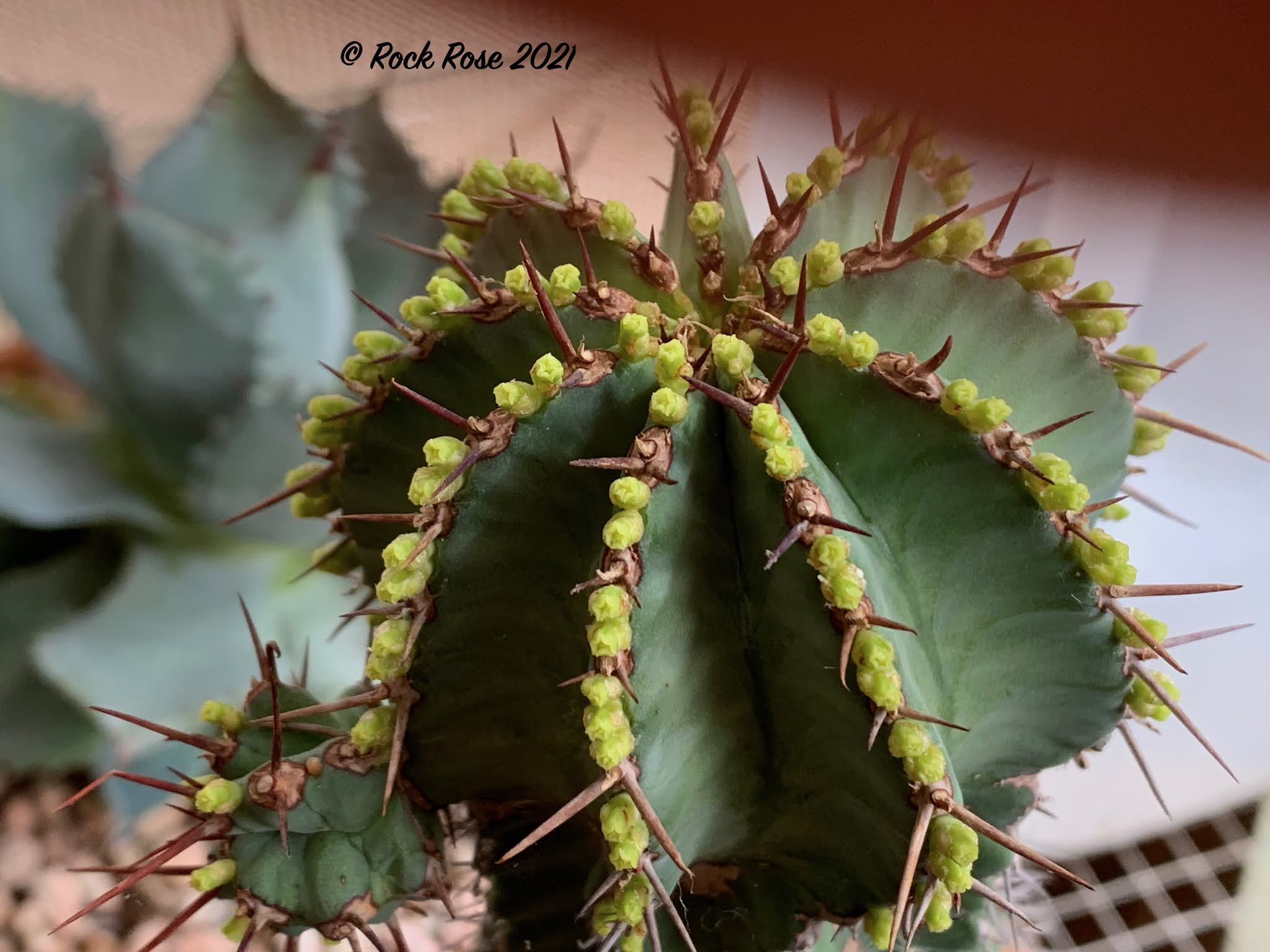
And a euphorbia blooming. You know how tiny their flowers are and if it weren't for the fact that they are yellow you might even miss them.


Finding more scale on some cactus I broke off tidying and got the paint brush and alcohol out. I was not expecting to do that but it seemed like a priority.

I was sad to see I had almost missed these sprays for flowers on the copper Sedum nussbaumerianum. I felt rather badly that they had been under appreciated being on the lower shelf. The plant is rather straggly and needs a complete pruning. Not a job for today.

When I got down to moving the last pot which was on the floor by the door I discovered that the ants had come up through the bricks and into the pot. What next! It was the newly potted bird of paradise which I quickly removed and took outside far away from the garden. Then I put the kettle on to boil. I'll make their life unpleasant. 

I only have 3 orchids left and they are in much need of attention. I heard on a gardening program that an orchid needs at least 4 good strong leaves in order to bloom so there is a good chance that this one will soon send out a bloom stalk. One has a small stalk and the other only 3 leaves. Some nurturing is needed. I knew that orchids like to grow in clear pots. Don't they all come that way from the nursery. Their roots like light as they photosynthesize through them. I don't know why I was anxious to put the other two in clay pots even though they were so-called orchid pots. From now on its clear pots for my orchids. 


I have a couple of hanging baskets. The first is the Huernia schneideriana, which spent the summer hanging in the live oak tree, totally under appreciated. It will probably go back there again next year but will need some trimming as eventually the longer stems start to fail. In Arizona I saw this plant creeping along the ground and it will set down roots easily along the length of the stems.  


Finally a quick wash down hoping to make the ants more miserable and the greenhouse is ready to receive many plants that will have to come in during the upcoming inclement weather. 

Now a week later we begin to feel the start of the weather. It is 43° out there and for us bone chilling and damp. Tonight will probably be the first night of 7 nights of freezing temperature with some possibly in the single digits. Freezing rain is also in the forecast followed by snow next week. The heaters are on in the greenhouse and I have brought even the foxgloves inside. I have been nurturing these since they were 4" pots. You can't take the English out of the girl. She has to have her foxgloves. 


It will not be good as the garden is so far ahead. I have already picked daffodils and many of my vegetables that will not take even those low temperatures. Shiver , Shiver! I don't want to think about the possibility of a power failure due to this unusual weather. 

Sunday, September 20, 2015

WHAT A STINK

It's not a plant that everyone would want to grow even though it has such amazing flowers. The problem is that when the flowers opens they emit a smell like rotting flesh. And you know what is attracted to rotting flesh-flies. Who wants to attract flies to their garden?


Surprisingly, Stapelia gigantea, is a member of the milkweed family, Asclepidaceaea, and native to South Africa. Sometimes called the carrion flower because of that smell of rotting flesh, the flowers even have the texture of animal skin, including long hairs.


Don't rub your finger across the surface because something you don't like is sure to rub off on you.
The flower parts are found deep in the center of the plant requiring a very small pollinator. When I looked at the flowers a day later there was evidence that a pollinator had been by or at least something had laid its eggs in the center of the flower. They had hatched overnight and were wiggling around. I wasn't waiting around to find out what they would turn into. Promptly dispatched into a sealed plastic bag.


I was surprised to see flower buds just 3 days ago and had been watching each day for the momentous occasion. You can see the twist at the end of the flower bud. I'm guessing that tension must build up in the twist until the flower just bursts open.


It's not the only stinky flower in my garden. Huernia schneideriana, is hanging in a planter on the gate, but its flowers are tiny and you have to get up very close to detect any aroma.


Both these plants have similar stems. This one may look spiny but it isn't. The stems are upright when young but then drape with their own weight. In nature they would like to spread along the ground sending out roots along the length of their stems. They make the perfect draper until their branches get  heavy and just drop off. Unfortunately for them it is usually onto the concrete. Neither of these plants are hardy in Texas but they never bloom during the winter so there is no danger of that smell in the house.

Sunday, July 14, 2013

WOULD YOU GREET YOUR GUESTS WITH THIS PLANT?

For years I struggled to find a suitable plant for the planter on my front gate. No sun, sheltered from rain and plenty of heat. That amounts to tough conditions. What else would do well in such a spot but a succulent and I found one which brought with it the added bonus of a draping habit.


The plant is Red dragon flower, Huernia schneideriana, a native of Masagascar, South Africa. This is one of my easy care plants as long as I keep it out of the sun. I can leave it untended for weeks on end and although it might become a little shrunken will quickly soak up a drink of water. As summer progresses its tresses become longer and longer. Side branches form which are easily potted up in preparation for new plantings next year.


This is a member of the Asclepiadaceae to which belong the Stapelias. For this reason you might expect the flowers to have a smell of rotting flesh and sometimes called carrion plants because the smell they emit attracts flies which pollinate the flowers.


Would a visitor passing through the gate bend to sniff one of the pretty blood-red flowers? I do hope not becasue rotting flesh is what they would smell. But you do have to get really close to get a whiff.

Monday, December 10, 2012

TIME FOR A CHANGE

It wasn't just the threat of a freeze tonight which had me removing the succulent Huernia schnederiana from the front gate. I've known for a while that the plant needed a severe hair cut.


I didn't have to do much cutting though because as I transported it to its winter haven lots of branches broke off. They have now been potted up.


But the real reason was Christmas decorating. I cut some branches from the holly, added some raffia and a bow to make a simple arrangement. Now we are all set to welcome guests. I just hope the mockingbird doesn't pinch the berries.

Sunday, September 4, 2011

THE INDESTRUCTIBLE

Yes, the indestructible Huernia schneideriane, red dragon flower. Left all summer in the shade on the front gate. Never a drop of water. Shriveled and forlorn two weeks ago. Miracle comeback after drinking its fill of water. This is one of the easiest plants a gardener could have. Very easy to propagate. (No-one should ever have to buy this plant.) Beautiful draping habit, perfect for a hanging basket or one of those head pots for the medusa look. I'm still looking for one.

Once again starting to produce flowers.

The Texas fishhook cactus is going to bloom too. It has 5 fat buds.

Friday, September 10, 2010

MAKING THE MOST OF THE RAIN

Anyone who lives in central Texas knows that we have a few plants that respond immediately to rain. The day after the rain I saw the slender stems of rain lilies, Cooperia drummondii poking through the ground and within 2 days they burst into flower.

They don't always grow where you want them to grow, even though you try to grab those seeds as soon as they are ripe and put them where you want them.

I have them growing between the pavers in the vegetable garden and in the herb beds. Even more than ever this year. The flowers don't last long and this year they were pounded into the ground by the 10" of rain that fell, in one day, in my garden.

Nevertheless, here come the seed heads. They must be self pollinated. Now if I can just remember to keep my eye on the seeds.

Another plant that responds immediately, but this time to late summer rain, is the oxblood lily. Nothing showing above ground last Thursday but by Sunday, after 3" of rain, I photographed them in full flower. The flowering was short lived due to Tuesday's torrential downpours. I'll have to wait another year to see these ones again.
I don't think these two make good companions. Even though I moved all my cactus, succulents and agaves out of the rain, the second time, there was enough moisture to get things moving in the toadstool world.

Finally, roots appeared overnight, along the stems of the Huernia. Time for some repotting.