My Blog List

Showing posts with label kumquat. Show all posts

Saturday, November 21, 2020

GARDENING IN NOVEMBER

 November is a busy time in the garden. Winter vegetables need to be tended and direct sowing of seeds. And there are seeds to be saved from summer bloomers. November finds my counters littered with saved plastic boxes filled with dried seed heads waiting for a little finger work. Tender plants are already in the greenhouse safe from expected frosts-although so far we have been fortunate. Apart from a few nights of temperatures in the high 30s we are now having Indian summer which is a lot nicer than a Texas summer. Warm dry days and cooler nights. The plants are loving it.

There are many years when the Copper Canyon daisy, Tagetes lemmonii, never gets to bloom. It can be so late that an early frost nips it in the bud. This year, however, it is spectacular.

The same is true of the Gomphrena 'grapes' Because it is a late bloomer it rarely get chance to bloom. In the end I gave the original plant away, but it had left behind some seedlings in the gravel, which I left, and this year the plants are blooming beautifully. They grew like spindles all summer and then about a month ago they started to produce flower heads. Maybe I will try to transplant into a place at the back of the border where they can mingle in among other plants including Verbena bonariensis. It is best grown where it can grow through other plants. 

Ajania pacifica, is another good fall bloomer. It is quite the spreader but easy to pull and performs well in a rock garden setting. 

But it is seed collecting time for many of the fading summer bloomers including the globe gomphrenas, pink and purple although not entirely necessary as they usually naturalize-sometimes a little too vigorously. Gomphrena 'fireworks' gives off a curry smell in the fall. The first year I grew the plant I remember thinking that one of my neighbors was busy making an Indian dinner! Since then it has shown up everywhere although none seems to have escaped the garden. It has a big tap root which often results in it overwintering. All the gomphrenas leave a lot of mess behind when the petals start to fall. Confetti time.

I have so many blanket flower and verbena seedlings that I have to move some of them to places where I would like them. Not in the pathway, although alyssum and daisy fleabane can stay. I will probably pull out the Mexican feather grass that is growing alongside it. 

I have already transplanted a few Larkspur from the vegetable beds to the sunken garden. I just have to make sure that the snails don't eat the seedlings before they are big enough to stand on their own two feet.What's going on in your garden?

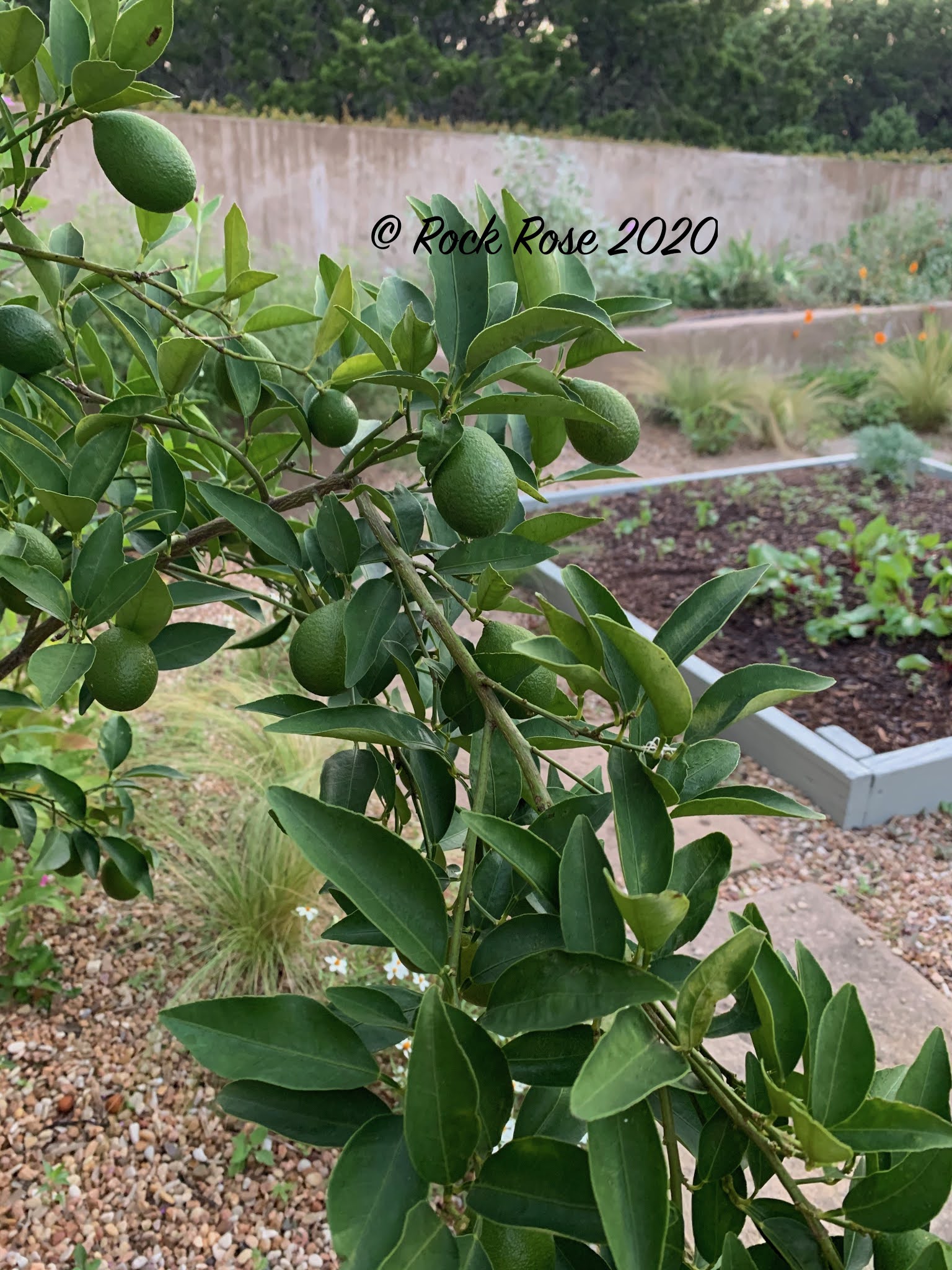
Fruit is ripening on the citrus but it will be a few more weeks before I pick the kumquats and the calamondin to make marmalade. Lots of work but so worth the end result. We are terribly finicky about our marmalade and like the sweet/tangy taste when made from these little fruits. 

Kumquat

Calamondin

Improved Meyer lemon

I'm having one of the best winter vegetable garden seasons in quite a while. Already harvested pak choi, chard, peas and beets broccoli and carrots are well on the way to a good harvest. 

It's not often we get a successful pea harvest in the fall unless we protect the crop from frosts. This year, so far, no frost but then no rain either.

This variety is Cascadia which I have the best success with in spring. It produces tender posts that can be eaten at all stages from snap to full pod. They remain crisp and stringless. 

I don't know what I would do without my garden as it has kept me busy during these difficult stay-at-home days. 


Wednesday, October 14, 2020

FALL IN THE VEGETABLE GARDEN


 Over the last few weeks I have concentrated some of my gardening time( just an hour or so a day is still all I can manage) on preparing the vegetable and herb garden for the fall/winter growing season. Arguably the variety of crops that can be grown successfully over winter far out-number those grown during the spring/summer season, although some of the fall plants will mature during the early spring.

 Before I could even begin to prepare the beds I had to first remove much of what had been growing in the pathways all summer. This included the many grasses, blanket flowers, gomphrena, pink, purple, strawberry and 'Fireworks." I am always torn between having flowers spilling over the pavers and the neat and tidy look of having nothing to impede moving around when working out there. When I clean everything out in the fall I know this is the look I like but then when they all start growing in the spring I like that too. How to balance this with the hours spent removing them is the challenge at this stage in my life.

Even now I have left a few to enjoy the last of their blooms.

Then I had to tackle the beds themselves, removing the layer of cedar mulch that had been been on there for 2 years saving it to either mulch another area of the garden or return to the beds after planting. Each bed got one bag of new 'garden soil' purchased from a big box store. 


We decided that because our gardens are so difficult to access that it was more economical on the body to move them by the bag. Plus we no longer have a truck to transport bulk material. 


 Weeks ago I started some winter vegetables inside, under grow lights.  I find they stand a better chance against snails and caterpillars if they are a decent size when planted outside. 

broccoli, baby pak choi, kale


             red cabbage, parsley

Beets and carrots were sown directly in the ground. They are now up and growing well. One of my weaknesses is my inability to pinch out plants but with the beets as soon as they are big enough to add to the salad bowl. I promise I will!


Kale, pak choi, broccoli and cabbage are now all big enough to go into the ground.


I have a few packets of seeds including Napa cabbage, lettuce and radish which I will direct sow over the next few weeks. 

Peas are struggling with the heat. I probably planted a little early. 


We kept the citrus trees out on the driveway this year, mainly for ease of transport into the garage during periods of freezing temperatures. All that is except the smaller kumquat and the orange. The kumquat was a rescue citrus and it was a few years before I even knew what it was. Last year was the first fruiting which has increased this year. It makes great marmalade.

I see the beginnings of ripening on one of the fruits.


The orange tree has not done so well. One last chance to improve itself!

Thursday, May 21, 2020

A FEW SCENES FROM MY MORNING WALK IN THE GARDEN

It's the second thing I do every morning. Number one is put the kettle on to make tea. Number two is to pick up my phone and head out into the garden. What will I see this morning; a new flower, a wilted plant, a lizard scurrying ahead of me on the path or just that special scene that I want to capture in a photo? Here are a few of the scenes that I enjoyed this morning.

The kumquat is blooming and this year, if all the flowers are pollinated, we will have a really wonderful crop for kumquat marmalade.


In the distance is the pedestal with the hypertufa crevice garden. I planted it with little plants that could not survive my summer travels, nor the blasting sun. This year I am hoping for better success with a few things that have seeded there, a feather grass, and one particularly tough succulent I snuck in there last fall. But it is my opinion that the rocks could just stand alone.


As I walk back I realize I need to do a little editing to make walking through here a little easier.


Further along the wall the clematis, Clematis texensis 'Princess Diana', is starting to bloom. There was an anxious moment a few weeks ago when I was sure it was lost but then I noticed small shoots beginning to grow and within weeks she was showing her first buds.


Back up the steps and a nice shot of the prickly pear with the heart leaf skullcap. I have managed to control its spread so that it is confined to this area but it is an ongoing process.


A passalong plant from Bob Beyer when he moved to Florida, the Crown of Thorns Euphorbia milii, blooms constantly.


I love my hypertufa balls in the English garden.


and the hypertufa trough in the Spanish Oak garden. I finally settled on the African false hosta, Drimiopsis maculata, another passalong plant.


Just outside the back door a cow bell, picked up at an estate sale, an aloe and a metal lizard make a perfect trio.


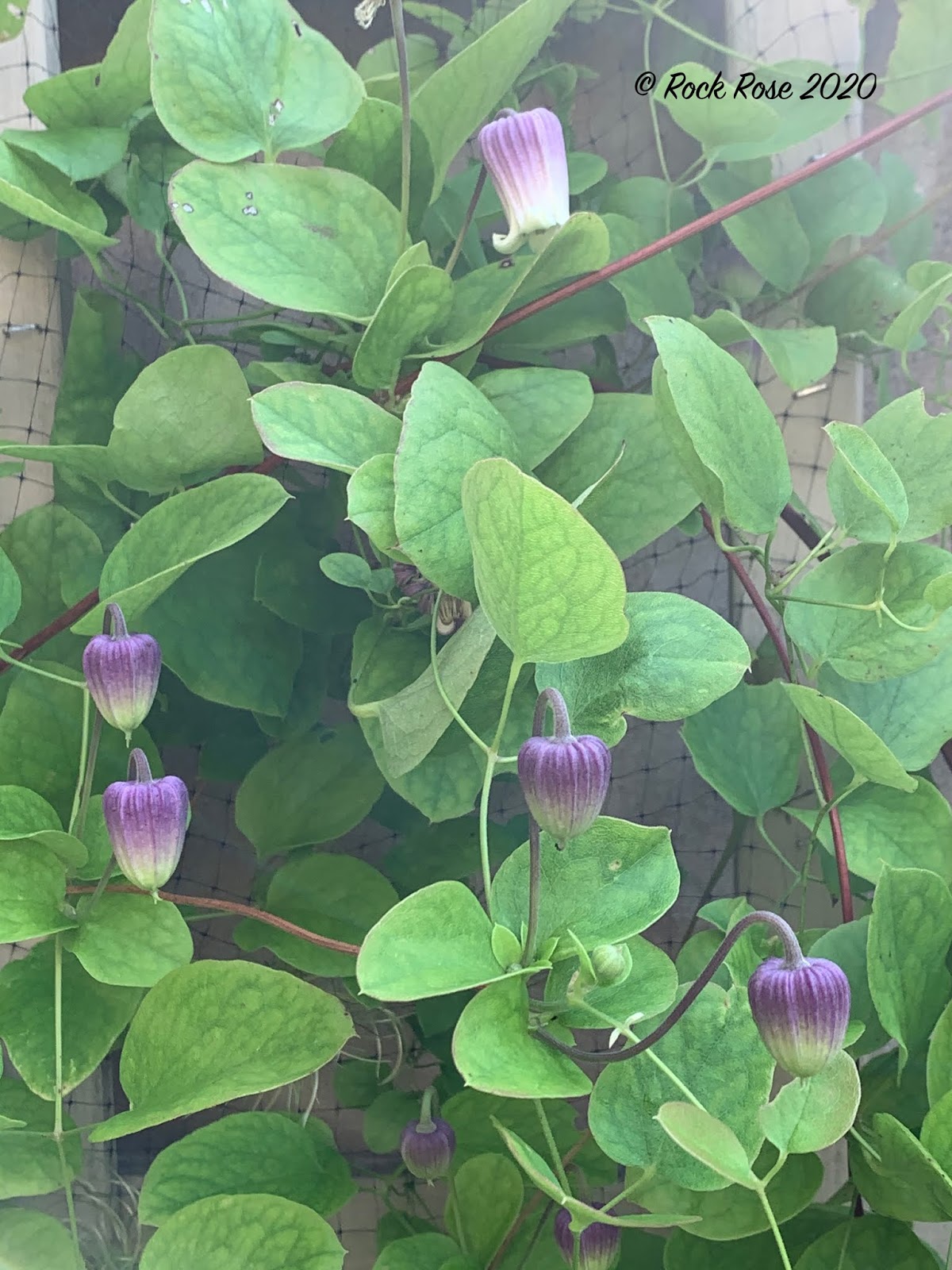
And on the far side of the courtyard garden I check out the Clematis versicolor, Lots of new buds ready to pop open.


At the same time on my walk I see plenty of jobs for the day but for now that early morning cup of tea awaits.