My Blog List

Showing posts with label Verbena bonariensis. Show all posts

Saturday, January 23, 2021

MY GARDEN HAS INSOMNIA

When I lived in Eastern Canada gardeners were well assured of having a respite during the winter. It was a time when browsing through seed catalogues and placing an order was the highlight of winter gardening. Seed starting came next, geared towards being able to plant frost sensitive flowers and vegetables outside by May 24th. The garden slumbered under a thick layer of snow.

Now here I am in Texas with its unpredictable climate and often mild winters. Because I knew there was to be no winter travel this year it gave me the opportunity to be more diligent about planting a winter vegetable garden. It has been a great success.

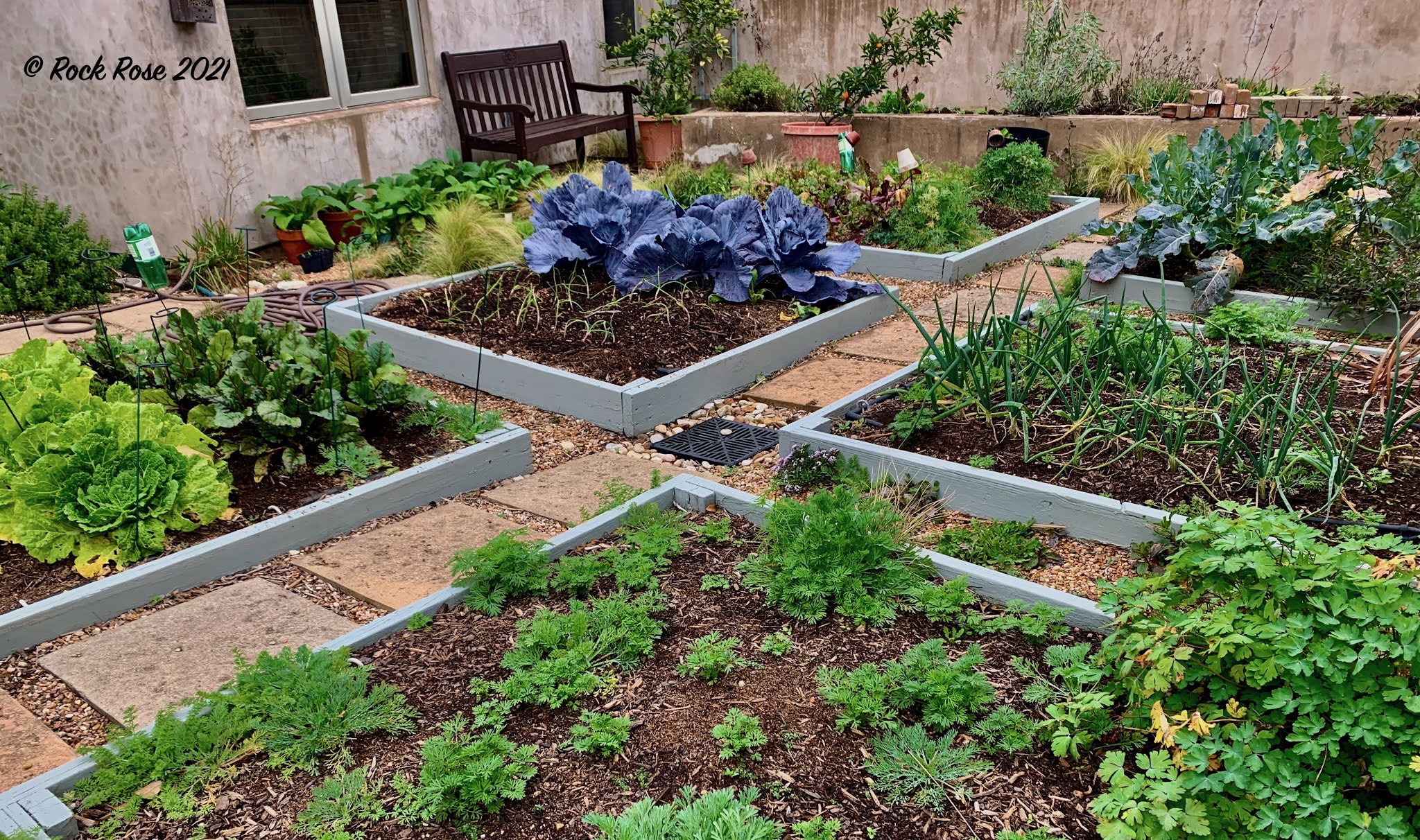


We have had an unusually mild fall, although frost has made an appearance on several occasions necessitating the covering of my peas.  I was  determined to keep them going in order to get an early spring crop, but because of mild weather was rewarded with a winter crop. 
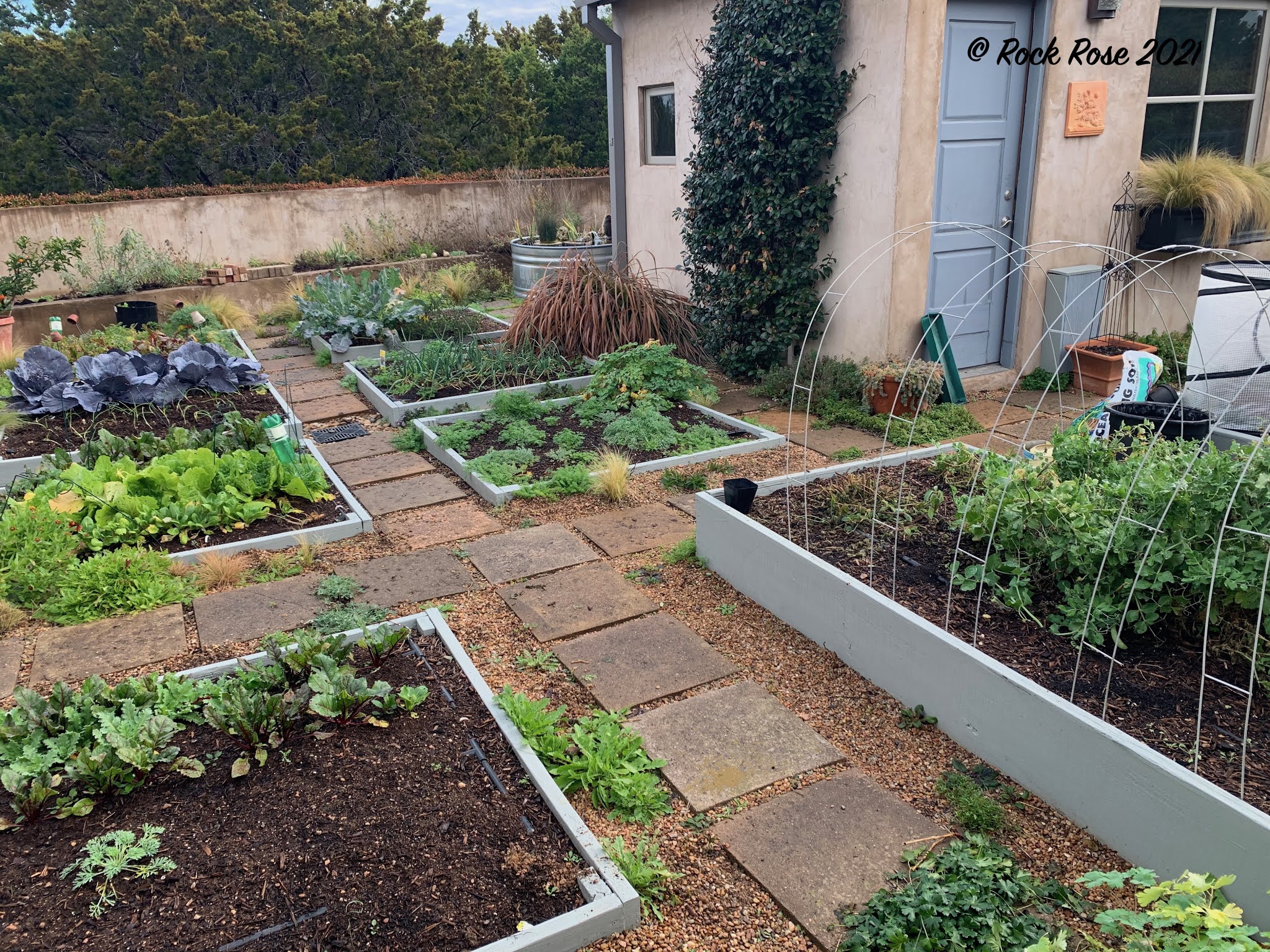
 

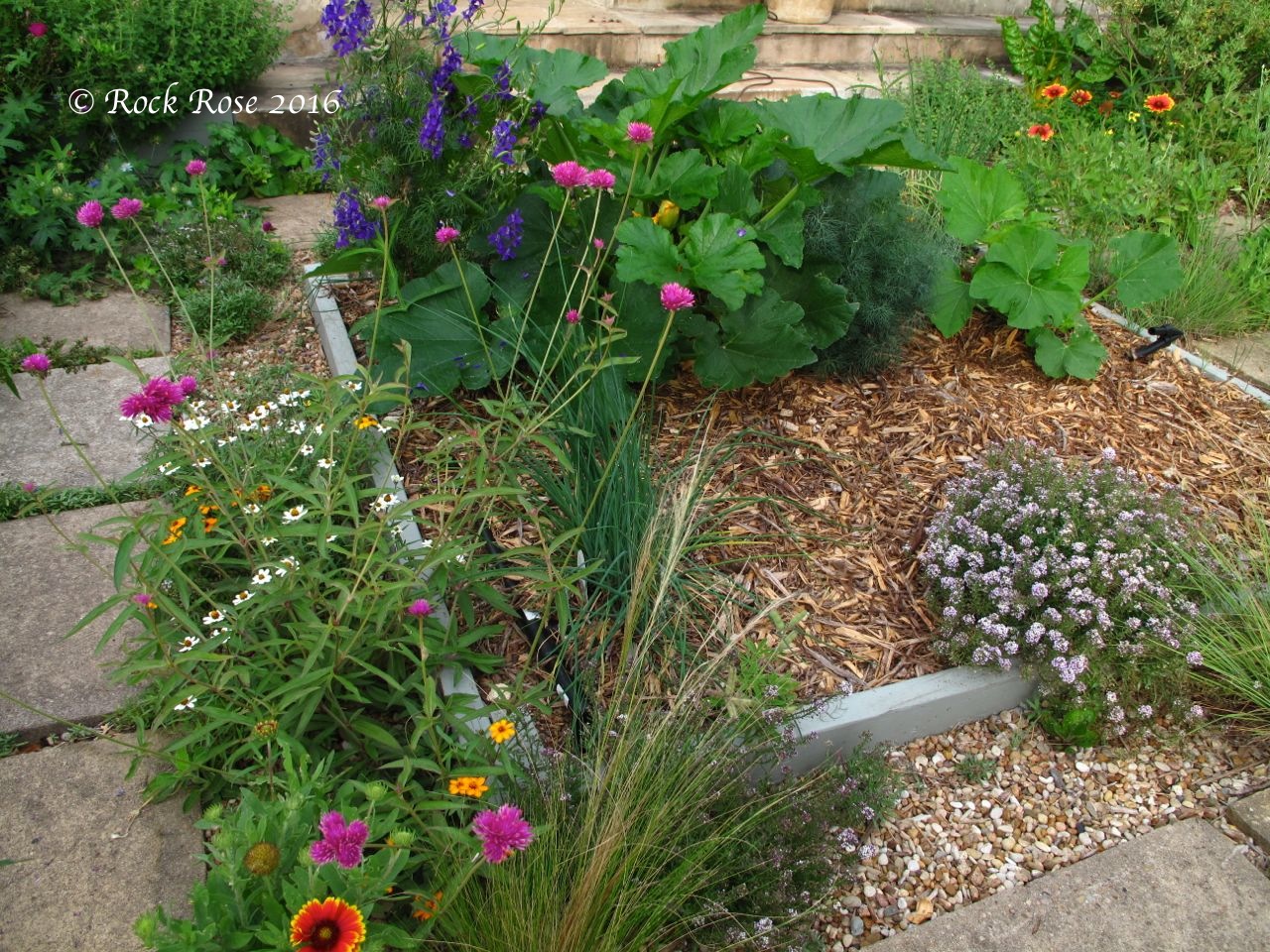
We have already devoured two crops of broccoli, pak choi and a succession of chard and kale not to mention peas, carrots and beets. All these plants are contained in beds in my vegetable garden. Even so there are many intruders in those beds chiefly larkspur, California poppies and the most successful seeder of all Love-in-a-mist. Known as hardy annuals this is their time to germinate, growing over the winter in time to flower in the early spring. I regret I have allowed them to take over. 


Those spaces between the pavers create an ideal spot in which seeds from last years flowers settle and particularly with Love-in-a-mist it seems every one germinates.  

And they found an even better home in the vegetable beds among the cilantro.

And poppies too.


And bluebonnets. Knowing how they can cover a diameter of 3' I may need to remove the one in the center of the path.

Every year I vow to keep those paths free of these opportunists and every year I relent which means even more will arrive every year. 

Blanket flowers, Gaillardia pulchella give me great difficulty. That is because they behave like perennials and these rather shop-worn plants are beginning to flower again. Soon they will have to go because they make a tripping hazard but I will leave them in case the bees come by looking for nectar or pollen. There are hundreds of seedlings just getting going.

It is my firm intention this year to reduce their numbers before they make it impossible to walk down the paths. 

Some plants don't seed quite so prolifically  so I am happy to see a few rose campion, Lychnis coronaria, just beginning to develop. I plan to remove them from where they are growing at the edge of the path to a more prominent position.
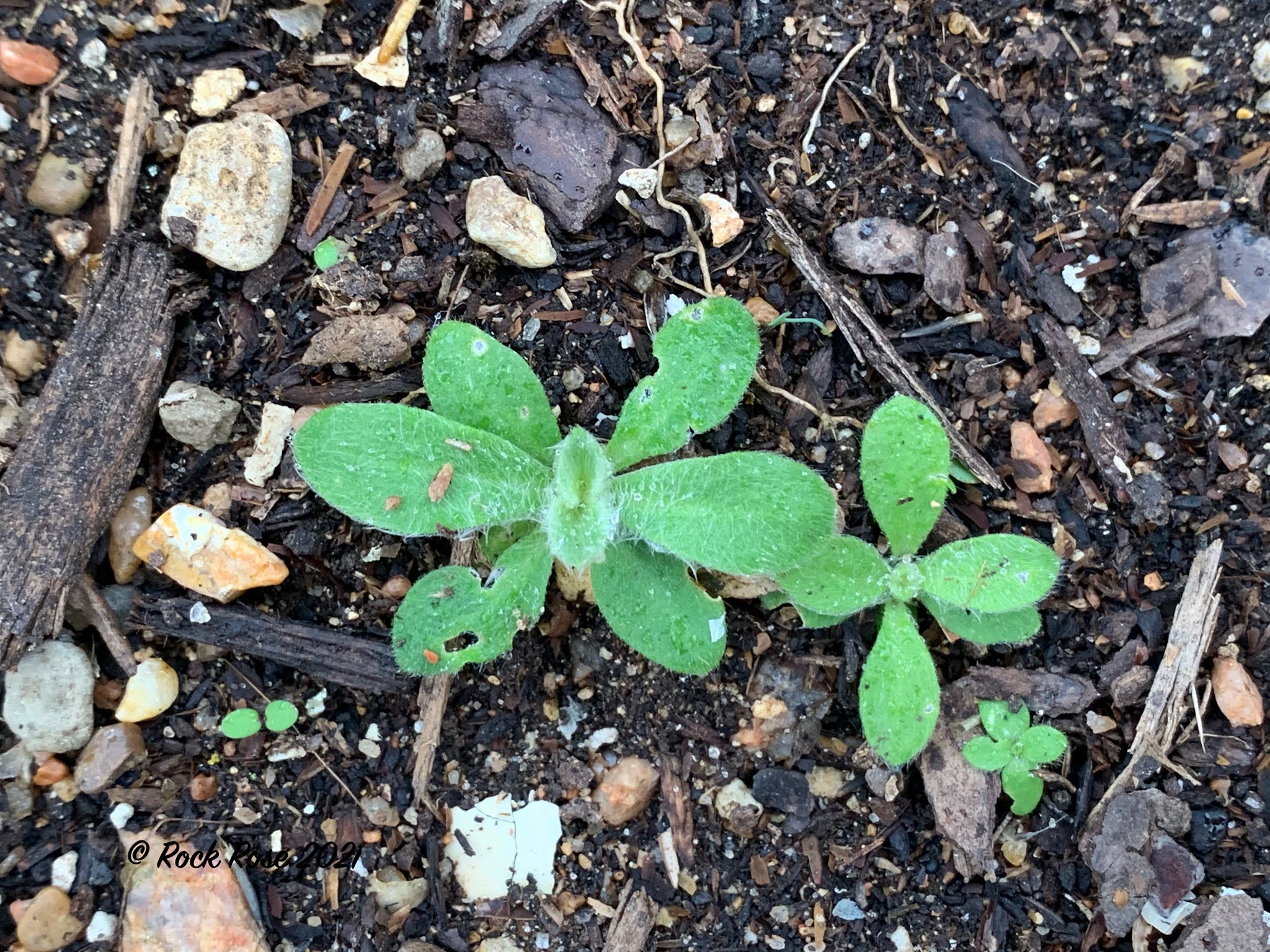
 Those that are a little larger will have to stay. A happy trio of rose campion, Lychnis coronaria, Gulf coast penstemon Penstemon tennuis,  and alyssum, Lobularia maritima. They are in the herb garden and will stay there.

Verbena bonariensis by the hundreds! I have already shared many and have potted some up in case of a some weather mishap. Last year's plants are looking strong and healthy but there is much winter to come yet. 

 Larkspur seedlings in the sunken garden. A little thinning required. They won't grow as large as the ones in the beds because the soil is poor. The same being true of love-in-a-mist.
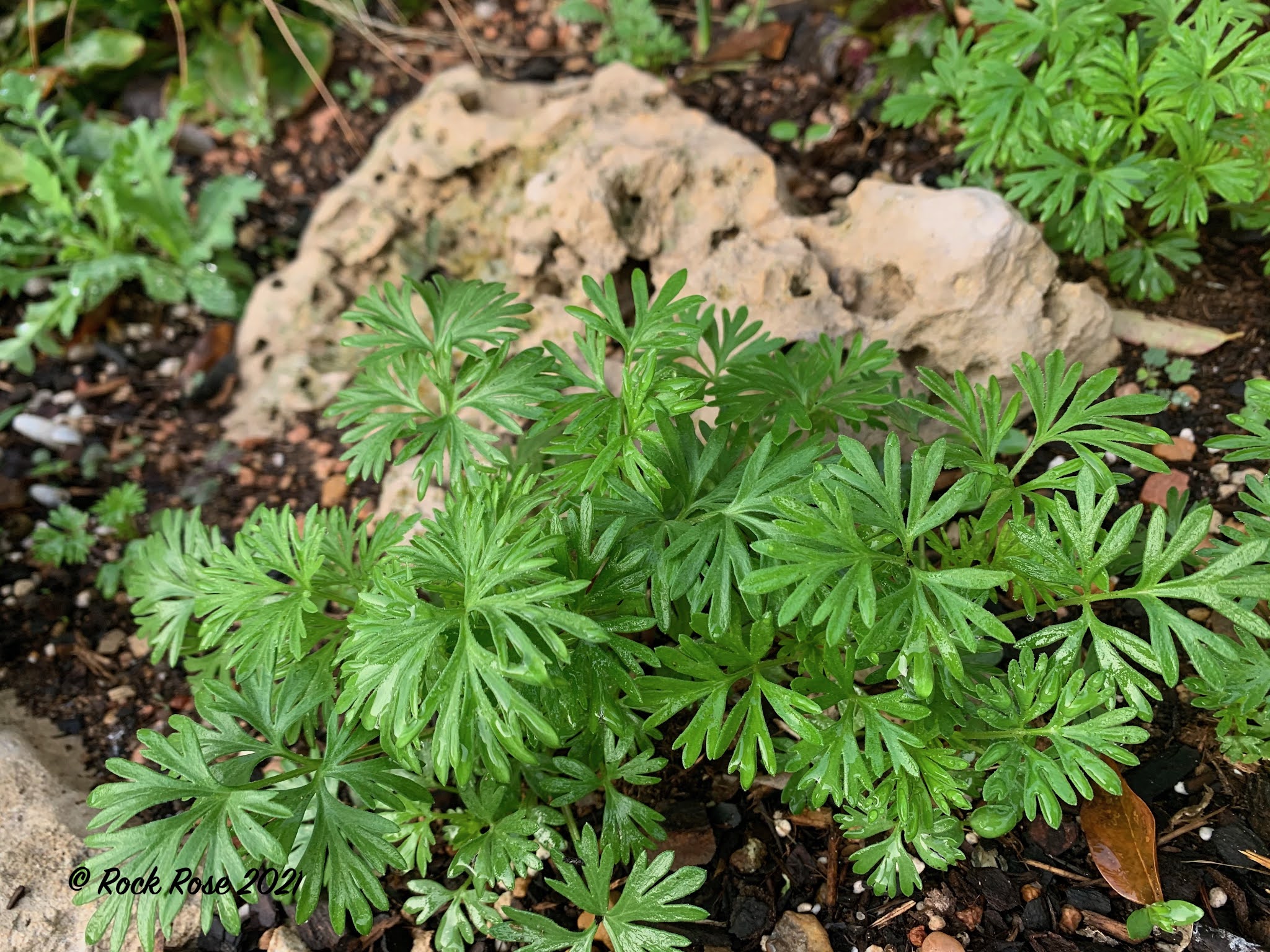
Here is a plant that hasn't slept in 2 years, Scabiosa. One of my favorites in the rock garden becaseu its foliage is never touched by insects.

Someone once said my weeds were a lot different from theirs. The fact is a weed remains something that is growing in the wrong place and I have plenty of those.


Wednesday, October 7, 2020

GOODBYE SUMMER, HELLO FALL

At last! Temperatures are moderating and fall is on the way. It is not just the gardener who is celebrating the advent of the new season but the garden plants are too.

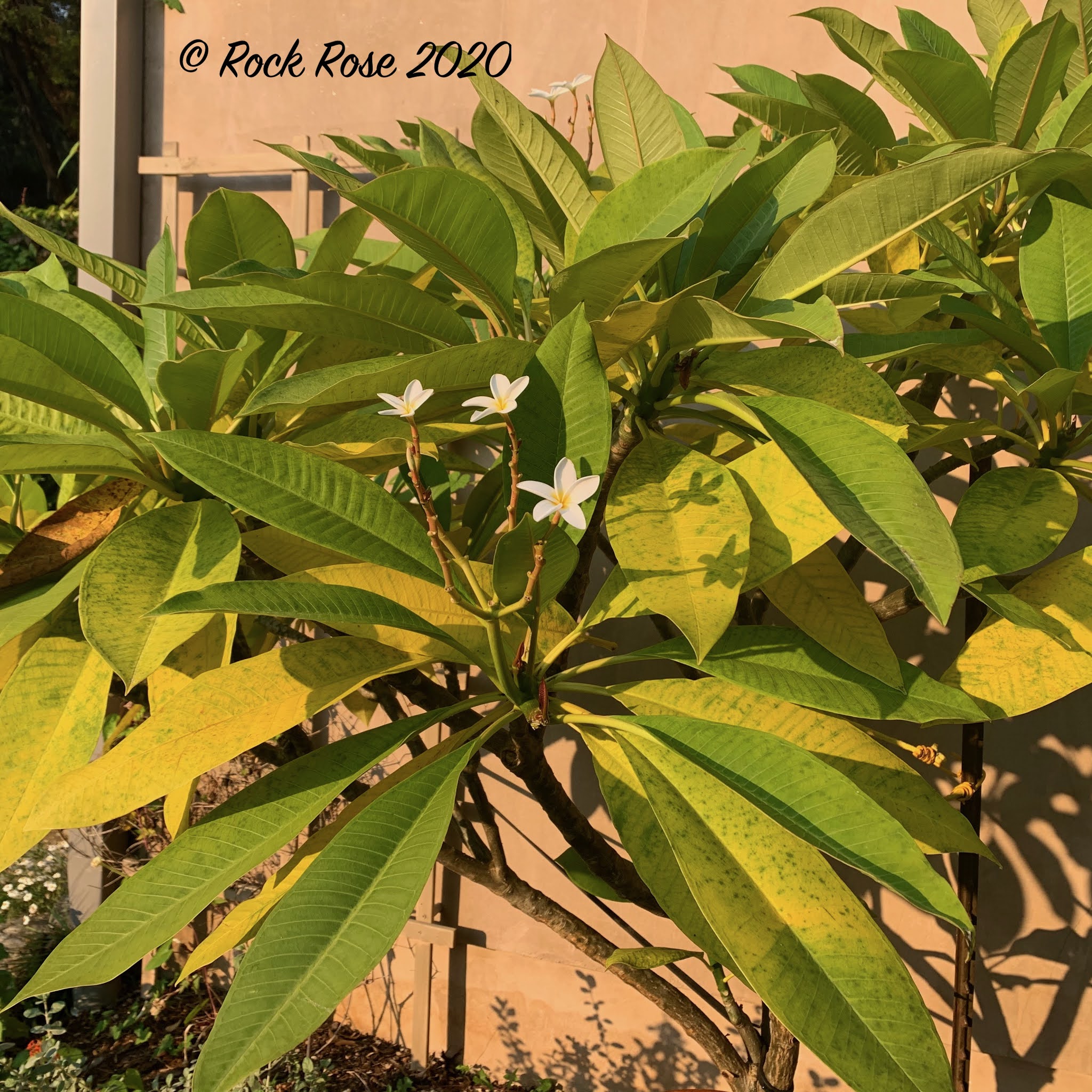
All that is except the plumeria. A few nights of temperatures in the 50s and it is already beginning to cry "I'm out of here" Shortening days mean the plant starts to cut back on food production, the leaves turn yellow as the supply of food is reduced. The leaf forms  an abscission layer and eventually falls off. 

 Every day new leaves fall and soon it will be time to move the plant into the garage. During the winter it will receive no water and will go completely dormant. Because the plants are so large I plan to do some pruning before I move them which will make the job a lot easier. 


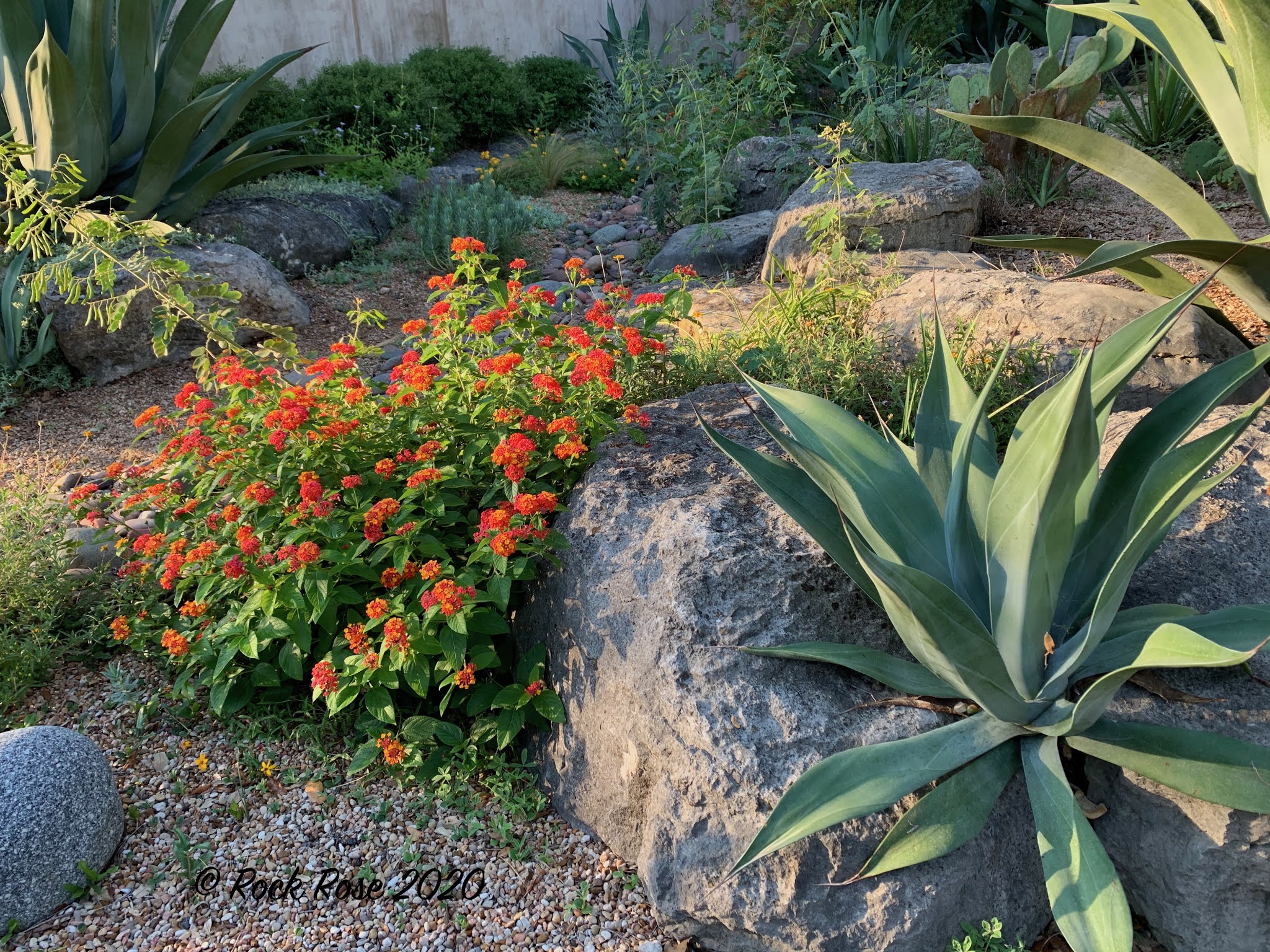
Flower colors become more vibrant as with the native orange lantana, Lantana horrida. And the award winning David Austin rose, Rosa 'Molineaux', blooming again for the first time in months. This shrub rose is a repeat bloomer and named for David Austin's favorite soccer team. 


There are lots of flowers that are repeat blooming such as the Verbena, Verbena bonariensis whose lanky growth was cut back to the ground a few weeks ago.


Another repeat bloomer is the soft leaf yucca, Yucca recurvifolia, which the deer have failed to find. 


It has become quite a free-for-all of flowering plants in the sunken garden with Perovskia, white Salvia greggii, mealy blue sage, Salvia farinacea, frost weed Verbesina virginica, and Mexican bush sage, Salvia leucantha.


 But there are some plants that bloom only in the fall. They wait patiently for the shorter days before they begin to bloom. Notable in my garden is the Philippine violet, Barleria cristata. 


It blooms best when given plenty of sun and is one of my favorite fall bloomers because it attracts neither bugs nor disease. It dies to the ground during a normal winter and shifts a little from its original positions as the center often becomes very woody and dies out. 

And finally the bush clover, Lespedeza thunbergii, waits patiently to bloom in the partly shaded border of the English garden. 


There are lots of short day plants which will bloom over the next few months including chrysanthemums, poinsettias, Christmas cactus. Make sure the later receives at least 15 hours of darkness from now on. 

Happy Fall Y'all.

Thursday, August 20, 2020

DON’T BE SO TIDY IN THE GARDEN

"Don't be too tidy in the garden" I have heard these words spoken many times before by well known gardeners and horticulturalists. It gives me an excuse to be the gardener that I am. Someone who loves the cottage garden look and can never pull a plant out until it just screams to be gone. Even when a plant no longer looks at its best it may still provide a meal for something. 

These are the spent flowers of Verbena bonariensis. They have been blooming for weeks and a few tiny flowers still remain even through the plant has gone to seed.

Those tiny seeds, and they are almost microscopic, are the reason I am leaving the plant a while longer. Every evening we enjoy the antics of the American goldfinches as they swing and do their acrobatic tricks on the stems of the plants. Many of the long stems are bent double and nearly touching the ground but the finches are so light and agile that they manage to stay balanced on the stem as they pick off the seeds. 

Easier to manage are the seeds on the blanket flowers, Gaillardia pulchella, which are more than happy to grow anywhere they can find a foothold. 

Not looking their best after days of 100° but the finches are not interested in looks. They are interested in the ripe seed heads. Many of them are just picked clean. Fortunately for me they are somewhat untidy and leave plenty off seeds scattered around which will serve for next years crop of flowers. 

That common mullein wouldn't win any prizes. 

The soft fuzzy leaves that always looked so perfect earlier in the year are crispy brown at the bottom. Every evening the stalk is nothing but a brown stick. But every morning a few new flowers open and there is always a bee having its breakfast. Seeing those flower buds on the left makes me realize that it will be quite a few days before I can pull the plant out. 


Those same solitary bees are also busy on the purple skullcap, Scutellaria wrightii and the snapdragon vine, Maurandella antirrhiniflora.


The first time I saw this vine was in Pam Penick's old garden. It was climbing up the pole of a beautiful Dovecote. It was quite large flowered which might have been due to better sil conditions or being a cultivar. Either way my native one is a small flowered scrambling, rather unattractive vine which has scrambled up to almost take over the Carolina jessamine. But the bees are on there every evening so I feel reluctant to remove it. 

Lizards scurry around in the leaf litter and the Carolina wren is often rooting around in there too. Clearly here are some tasty morsels hiding in there. There will be plenty of time in late fall for doing a big tidy.

How about you. Are you a tidy gardener. 

Friday, May 15, 2020

FRIDAY FLOWERS

I never expected my sunken garden and its surrounds to be a wildflower meadow but it seems that is exactly what I have. Does that disappoint me? Not really although I would love the wildflower meadow to be outside the main garden. But I love the profusion of blooms that greets me every morning when I step outside the door. Each new flower aiming beat the heat and fulfill its destiny-seeds.


And those seeds, wherever they fall, will create next year's garden. The coneflowers, Echinacea purpurea, are beginning to bloom alongside the gaura, Gaura lindheimeri. I have two varieties one pink and one white which seed around the garden and once they start blooming they bloom all summer long. And hidden among them I see the new leaves of the Mexican Bird of Paradise. It will be many weeks before that plant begins to bloom.


I didn't pull out as many of the mulleins as I said I would but they will not be long in the garden as they will soon enter into their rather messy phase. How I wish we could get the perennial kind that I see in English gardens. This one is my favorite although it is taking up more than its share of the sunken area.


Blue flax, Linum lewisii, with it long arching branches.


And scarlet flax, Linum rubrum, native to North Africa but naturalized in the USA. Always there is a plan to have more but always just a few develop.


Seen here with coreopsis and California poppies.


I grew this achillea from seed 2 years ago. It was supposed to be a much darker color. Sometimes the seeds will surprise you.


And also this foxglove, Digitalis purpurea,  which has taken it three years to flower.


On a rather humid morning the chocolate flowers, Berlandiera lyrata, filled the air with its delicious fragrance. They can't help but draw attention to themselves.


Bee balm, Monarda 'Peter's Purple' enjoys far too much success in this garden to the point of crowding out other plants, including the iris it has surrounded.


And under the shade of the Yucca rostrata the shrimp plant, Justicia brandegeeana has been blooming for several months.


 And a surprise shrimp plant which suddenly appeared has been identified as the native Montell bractspike, Yeatesia platystegia,


And finally Brazilian verbena, Verbena bonariensis with prickly pear.


 I rely heavily on the sunken garden to seed itself so never know what will be growing there from year to year. Unfortunately last year I lost all but one pink skullcap and all the purple skullcap which had been a staple in this garden for nearly 15 years but gardeners learn to move on and like Wilkins Micawber I rely on the fact that "Something will turn up" and it usually does.
Have a great weekend.

Saturday, May 14, 2016

I HAVE THE COTTAGE GARDEN GENE

It's not surprising that I have this gene. After all, I spent the formative years of my life growing up in England, the land of cottage gardens. You only had to drive into a rural area to see multicolored, informal groups of plantings both in gardens and along the hedgerows. Who knows how far back the cottage garden dates but their numbers increased dramatically during prosperous Elizabethan times.  Once-fashionable garden designs have come and gone but the cottage style of gardening has remained. It seems I have brought it to Texas.


It isn't an easy gene to carry with you to Texas. In the words of Penelope Hobhouse, 'Well, I just think that if I were a plant, I wouldn’t want to live in Texas.' Not true. There are plenty of plants that like living here in Texas and even though their flowering may be short they are happy enough to return for another year. The problem is more to do with their success during a long growing season. They don't come in quietly in the spring, flourishing through the summer and fading into the fall. They just keep growing.


This year many plants didn't even go dormant and the penalty is that they now have a very long growing season to look forward to and they will keep on growing and growing unless they are cut back.

Engelmannia peristenia with Verbena bonariensis

So what are the features of a cottage garden. The first is that they are usually enclosed by walls or hedges. The garden is not meant for the person passing by. Plants are crowded together so there is little soil showing. The plants generally come from neighbors and friends, cuttings and seed. The plants are a veritable jumble with flowers growing alongside the vegetables.


Plants put themselves where they want to be.


And even the most weedy plants are welcome.

Pink primroses among the Dicliptera.

And when the annual  plants fade the cottage gardener goes out and collects their seed to save for next year so she can spread the flowers everywhere.


It's in the genes.