My Blog List

Showing posts with label Mexican feather grass. Show all posts

Monday, May 3, 2021

RIGHT PLANT WRONG PLACE, BLUEBONNET PURGE.

I couldn't help but smile when I read this. They are talking about bluebonnets, our Texas State flower.

"While it may be a myth that picking the beautiful blue flowers is illegal, conservation is crucial to preserving these delicate native plants"

Delicate native plants indeed! Not where I live. And I do believe the Ladybird Johnson Wildflower Center would agree with me on that. That is why they are smart to make a dedicated bluebonnet patch within their garden because otherwise the plant would just take over the whole garden.


That is exactly what happened in all of my inside gardens. I am asking myself why did I let this happen again because I have learnt from experience that if I let them grow in here I will spend hours pulling them after they are spent.  Not to mention the poor plants which struggle to grow beneath them and how it impedes walking through the garden. For the last three days I have pulled hundred, piling them in various places under the trees. If they ripen, all well and good, if not then I still have hundreds more whose seed I can collect for places where I want them to grow. It was imperative to remove them before the rain came....and it di. 4.2" over three soggy days.
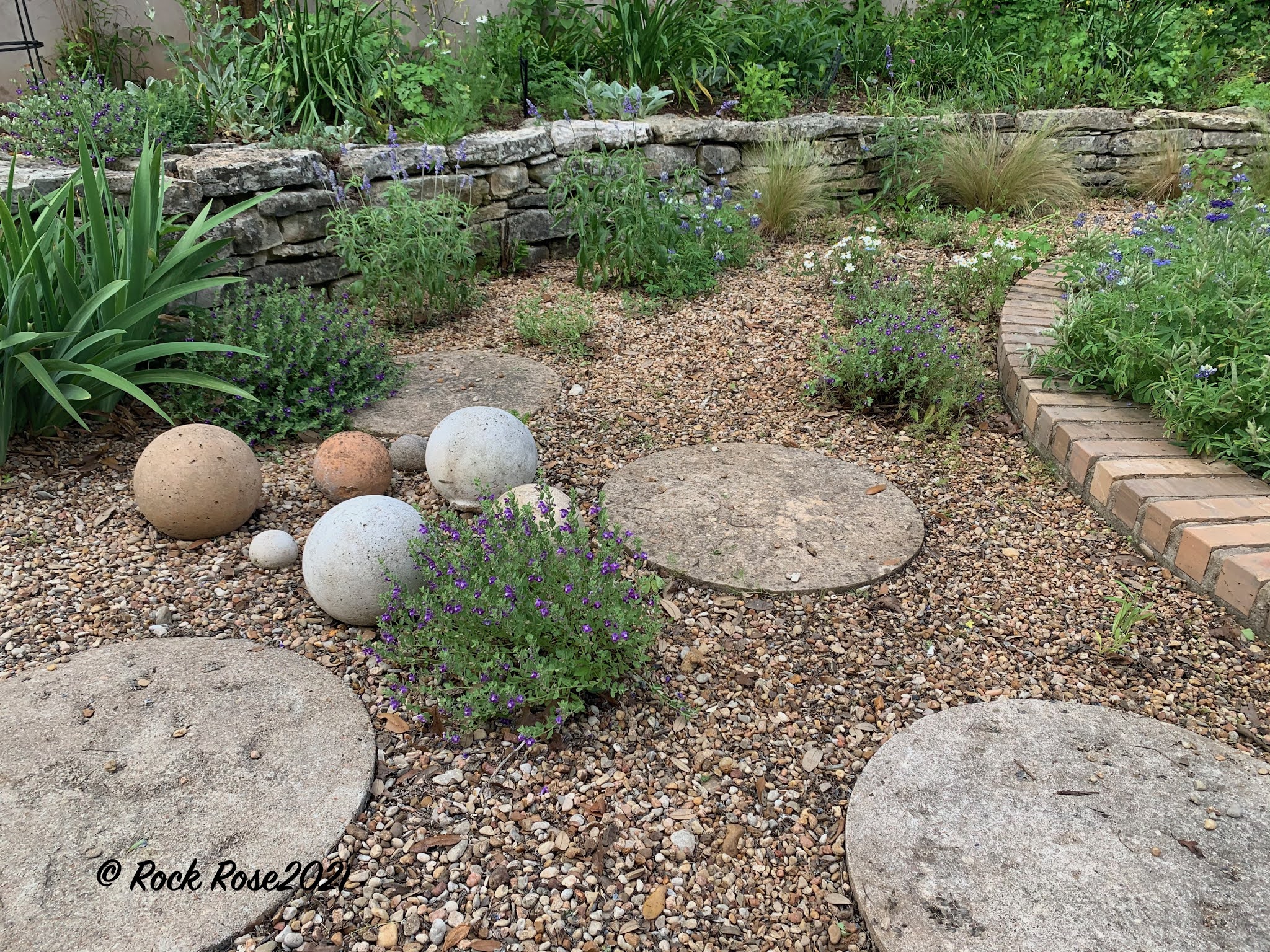
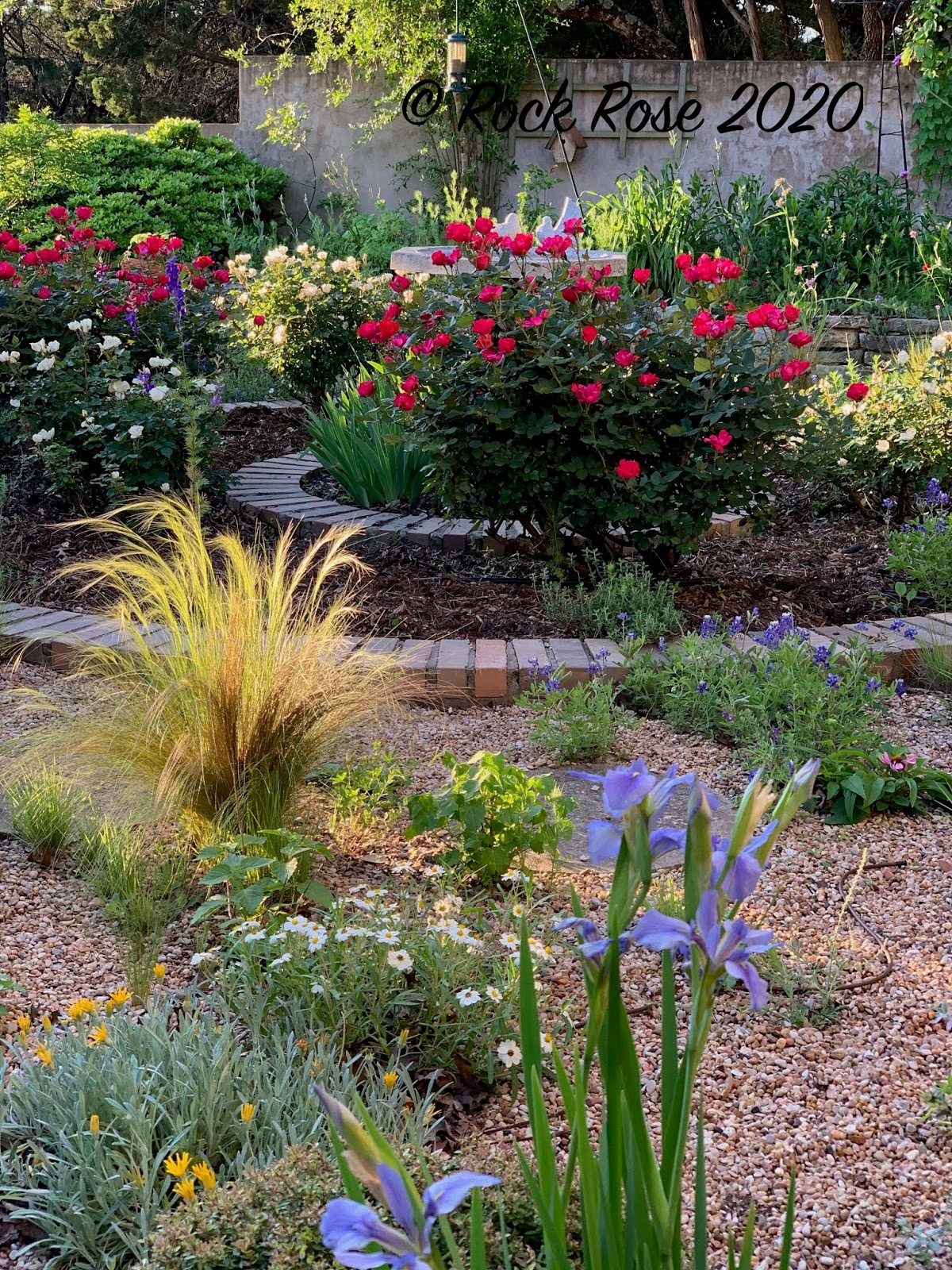
Ah! The other plants in the gravel can breathe again. The skullcaps, Scutellaria sp.blackfoot dasies, Melampodium leucanthum, mealy blue sage. Salvia farinacea. These much more mannerly plants who will only occupy a small area. I am more than happy to have them brighten up the larger expanses of gravel.

An occasional ruby crystal grass or Mexican feather grass. 


My absolute favorite fro this gravel garden is the purple skullcap, Scutellaria wrightii, I prune it to a more rounded shape in the spring and scatter the seeds around in the fall.

The other players permitted to remain in this garden are ruby crystal grass, Melinus nerviglumis, Mexican feather grass, Nasella tennuisima and a modest amount of love-in-a-mist Nigella damascena.


I will remind myself next year that this is the look I prefer and certainly saves days of work.


Friday, April 24, 2020

THE ENGLISH GARDEN...NOT EXACTLY

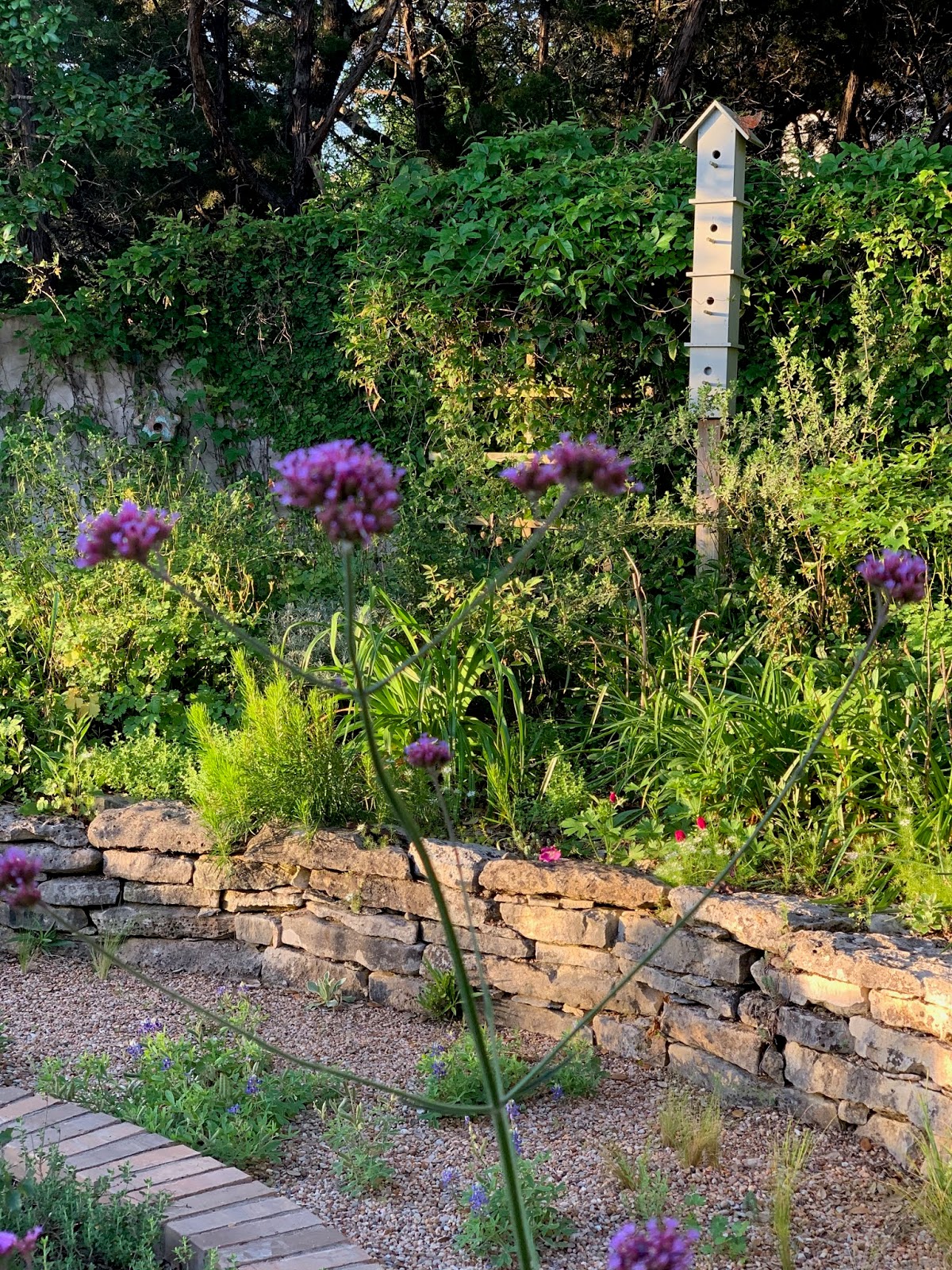
I named the English garden for the dry stone wall I created. A reminder of my childhood in the north of England where drystone walls were created to divide farmers' fields. I quickly discovered when we started building the house that there was a wealth of perfect stone at my fingertips. Flat pieces of stone suitable for building stone walls without any mortar. I began saving them and shortly after we moved in the house I began the project.


The wall creates a raised bed which follows the curved wall which encloses the garden. This was really necessary if I wanted to grow anything.
I love to capture the sun just as it peaks through the archway in the morning.


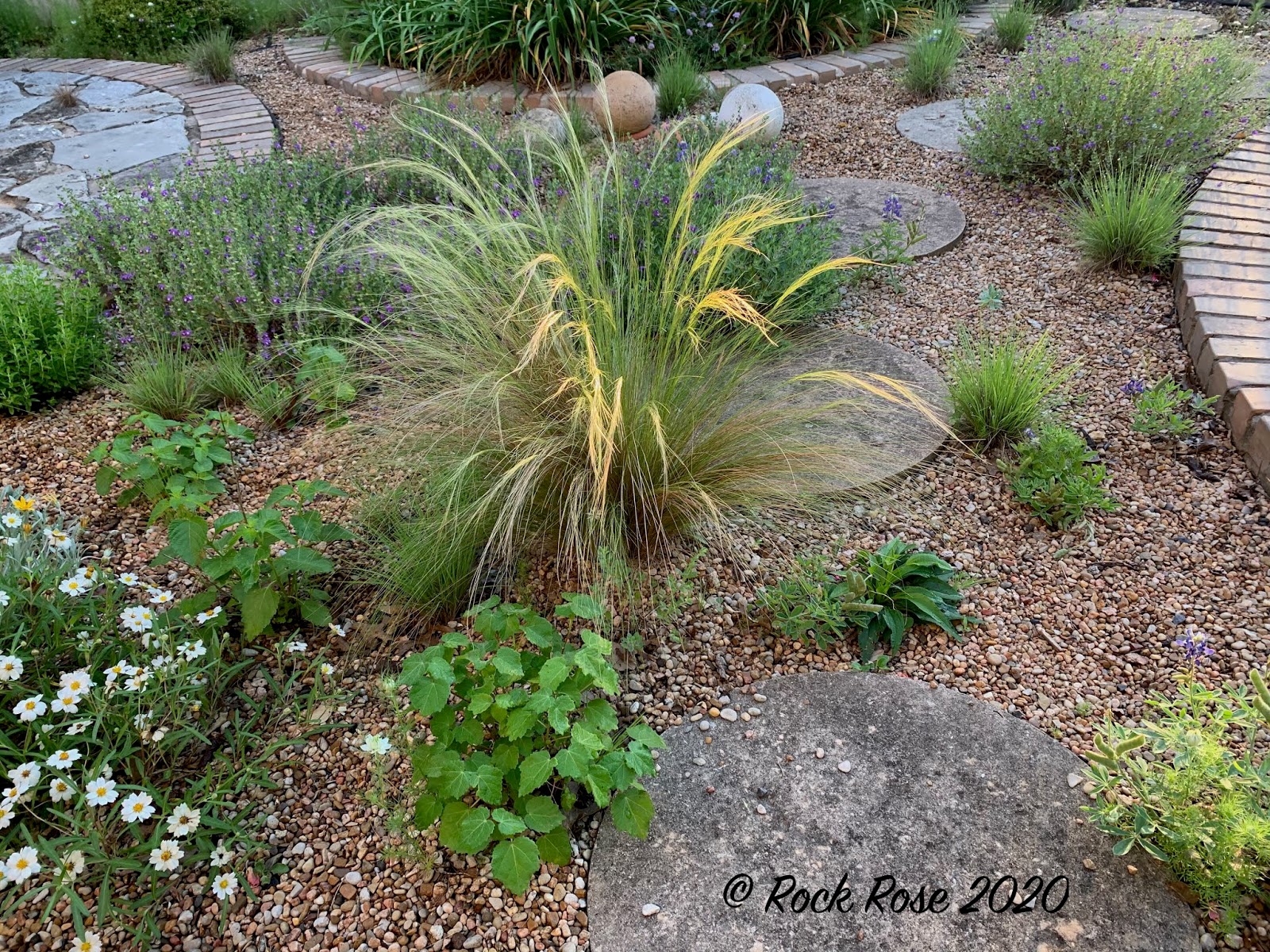
It lights up the Mexican feather grasses.


Not all English gardens are cottage gardens with lawns. In England there are many gravel gardens and gardens planted in the Mediterranean style, and although I didn't imagine this at the time, it is the way the garden developed and it made sense to eliminate lawns completely. It would have been so much work getting a lawnmower in here and so much more water to keep it looking good. Instead I decided on gravel and I am really happy with the way it looks most of the time.


In my usual style a majority of the plants growing in the gravel have self-seeded and although it is work to keep it under control when it is at its best it looks great.


I confess I did plant the silver leaf gazania last year and it survived the winter.


A few days ago the gazania was looking wonderful and then with the heat yesterday and today it just started to wilt. Maybe the underlying soil was just too wet from all the rain we have had this spring.
One of my favorite flowers which have had wonderful success are the skullcaps-particularly the native Wright's skullcap, Scutellaria wrightii. It is one of the few plants that will last all through the year and with an early spring trim will stay in a mounding shape. When I prune off old growth I walk around sprinkling the seed into other areas. That and the Blackfoot daisy, Melampodium leucanthum, require no irrigation.


An English garden should have roses and yes there are a few of these but I could be doing so much better. I originally planted 3 knockout roses around the birdbath in memory of my mother and a friend who died of breast cancer. Then added 3 white ones in between. Unfortunately one of the red ones died and I have been planning to replace it for several years. Yes, with just another knockout rose but quite honestly they are fuss free-so far. No bugs, no blackspot and as long as they don't get rose rosette disease they will stay. And if that happens I will switch to salvias.


But my other roses are not doing so well. So far this year Felicia has had blackspot and thrips but still still she has managed to provide me with wonderful fragrance when I have been working outside.
My idea was to replicate the pillar roses I had seen at Mottisfont, but then I am afraid I don't have their expertise. It's not too late to give them a big trim back because Felicia is a reliable repeat bloomer through the season.


But my big failure has been in that raised bed I created. I never put any thought into the planting and just put plants in there willy nilly. Mostly passalongs. The shasta daisies have almost taken over one section and the pale pavonias are crowding out other plants with their scrappy stems reaching for the sun. One side gets more sun than the other and the vines on the wall have moved into the beds. It is my plan to overhaul the whole bed or in the very least move some plants out of there. But that has been in the plan for a few years so we will see how far I get this year.


The garden is always a work in progress.

Sunday, May 8, 2016

GOING TO SEED

This is the second year I will let my Italian parsley, Petroselinium neapolitanum, flower and go to seed. I will probably do so for the rest of my gardening life. The insects adore those tiny flowers. In the warm sunshine it isn't just the bees, but all manner of insects, most of which I am unable to identify. It might be easier if I could just get a good shot of them but they just don't like that camera lens moving in on them.


Parsley nectar attracts many beneficial insects and encouraging them may even protects plants such as tomatoes from the tomato hornworm caterpillar. That would be a bonus. And right by the side of the parsley plant is my newly made bug hotel. It's early days yet but someone has already moved in.


When a friend came over with her camera with new macro lens the other evening I gave her a mission. A nice close-up of those parsley flowers. Of course the bees had gone home for the night but she managed to capture this ladybird feasting on the parsley.


Yesterday, I tried once again but my camera has trouble finding the right focus. I wonder if I need to try manual?


Is this a big-eyed bug? Either way it has a big head.


Who is this?


And the ladybirds were back again only this one has spots.


Last year when the seeds were ripe I took down the plants and carried them out and threw them under the cedar trees on the edge of the septic field. I have often taken plants to this area and there is quite a garden there now. Among the plants growing is a nice field of parsley. The poor quality of the soil there has meant the plants have not grown much-unlike those in the herb garden.


The grasses are in full seed mode. In the herb garden, Mexican feather grass, Nassella tenuissima, and Ruby crystal grass, Melinis nerviglumis, caught in the morning sun.


Both these grasses need to be controlled a little as they are a little too generous with their seeds. The older ones need to be pulled out.


The same is true of the bluebonnets. I have been snipping off the ripe seed heads every day and putting them in brown paper bags until planting time in the fall.


Clearly I have missed some.


After losing the whole of last years crop to the hail it is a relief to see the seed bank filling up again. By the end of the week I should be able to remove all the dead, dried foliage and the garden will start to look a lot tidier.
But there are those plants whose seed heads put on quite  a show. First it was the poppies and now it is the Love-in-a-mist, Nigella sp. They are wonderful in dried arrangements.


Before they went to seed they put on a wonderful show, returning year after year in all different colors.


I heard the designer Bunny Guinness espouse the growing of Nigella in the rock garden where they never achieve their full height. She was right. Seed away as much as you like.

Wednesday, October 21, 2015

WE'LL GROW WHERE WE WANT TO GROW

It would appear that most of the time I don't have much say in where plants are going to grow. I would like them in the beds. They would like to grow in the pathways.


This is the scene between two of the beds in the vegetable garden and is played out in may places in the garden. Here's another grouping slap bang in the middle of the two beds. They all want to be in the same place. Mexican feather grass, alyssum, narrow-leaf zinnia, Zinnia linearis, and a gaillardia, Gaillardia pulchella.


My job is to do some weeding out so that we can actually walk through the area. As usual the ruby crystal grass seedlings have been abundant. I must have pulled out over 50.


It is hard to believe that 4 weeks ago there was nothing growing here except the mealy blue sage, Salvia farinacea.  More narrow-leaf zinnia, Zinnia linearis, dahlberg daisy, Dyssodia tenuifolia and gomphrena, Gomphrena globosa.


The one disappointment this year has been the seedling chocolate daisy, which seems determined to co-habit with another seedling gopher plant. You can see the pair here in the lower center of the photo. I am wondering how this is going to play out. Should I make the choice for them?
This is the sunken garden where I rely on plants to self-seed.


Another plant that is in abundance this year is the native frost weed, Verbesina virginica. I saw this being sold as a shade plant at a recent Lady Bird Johnson Wildflower center sale. In my garden it has seeded with abundance this year in full sun. Not only does it put on this floral show in the fall, but when we have a frost it will exude water from the stem which will create  incredible crystal like structures. For now it is a favorite of the bees.


It is always a thrill for me to find a special plant has reseeded. Such is the case with this Philippine violet. It found a spot right along the edge of the path. I hope I can get it out without damage when it loses its leaves.


A similar seedling along the edge of the walkway to the patio was never removed. It is a good job that it dies back every winter because it is now too late to move it. Why do they always choose the edges?


This garden just wouldn't be the same without all the help I get from mother nature.

Sunday, May 11, 2014

THE VIEW FROM OUTSIDE

This is the view from the bottom of the steps outside the vegetable garden. What's a gardener to do when she has extra plants she can't give away? Why, find a new home outside.


Salvia leucantha has a companion this year, the pink primrose, Oenothera speciosa. Where did she come from I wonder. Well, we all know that little plant. Then there is the spineless prickly pear putting on additional pads this year but no flower buds, as yet. In between there is a galvanized tub with fresh water for the deer. The pink poppies in the foreground were untouched by foraging deer. There's a Mexican mint marigold, Tagetes lucida, just peeking and Mexican feather grass, Nassella tenuissima. They are surrounded by a thick bed of ¼-½" granite gravel. If I was doing a garden again I would create large spaces with this granite with just a few individual plants like this.

Thursday, April 24, 2014

GOOD MORNING SUNSHINE

Sometimes we linger too long drinking our early morning tea and watching the news. The sun is already making its appearance over the tree tops.


It will make photography difficult.

But there is still time to capture flowers in the lower part of the sunken garden which is still in the shadows.


I knew it was going to be a good year for the blue-eyed grass, Sisyrichium angustifolium.  Its grassy leaves line every space between the flagstones. Such a pretty little flower.


Wine cups, Callirhoe involucrata, will soon be open. and they will soon take over the garden if I don't cut them back frequently.

The sun is already bathing the vegetable garden and will soon be in the herb garden. It is catching the seed heads on the Mexican feather grass. Time to put the camera away.