My Blog List

Showing posts with label cactus. Show all posts

Tuesday, April 15, 2025

SPRING IS HERE AGAIN!

 It seems the arrival of spring flowers has jogged me into writing a post. This, after an absence of 11 months. I don't know what happened. Maybe it was being away from my garden for 3 months last summer, or the daily walks and hikes which take up most of the morning. Maybe it was the long breakfasts after the morning exercise... they certainly eat into your day, or maybe it is my shortening attention span for everything I do. Could it have been our purchase of a new trailer and the planning it takes to book campsites. Or was it quite simply the ease of posting a few pictures on Instagram and the scrolling that goes along with it. Sheer laziness?


So here we are, our third spring in the desert. It has been a magnificent winter with lots of warm sunny days but no rain all winter long. My newly acquired rain barrels filled up during a rain in November. I emptied the contents into 50 gallon milk jugs and used the rest. Since then not a drop. And no rain in the desert really means no rain and no spring wildflowers. Of course we have a drip irrigation system but it has been very difficult judge how often to run them. I fear not often enough. Even with all that warmth the budding of leaves and the opening of cactus flowers did not happen earlier. It has been right on schedule. 

For any gardener seeing that first green leaf begin to unfurl brings enormous relief. Relief that the lack of rain did not kill it. The first to break were the two Wonderful pomegranates, purchased for $5 each from our power company. The one from the first planting produced one tiny pomegranate last year, too late in the season for it to mature. This year I have counted 14 flowers on that tree and one is starting to swell. Undoubtedly I will have to protect it from birds and wandering javelina. This morning I noticed 1 flower bud on the second pomegranate, planted a year later than the first. 

The next, of the deciduous trees to begin leafing out were the desert willows. Similarly purchased from TEP. I have 4 of those all of which are coming along nicely. We removed a Texas olive from this spot in favor of desert willow. 


And another deciduous Sonoran tree is the Arizona wild cotton, Gossypium thurberi. Growing to about 10' 
this tree was nearly eradicated because of a fear of the boll weevil which had attacked the cultivated cotton fields. It turned out it was not the same weevil and the cotton tree is now returning. I first saw it growing at Tohono Chul garden and was able to buy one from their garden shop. I look forward to its pretty white blooms later in the spring. 

   
                                                                Arizona cotton tree


                                                               Cotton tree bloom from last year.


And then the cactus begin their spring routine. They sit quietly all year until the first buds start to appear. At this point they need to be checked every day as if you blink you can miss them. 

Yesterday the first bloom on the ladyfinger cactus, Echinocereus pentalophus, followed today by two blooms on another plant. 


And then a cluster open on another plant.


When we moved here I brought a number of plants with me. One was the Myrtillocactus geometrizans, or
bilberry cactus. I had planted it alongside the garage, far too close to the wall. Unfazed it began to send out arms and last year produced a pup and yesterday I noticed flower buds. This morning when I took David over to show him one of the buds had opened. It is not showy as many cactus flowers are but certainly welcome. 


A purchase last year at Tohono Chul plant sale. 


                                                           Echinocereus engelmannii

It is a great time of year for the aloes to bloom and for the first time in its life the Aloe vera, I brought with me in a pot and planted in the ground, is blooming. I found the perfect place for it alongside the fence where there was another Aloe vera clump. Both have produced many pups. 


The large stand of giant aloes in the back garden have bloomed with one side taller than the other. I can only assume that the uneven growth is due to the lack over overall watering provided by rain and one side receiving some irrigation water. I would love to divide this aloe but it looks like a daunting task which would likely damage the symmetry of the plant. 


It is visited by the hummingbirds and Gila woodpecker. 

New blooms on the mammillaria open in tiers every day for several weeks. 


There is sure to be something new every day and it looks as though tomorrow it will be the first flowers on the Gymnocalcium baldianum.

Friday, May 3, 2024

MY DESERT GARDEN COMES TO LIFE

Spring is a wonderful time for all gardeners but particularly so for desert gardeners. It is the season of spectacular bloom brought on by winter rains. I have taken advantage of that by adding many blooming plants to my garden to complement the cactus and succulents. Some are perennial and some are annuals like this scarlet flax Linum grandiflorum rubrum. Annuals like to seed themselves along the edge of the paths where they driven by rain. Not always the best place.

Flax are dotted all over the front garden among rocks and cactus. I have always favored growing from seed and finally had success with damianita, Chrysactinia mexicana. This one I grew from seed planted 2 years ago. If I'm not careful it will be crowded out by these penstemon seedlings and a desert marigold. Despite the enormous numbers of seed they produce I have only ever found one growing naturally in my garden. No doubt the fault of the hungry quail who frequent the garden.

Damianita, blackfoot daisy and skullcaps are perfect low-growing perennials for the desert rock garden although not easy to come by. I did manage to find 2 purple skullcaps but unless they are in bloom they are sometimes miss-labeled and turn out to be the more common pink variety. Despite the many flowers and seeds produced it is very difficult to get these three to self-seed.


I'm trying to maintain a good balance of flowers and succulents for the quieter time of year when the cactus are center stage.

The damianita will  need to be sheared back soon so they can bloom again when and if the monsoon rains come. 


Just coming into bloom is the chocolate daisy, Berlandiera lyrata. I bought one plant 2 years ago and have been able to grow several more plants from seed over the winter. It has always performed well throughout the year opening new flowers every day. It is a morning bloomer, closing its petals by noon. It's chocolaty fragrance cannot be missed when walking around the garden. 

 This is one of three hedgehog cactus, Echinocereus triglochidiatus, I inherited,  which has bloomed successfully each year.  Their location is not ideal as they receive sun only in the later parts of the day. A place in a more open spot would probably result in a more spectacular bloom. I have allowed this native cudweed to remain. I love its silvery soft leaves which are the closest we would get to growing lambs ears in the desert. Some call it pearly everlasting as the flowers do well when cut and dried. 

My desert marigold,  Baileya multiradiata, has become so successful that it threatens to overgrow the driveway. I think it must be getting too much water. It reseeds quite readily where the layers of rock are not too deep or too large.

Spring is a very yellow time of year in the desert and I think I may just have a little too much of it. Between the brittle bush, damianita and the desert marigold I need to find a happier balance. Brittle bush is a wonderful desert plant which also reseeds heavily. I think it is underused as a native plant filling the roadsides with its yellow and dusky sage colored leaves. 


Seeds of blanket flowers grown from seed last year have been immensely successful. They are acting as though they are perennial. Last year they bloomed all summer long. You couldn't ask more of a plant in this desert climate.

 And there are frequent pop-ups in the spring of native wildflowers like the verbenas.

                                                         Verbena gooddingii

                                                              Moss verbena, Verbena tenuisecta

 The mix of colorful annual, perennials, cactus and succulents is a joy to behold on my early morning stroll around the garden. And it is always early.  Spring and summer in the Sonoran desert is a time to get up early to enjoy the cool mornings. The sun rises early and we must make the most of the best part of the day. Now we are in our dry summer with no rains expected until the monsoons arrive in July. Fingers crossed we will get good rains this summer.

Wednesday, February 10, 2021

A M0RNING IN THE GREENHOUSE

 "I'll just spend a little time in the greenhouse this morning while it is still cold outside" 

That little time turned into a whole day. If only I hadn't let it get so out of hand. I had good intentions when I started to take things inside last fall promising myself that I would keep plenty of space between each pot and nothing on the ground. Suddenly every bit of shelf space was filled, above and below and then the floor started to get crowded out. That pot of dwarf papyrus, the two branches of plumeria, a box of agaves which I had planned to take to Phoenix at Christmas, a bird of paradise I dug out from the edge of the path. Empty pots, pots of soil. No room to move in there. The first job was to move everything outside so I could work on the shelves.

Next was to organize the shelves moving a few things around. There is shade cloth and a cross vine growing over the greenhouse so the only really good sun is at the end. That is where I need to have my winter blooming cactus. Some have already started blooming and some are now making buds. I think they are going to be earlier this year than any before. 


I have several pots of lady finger cactus, Echinocereus pentalophus. All are beginning to make buds. If you aren't familiar with this plant the flowers are the most wonderful Thai-silk pink. But it will be a few weeks yet.

And more and more mammilarias.

I moved this plant up from the lower level and into a more sunny spot when I saw this bloom stalk.

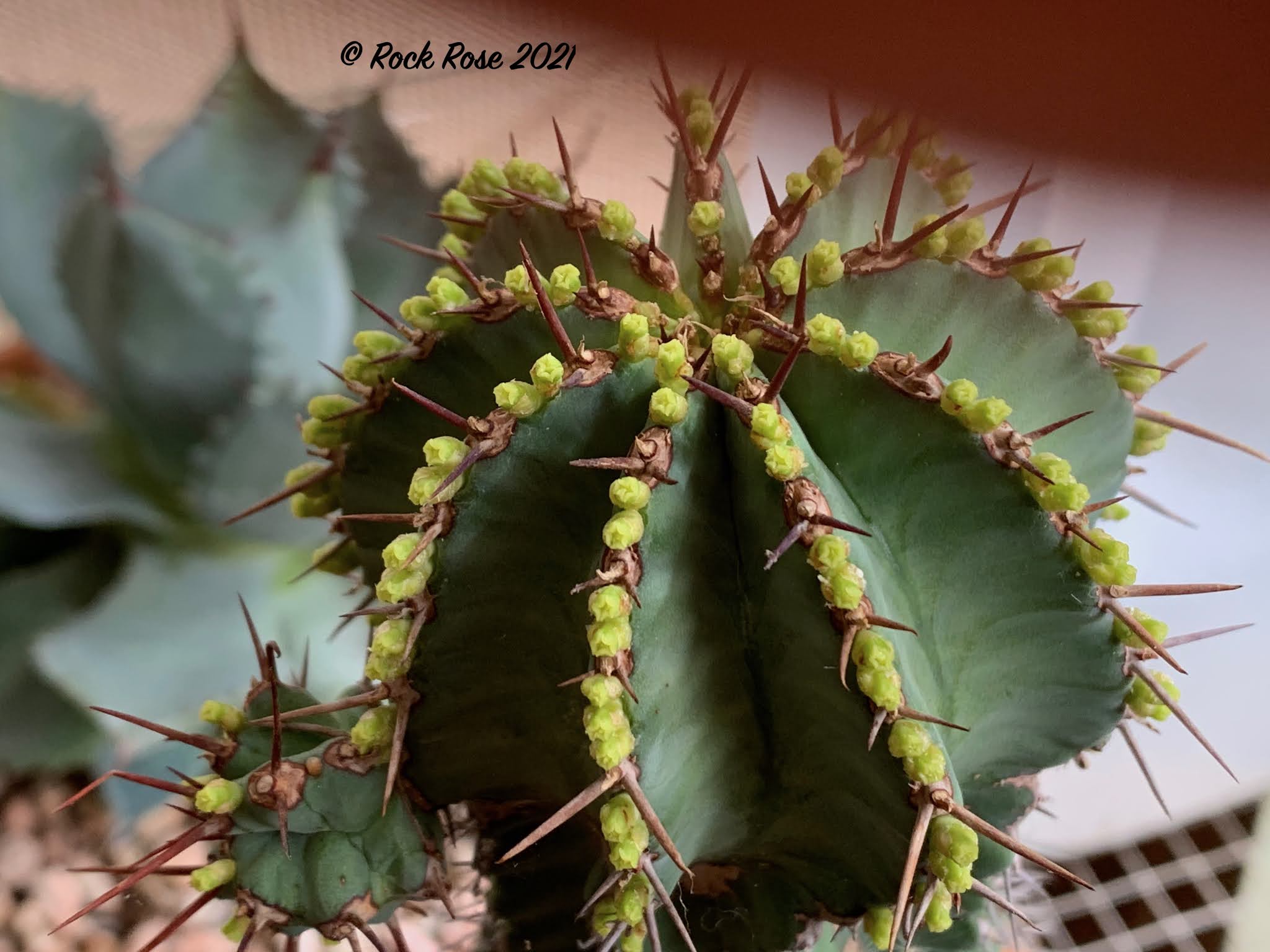
And a euphorbia blooming. You know how tiny their flowers are and if it weren't for the fact that they are yellow you might even miss them.


Finding more scale on some cactus I broke off tidying and got the paint brush and alcohol out. I was not expecting to do that but it seemed like a priority.

I was sad to see I had almost missed these sprays for flowers on the copper Sedum nussbaumerianum. I felt rather badly that they had been under appreciated being on the lower shelf. The plant is rather straggly and needs a complete pruning. Not a job for today.

When I got down to moving the last pot which was on the floor by the door I discovered that the ants had come up through the bricks and into the pot. What next! It was the newly potted bird of paradise which I quickly removed and took outside far away from the garden. Then I put the kettle on to boil. I'll make their life unpleasant. 

I only have 3 orchids left and they are in much need of attention. I heard on a gardening program that an orchid needs at least 4 good strong leaves in order to bloom so there is a good chance that this one will soon send out a bloom stalk. One has a small stalk and the other only 3 leaves. Some nurturing is needed. I knew that orchids like to grow in clear pots. Don't they all come that way from the nursery. Their roots like light as they photosynthesize through them. I don't know why I was anxious to put the other two in clay pots even though they were so-called orchid pots. From now on its clear pots for my orchids. 

I have a couple of hanging baskets. The first is the Huernia schneideriana, which spent the summer hanging in the live oak tree, totally under appreciated. It will probably go back there again next year but will need some trimming as eventually the longer stems start to fail. In Arizona I saw this plant creeping along the ground and it will set down roots easily along the length of the stems.  


Finally a quick wash down hoping to make the ants more miserable and the greenhouse is ready to receive many plants that will have to come in during the upcoming inclement weather. 

Now a week later we begin to feel the start of the weather. It is 43° out there and for us bone chilling and damp. Tonight will probably be the first night of 7 nights of freezing temperature with some possibly in the single digits. Freezing rain is also in the forecast followed by snow next week. The heaters are on in the greenhouse and I have brought even the foxgloves inside. I have been nurturing these since they were 4" pots. You can't take the English out of the girl. She has to have her foxgloves. 


It will not be good as the garden is so far ahead. I have already picked daffodils and many of my vegetables that will not take even those low temperatures. Shiver , Shiver! I don't want to think about the possibility of a power failure due to this unusual weather. 

Thursday, January 28, 2021

WINTER FLOWERS THAT BRING JOY

We send flowers to friends in hospital, on their birthday, Valentine's Day, when they lose someone dear and we celebrate weddings with flowers, the bride carrying her favorite flowers in her wedding bouquet. Flowers bring joy to everyone. These days we can enjoy flowers year round with winter no longer a problem because flowers can be grown in glass houses and from there transported to flower shops and grocery stores. 

For the gardener flowers that bloom during the winter season are special. Yesterday when I went into my greenhouse I was thrilled to see flowers blooming on the Mammillaria compressa. This is the best flowering I have seen in many years.


The original plant was bought many years ago at the Austin Cactus show, a gift from friends who were staying with us. It was cluster of about 7 growing closely together. When I tried to repot into a larger pot the individual plants, which had been growing very close together collapsed. They never regained their original form.

There was only one thing to do and that was to cut off the individual plants, let the cut dry and pot up in some really good succulent mix. The only one I have found, which in my opinion is the best, is from East Side Succulents and is called Cactus Gold. I made up several pots, this one with three and several singles. This time I would really take care of them. As you can see I was rewarded. 

Over the late fall and early winter tufts of white fiber began to fill the spaces between the tubercles and it was from these that the flowers burst. Furthermore new branches have begun to sprout from the sides which means that it will eventually make another clump. It is for this reason that it has often been called Mother of Hundreds. This cactus comes from Central Mexico and is supposed to be hardy down to -5°C or 23°F if kept dry.


Other mammillarias are flowering too. This pink flowered variety.


And recently a much larger one which is also starting to make off-sets. This one blooms multiple times throughout the year.

They seem to favor having a cold dry spell during the winter and although in my greenhouse they are not in full sun. A sunny window ledge in the house might suffice.

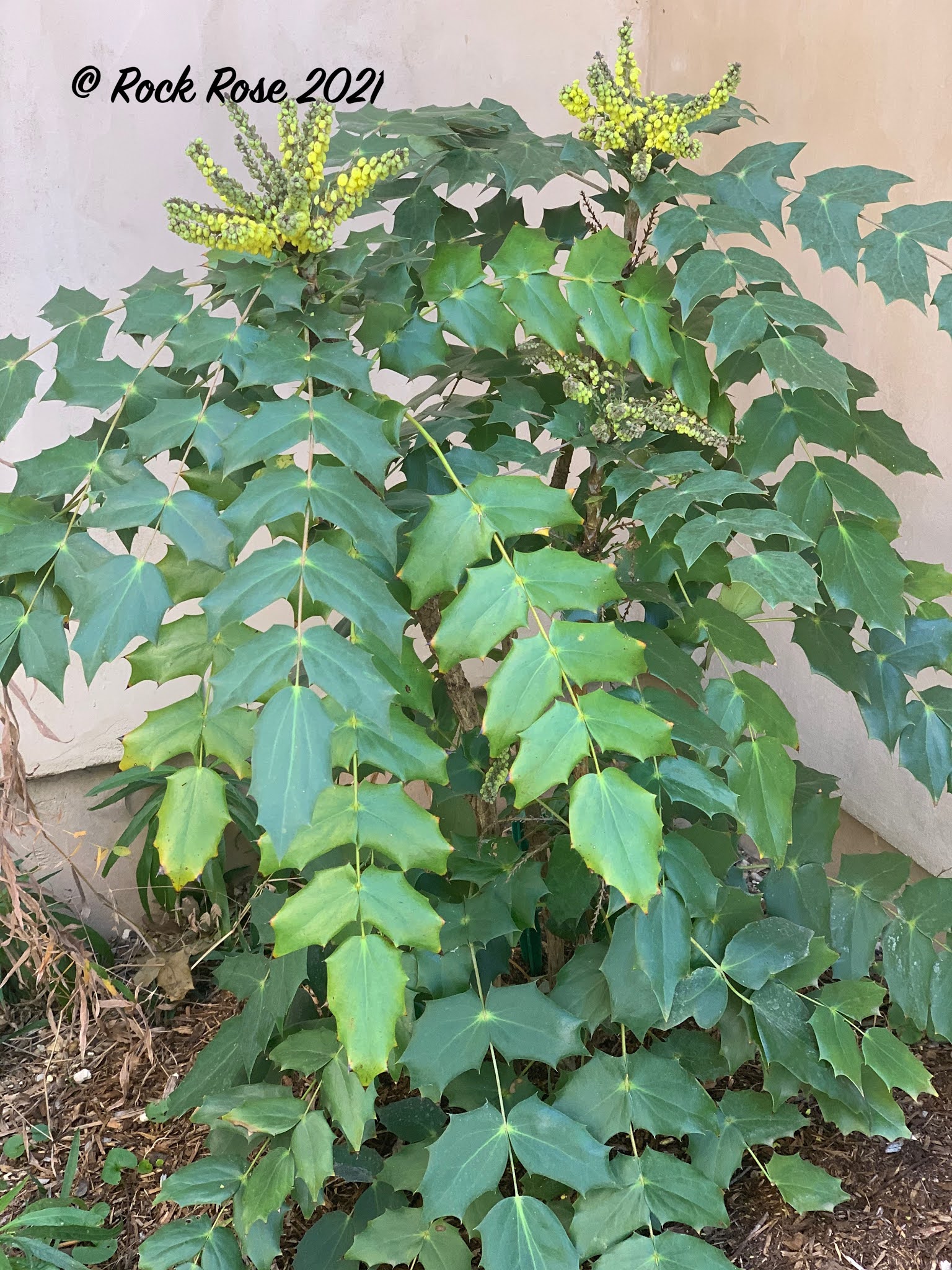
In the garden there are a few early bloomers. The Mahonia is one.


 It grows in the shadiest spot I have in the garden never receiving any sun. For this reason it blooms later than most in the area.

Yesterday I was thrilled to see several bees had managed to find the flowers.

And sweet alyssum, Lobularia maritima, is of the early bloomers. It re-seeds around the garden and is  loved by bees.


Plant it now and you will never have to plant it again and at the same time you will enjoy its sweet honey fragrance for months.