My Blog List

Tuesday, June 21, 2011

THE GREAT BRITISH GARDEN TOUR, DAY 5

Monday morning we left our B&B and headed out towards Hampshire on the A272. I had planned the trip with opening days in mind, as many places are closed on Mondays. Fortunately one of the gardens I was anxious to visit, Hinton Ampner, was open Monday. On the way we decided to visit another stately home, that of Petworth House. We were not particularly enamored by the tour of the house, save for the kitchens which were really amazing. The gardens consisted solely of parkland. We continued on our way.

HINTON AMPNER
Ralph Dutton is largely responsible for the house and garden as they are today. When the house was largely destroyed in a fire in 1960, he re did the house in the simple Georgian style and replaced all the destroyed furniture and paintings with Regency style furniture and Italian paintings. He was a knowledgeable gardener resulting in one of the finest shrub gardens in the country.

The view from the south terrace takes in the chalkland downs.

The steps down to the lower terrace are softened with erigeron.

In this lower garden yews have been clipped into regimented topiary.


What a fun garden in which to play hide and seek!

Yews stand guard at the grass pathway leading to the Saxon church.

Ornate gate with coat of arms.

We were to see the lumpy, dollopy yew clipped like this in many gardens on this trip.

The eye is drawn down the yew avenue to a statue at the far end.

It seems Monday is a great time to visit. Very few people around. A perfect place to visit. Now it was time to drive to Romsey to find our B&B for the night.

We were delighted to find that Ranvilles Guest House was all that a B&B should be. Period Grade 11 listed house which had been tastefully modernized inside.


We strolled around the garden before heading into Romsey for dinner.

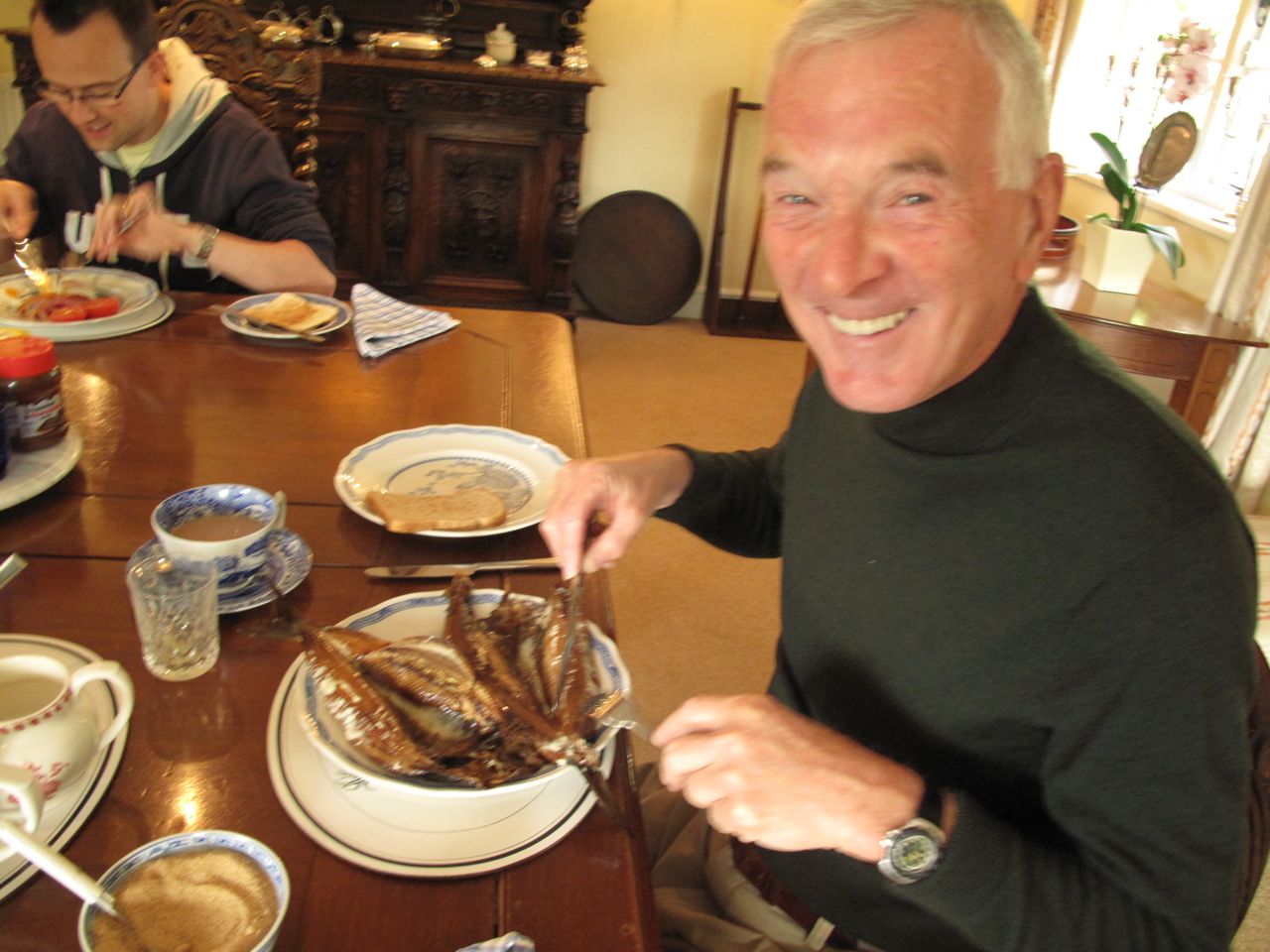
Next morning it was another English breakfast. This time kippers were on the menu. Who could resist!

On day 5 we planned to visit Mottisfont and Mompesson House.

Monday, June 20, 2011

MY OWN GARDEN

Ah! The retama tree, Parkinsonia aculeata. flowering as though there is no tomorrow.

I hope that isn't the truth. That it is attempting to put on hundreds of flowers in order to make seed because there will be no tomorrow. It's true the leaves are much more stringy and tiny than in the past. I know they tend to drop their leaves under stress and photosynthesize through the green bark. It's a perfect tree for out in our native area which is just parched.

This tree needs plenty of room to grow. Consider that this one grew from a seed which fell upon a pile of rubble at the end of the driveway. By the time it came to remove the pile it was doing so well I just couldn't allow it to be pulled out. Hence the building of a dry stone wall around it. Now another retama has sprouted closer to the road. Wish I had more of them.

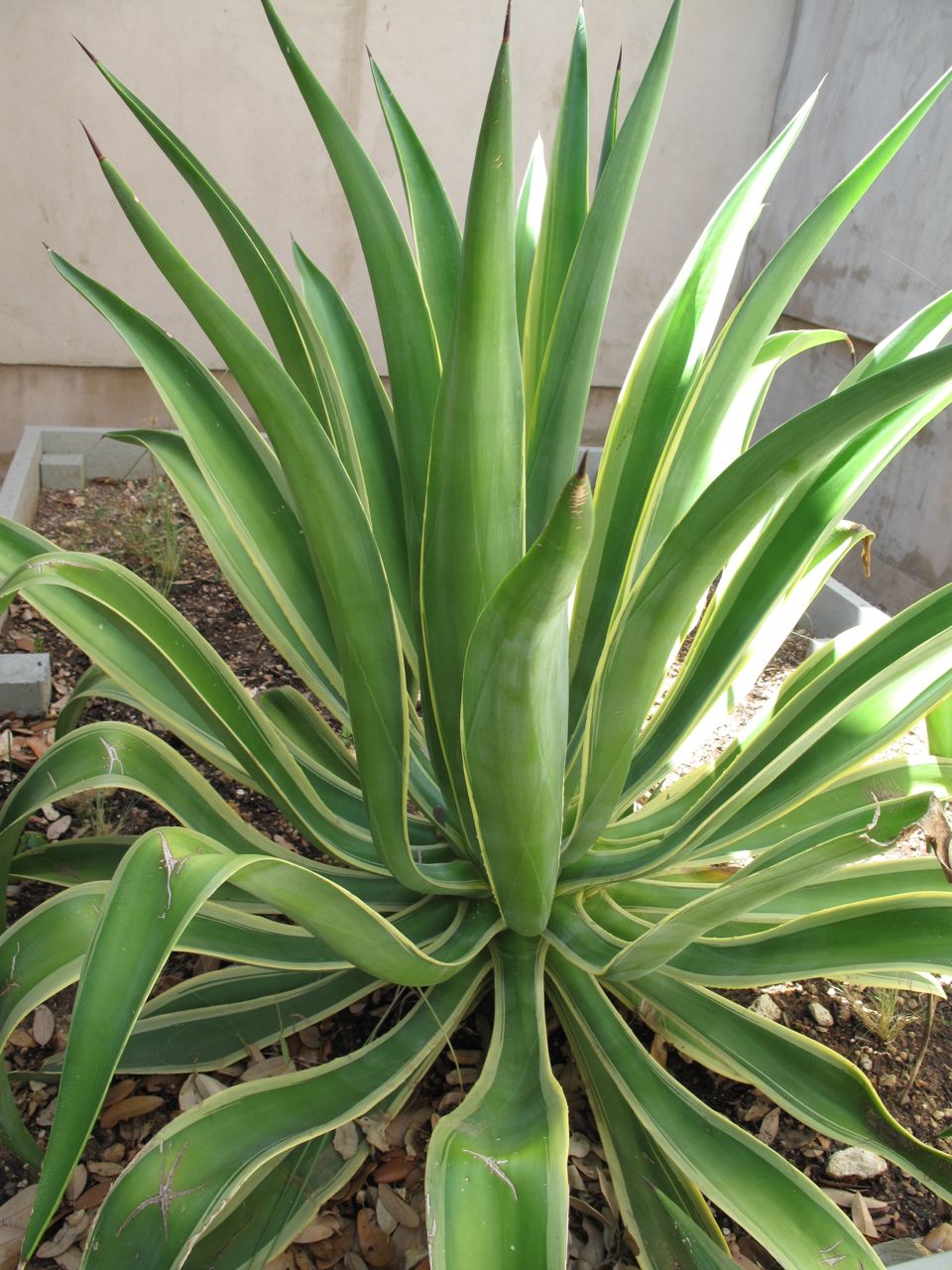
This is the Agave desmettiana that was in the pot by the side entry. It was really pot bound and clearly stressed because it never had produced a pup. After David built the new box bed, by the side entry, I still couldn't make my mind up about what I should plant in there. For the time being I planted the agave. It certainly seems a lot happier in there and I see a couple of pups. I had no water until I put the hose on it yesterday. It really needs more shade than it is getting here but for now it stays.

I planted a couple fo 4" pots of agastache in the spring. This one, in the front garden survived. The one in the back, where the watering system failed, died. Looks like it will be on my list for next year. I also said that about Senorita rosalita cleome. Bought 3 this year. All failed.
The Texas fish hook cactus is looking dehydrated but still managed to produce one bloom. I'm hoping that water will plump it up and encourage it to bloom again.

The purple skullcap, Scutellaria wrightii, along the edge of the dry creek is ready for its mid summer pruning. I have been spending the mornings pruning back all the salvias, skullcaps and many more in readiness for a fall blooming. That is, if we have a fall this year.

Sunday, June 19, 2011

THE GREAT BRITISH GARDEN TRIP, DAY 4

Sunday morning, following a 'bang up' English breakfast, we drove just a few miles down the road to Batemans, the former home of Rudyard Kipling, given to the National Trust in 1939 following the death of his American wife, Carrie. I have always loved Kipling's verse from the time I learnt 'The Glory of the Garden", at the age of eight and which I can still recite word for word today. George Orwell wrote about " the powerful seduction of his colorful and most rhythmic verse"

BATEMANS

Before we venture into the gardens let me first take you into the Jacobean house, which Kipling purchased in 1902.

Yes, the house really was built that long ago.

The front door leads into a large entrance hall with well used fireplace.

Kipling's study is just as he left it on his death in 1936. It is filled with memories of his colorful life in India and the things that inspired him to write so many books.

A portrait of Carrie hangs over the fireplace.

The Kiplings entertained many guests and this bedroom would have been used by guests during the visit. They would have to take notice of these rules pinned on the bedroom door! And woe betide if they overstayed their welcome. Kipling would then take them out into the garden to show them the sundial, which bore the words, 'It's later than you think'

When in 1907, he received the Nobel prize for literature he spent the 7,700 pound prize money on building the rose garden and pond.


On the right you can see the pleached lime allee which was in place when the Kiplings bought the house.

The pear arch is over 80 years old. I read somewhere that the pears were no longer producing so I think they must have replanted. They would, of course, have to be the same variety as planted originally.

View looking towards the old oast houses.

Oast house with one cowl converted into a dovecote. Many oast houses in the Sussex and Ket countryside have been converted into homes.
Twice a year the National Trust visit the property to make sure that all the plantings are contemporary to the time the Kiplings lived there. I'm sure this is a little frustrating for the head gardener.

SCOTNEY CASTLE

There are really two houses at Scotney; the one at the top of the hill built in 1837 and the medieval moated, ruined castle. We toured the upper house first but were really more interested to see the old castle and the gardens which surround it.

A path leads down the hill through enormous banks of rhododendrons.

We had missed the height of the bloom but there were still some later flowering varieties to enjoy. England had an unusually warm spell in April which brought on flowering rather early.

When the gardens were being designed the old castle was selectively ruined to produce a more romantic scene.


A sky had looked threatening for some time and a sudden downpour made everyone run for cover.

A perfect time to use the camera.

Peonies

Here I am looking to capture that perfect shot before we head off to Sissinghurst.


SISSINGHURST

You might expect that one of the most popular gardens in the country would be busy on a Sunday. After all Sunday lunch is a big event in Britain with restaurants all over the country offering great prices on their carvery. Then, what better thing to do than to take the family along to one of the Trust properties. There are hundreds of them, from stately homes to castles, abbeys, churches, coastlines and of course gardens. Sissinghurst is a favorite. We arrived around 3:30pm when many people were leaving and a sudden rain shower had people running for cover indoors.

It is really magic to walk past the row of oast houses and in through the arch way.


This part of the main house and the tower are all that remain of a manor house that was built in 1480. For the time it was unusual for houses to be built of brick. The estate had many lives and owners until it fell into serious decay. It wasn't until 1930 that Vita Sackville-West and her husband Sir Harold Nicholson, bought the estate to fulfill Vita's desire to build a garden. The couple had different ideas about design, Harold preferring the more classical , structured look and Vita the flamboyant and romantic planting. Harold designed the layout of the garden which Vita then planted.

Here is a plan of the property. After the deaths of Vita and Harold the Nicholson sons decided that the property would best be cared for by the National Trust. Ownership was transferred in 1967.

The best overview of the property is from the top of the tower.


Vita's white garden.

The herb garden.


I left with the impression that this property must have a big endowment. Everything was immaculate.
We had dinner plans with an old college friend in the evening so we did rather rush around the garden. We had to drive down to Eastbourne for dinner.