We had two nights of significantly cold weather recently. Temperatures dropped into the 20s. It was a time to scurry around taking in all my frost-sensitive plants; the citrus, the succulents, the fern, and the cold sensitive cactus.
Many of the annuals died, their colors turning from yellow, orange, pink, purple and white to brown. Time to go looking for what survived.
One of my favorite fall bloomers has come through with flying colors. I'm not sure who the little visitor was but he was gone once the sun warmed up the air.
Ajania pacificum, also known as Chrysanthemum pacificum, is blooming just as predicted. It took a little damage during the hot, dry summer but I just ran my fingers along the stem to remove the crispy leaves. I think that I have underrated this plant. Given to me more than 10 years ago it languished beneath a yaupon holly, until I finally removed the tree two years ago. Then it just took off spreading by rhizomes to make a mat of silver-tinged green leaves, which reach a height of 1' during the growing season. It is very tolerant of our Texas heat and humidity.
Tucked beneath these stems are the new rosettes of next year's growth. I plan to move a few to other places in late winter. It has been suggested to cut the plants back by 1/3 in July to reduce their height. Although this has not been a problem for me I do see how the stems could become too heavy and lie down un her their own weight.
This might be a good plant for the rock garden.
Friday, November 23, 2018
Monday, November 12, 2018
TULIPS ON MY MIND
Earlier this week I was watching Carol Klein's Plant Odyssey about the tulip. When she visited the dry mountainous regions of Turkey where the original tulips grew I was reminded of the only tulips I can grow in my garden in Texas, the species tulips. These are the most perennial of all tulips and have been returning year after year in my gravelly garden, multiplying slowly over the years.
To be successful they demand extremely good drainage and if planted in regular garden soil will rot. I have had that happen on more than one occasion. The most successful location has been alongside a claret cup cactus clump in my front courtyard and close by an artichoke agave. Clearly the drainage there is perfect. There, they have bloomed for at least 10 years.
This particular variety is Tulipa clusiana 'Lady Jane' but there are several other that do well in southern gardens. I bought a couple more packets this year. The bulbs are small compared with the hybrid tulips. It is easy to see which way to plant them and I added grit to the bottom of the hole to make sure the base of the bulb stays dry.
Tulipa 'Tinka' is yellow with red outer tepals.
And this short flowering Tulipa humilis 'Persian red'
I don't think I had ever thought much about why flowers open and close as they do but watching this fascinating program I learnt that as the day warms up the cells on the inner surface of the tepals grow faster than the cells on the outside and the flower opens, then at the end of the day the cells on the outside of the tepal grow faster and the flower closes.
I had heard about Tulipmania in Holland in the 1600s but was to learn more during the program when Carol visited a grower of tulips in Amsterdam. There he showed a 'broken' tulip among his flowers. These rare, beautifully marked flowers, the result of a virus, were the cause of tulip mania. The most famous of all being Semper Augustus. Today broken tulips are removed and destroyed for fear of the virus spreading among the other bulbs. Modern day broken tulips have been bred to form stable bulbs but none are as beautiful of that one that caused Tulip Mania.
Fascinated by the story we watched the film available on Netflix but were disappointed in the story they told. I think I will learn more by reading the book The Tulip by Anna Pavord.
To be successful they demand extremely good drainage and if planted in regular garden soil will rot. I have had that happen on more than one occasion. The most successful location has been alongside a claret cup cactus clump in my front courtyard and close by an artichoke agave. Clearly the drainage there is perfect. There, they have bloomed for at least 10 years.
This particular variety is Tulipa clusiana 'Lady Jane' but there are several other that do well in southern gardens. I bought a couple more packets this year. The bulbs are small compared with the hybrid tulips. It is easy to see which way to plant them and I added grit to the bottom of the hole to make sure the base of the bulb stays dry.
Tulipa 'Tinka' is yellow with red outer tepals.
And this short flowering Tulipa humilis 'Persian red'
I don't think I had ever thought much about why flowers open and close as they do but watching this fascinating program I learnt that as the day warms up the cells on the inner surface of the tepals grow faster than the cells on the outside and the flower opens, then at the end of the day the cells on the outside of the tepal grow faster and the flower closes.
I had heard about Tulipmania in Holland in the 1600s but was to learn more during the program when Carol visited a grower of tulips in Amsterdam. There he showed a 'broken' tulip among his flowers. These rare, beautifully marked flowers, the result of a virus, were the cause of tulip mania. The most famous of all being Semper Augustus. Today broken tulips are removed and destroyed for fear of the virus spreading among the other bulbs. Modern day broken tulips have been bred to form stable bulbs but none are as beautiful of that one that caused Tulip Mania.
Fascinated by the story we watched the film available on Netflix but were disappointed in the story they told. I think I will learn more by reading the book The Tulip by Anna Pavord.
Friday, November 9, 2018
THE WAR TO END ALL WARS
16 million people died during the First World War. As well as 8 million horses and many mules and donkeys. The 'war to end war', penned by HG Wells, became a familiar catchphrase during the war although we know now that the words of David Lloyd George, "This war, like the next war, is the war to end war" are more appropriate. Sunday marks 100 years since the end of WW1. At the 11th hour on the 11th day of the 11th month in 1918 French, British and German leaders met in a French field and signed the armistice.
Poppies grew in the disturbed ground of the battlefields and became a symbol of Remembrance. This year, the poppy will be the centerpiece of displays throughout Europe, as well as some areas of the USA.
The 2018 movie, They Shall Not Grow Old, which brings us never before seen footage, is a tribute to all those who served and to those who lost their lives. It tells their story in all its brutality. Lest we forget.
Poppies grew in the disturbed ground of the battlefields and became a symbol of Remembrance. This year, the poppy will be the centerpiece of displays throughout Europe, as well as some areas of the USA.
The 2018 movie, They Shall Not Grow Old, which brings us never before seen footage, is a tribute to all those who served and to those who lost their lives. It tells their story in all its brutality. Lest we forget.
Friday, October 19, 2018
INITIUM EST DIMIDIUM FACTE
Years ago we had a family website which we gave the above name. It sounded so much better than Half the Work is Getting Started. All that was on our mind at the time was the tremendous job that faced us in designing and building the garden. It was quite daunting, but we chipped away at it until it is what it is today. Those latin words have been rolling around in my head recently. And they are good words for me to remember because I have a tendency to let projects sit for a while and then finally when I get around to doing them I realize they didn't take too long at all and their competition gave me untold satisfaction. Case in point, the ever growing pile of styrofoam containers waiting to be turned into garden troughs.
This is what I call a feel good project. Most people put no value on them once they have served their initial purpose and frequently toss them out in the garbage. Or they may put a little value on them and sell them for dollar at a garage sale. It makes me feel good that I am repurposing and saving them from the landfill as well as providing a home for one of my succulents.
It's just getting started on the project is half the battle. The first step is to brush the outside surface with a wire brush and it is one messy job. This time I took myself outside and sat on the edge of the driveway in the shade, mask on and large sheet of plastic on the ground to collect all the bits. It's impossible not to get it all over everything. A few holes drilled in the bottom assured good drainage.
I try to make them more realistic by cutting the tops unevenly and brushing more off in some places. That done the surface needs to be sealed. In the past I used a barbecue lighter and a candle but this time I treated myself to a small heat tool. It costs around $12 dollars after using a 50% coupon at the local craft store.
Next job was to paint. I made a better job of painting this time by giving each box a complete undercoat of gray. The same paint I used to paint the potting shed cupboards-an alkyl latex paint, which I happened to have on hand. Doing this makes sure that the whole surface is protected as well as easier to faux finish.
These are the paints I chose for the finished look.
And the brush I use. It's a good idea to use and old brush with rather open bristles so you get the right paint effect.
I squeezed a little of the paint into a tray and dabbed the brush lightly picking up a little of each color and using a stippling technique applied to the painted surface until I achieved a stone-like effect.
When dry I applied a light coat of satin finish sealant. I have never done this before but decided this would probably extend their life.
Now the fun bit. Planting up with succulents and of course a few pieces of rock. it would be easy to go out and buy new plants but I have so many pots of small succulents to chose from and of course plenty of rocks.
Of course most troughs are made for alpine plants but that is just not going to work here with our hot, humid summers.
I still have the larger ones to plant up but they will soon be together in the new area of the garden called the Troughery.
This is what I call a feel good project. Most people put no value on them once they have served their initial purpose and frequently toss them out in the garbage. Or they may put a little value on them and sell them for dollar at a garage sale. It makes me feel good that I am repurposing and saving them from the landfill as well as providing a home for one of my succulents.
It's just getting started on the project is half the battle. The first step is to brush the outside surface with a wire brush and it is one messy job. This time I took myself outside and sat on the edge of the driveway in the shade, mask on and large sheet of plastic on the ground to collect all the bits. It's impossible not to get it all over everything. A few holes drilled in the bottom assured good drainage.
I try to make them more realistic by cutting the tops unevenly and brushing more off in some places. That done the surface needs to be sealed. In the past I used a barbecue lighter and a candle but this time I treated myself to a small heat tool. It costs around $12 dollars after using a 50% coupon at the local craft store.
Next job was to paint. I made a better job of painting this time by giving each box a complete undercoat of gray. The same paint I used to paint the potting shed cupboards-an alkyl latex paint, which I happened to have on hand. Doing this makes sure that the whole surface is protected as well as easier to faux finish.
These are the paints I chose for the finished look.
And the brush I use. It's a good idea to use and old brush with rather open bristles so you get the right paint effect.
I squeezed a little of the paint into a tray and dabbed the brush lightly picking up a little of each color and using a stippling technique applied to the painted surface until I achieved a stone-like effect.
When dry I applied a light coat of satin finish sealant. I have never done this before but decided this would probably extend their life.
Now the fun bit. Planting up with succulents and of course a few pieces of rock. it would be easy to go out and buy new plants but I have so many pots of small succulents to chose from and of course plenty of rocks.
Of course most troughs are made for alpine plants but that is just not going to work here with our hot, humid summers.
I still have the larger ones to plant up but they will soon be together in the new area of the garden called the Troughery.
Saturday, October 13, 2018
A LITTLE INDOOR GARDENING
I made good use of some very hot and humid days recently by sorting out some of the garden paraphernalia I keep in the little Korean chest in the corner of the living room. Among the stacks of papers are my garden notes, clippings from newspapers, pages of garden ideas I have cut from magazines, and lots of thank you notes from visitors who have been to our garden. This seemed like a good time to organize them into files.
I'm not a keeper of letters. I did once keep a bundle of love letters from David but I burnt them before I got on that plane to come to America! But for some reason I have kept all the cards and notes from people who have been to visit our garden. I'd like to think that some time in the future my descendants will look through this file and learn about how much I loved to garden and share it with others. I know how much I treasure the three cards written by my great, great grandfather to his beloved in the 1840s, and saved down the male line for me to read so many years later. And the excitement David felt when he came across the diary written by his great, great uncle which told of his great grandfather's visit to Australia and his plan to immigrate.
Among many of the letters and cards I received was a favorite which had a photograph of the pot which used to spill water into the pool- long gone and replaced by something more durable. And these two envelopes gave me quite a chuckle. Addressed to the Garden Queen of Austin and Queen mother of Austin gardening. It was nice that he thought that way but very far from a reality. I sent him some of my Monarda and in return he sent me some seeds for my garden.
I ended up organizing the magazine articles, newspaper articles and publications of our various garden tours, into a big binder. But I still need to find a better way to organize that big bulging sleeve of cards. Maybe a better idea would be to just copy and print the contents of each note.
There were lots of photos( taken before a digital camera became an important garden tool) some taken by me and some taken by the visitors and sent to me. It is a reminder of how the garden looked in its infancy.
Would you recognize the garden today? This is how it looked after David finished making those patio stones. Today they have aged and those cracks are home to many self sown plants. I'm afraid it is a weakness I have or is it just my gardening style.
And spring in this same garden.
I'm not a keeper of letters. I did once keep a bundle of love letters from David but I burnt them before I got on that plane to come to America! But for some reason I have kept all the cards and notes from people who have been to visit our garden. I'd like to think that some time in the future my descendants will look through this file and learn about how much I loved to garden and share it with others. I know how much I treasure the three cards written by my great, great grandfather to his beloved in the 1840s, and saved down the male line for me to read so many years later. And the excitement David felt when he came across the diary written by his great, great uncle which told of his great grandfather's visit to Australia and his plan to immigrate.
![]() |
| Hand written card from my GGGrandfather |
I ended up organizing the magazine articles, newspaper articles and publications of our various garden tours, into a big binder. But I still need to find a better way to organize that big bulging sleeve of cards. Maybe a better idea would be to just copy and print the contents of each note.
There were lots of photos( taken before a digital camera became an important garden tool) some taken by me and some taken by the visitors and sent to me. It is a reminder of how the garden looked in its infancy.
Would you recognize the garden today? This is how it looked after David finished making those patio stones. Today they have aged and those cracks are home to many self sown plants. I'm afraid it is a weakness I have or is it just my gardening style.
![]() |
| Fall clean up |
In the front courtyard a photograph of before I planted the Lady Banks rose. It was a visitor on one of the garden tours that asked me if I knew the story of the Lady Banks rose and later sent me some clippings from a National Geographic magazine about the plant hunting expeditions of Sir Joseph Banks and the origin of the rose's name. The two crape myrtles are long gone although they keep trying to return from roots left behind.
And today. Maybe time for a little clean up, although winter will take care of much of this. Would I ever be bold enough to have a clean sweep so that the rocks would once again be visible?
All these reminiscences were a good thing. This morning I got out in the garden and started the task of removing some of those weedy grasses. But, as always, I just pulled a few here and there preferring to leave it for a few days before I go back and remove more. Once pulled they can never be put back. And then returning heart and humidity drove me back inside the house. But all that is to change in the blink if an eye.
Saturday, October 6, 2018
OUT AND ABOUT IN THE OCTOBER GARDEN
Trying to work outside in this horrendous humidity is downright miserable. Where is our October weather? Those clear, dry days we expect after a brutal summer. They are just not happening this year and it means a delay in our fall gardening jobs. This morning I took a walk around the garden with camera, while waiting for some garden visitors to arrive.
The entry garden doesn't see much in the way of change through the seasons although it won't be long before many of these plants will be moved to their winter homes.
In the front courtyard the pink crystal grass, Melinus nerviglumis is starting to flower. Those seed heads will ensure a new crop of grasses for next year.
You wouldn't know there was sunken garden here. Viewed over the wall from the English garden.
In the English garden Rosa 'Felicia' with her beguiling fragrance. Just a glimpse of her through the Sun and Moon archway.
The Philippine violet on the corner of the patio is just starting to bloom.
As is the shrimp plant. A new addition to this same corner.
The planter of bunny ears cactus, Opuntia microdasys, is back on the wall.
Peas are up.
Mexican mint marigold, Tagetes lucida, is just starting to bloom.
Lots of grasses in the herb garden and one big one over by the potting shed. This one is lemon grass, Cymbopogon.
The stock tank pond surrounded by gaillardia, cosmos and narrow leaf zinnias.
A splash of pink from the Japanese anemone. Are their petals supposed to be distorted?
The fall bloomers have definitely enjoyed our recent rains. And there is more to come this weekend.
The entry garden doesn't see much in the way of change through the seasons although it won't be long before many of these plants will be moved to their winter homes.
In the front courtyard the pink crystal grass, Melinus nerviglumis is starting to flower. Those seed heads will ensure a new crop of grasses for next year.
You wouldn't know there was sunken garden here. Viewed over the wall from the English garden.
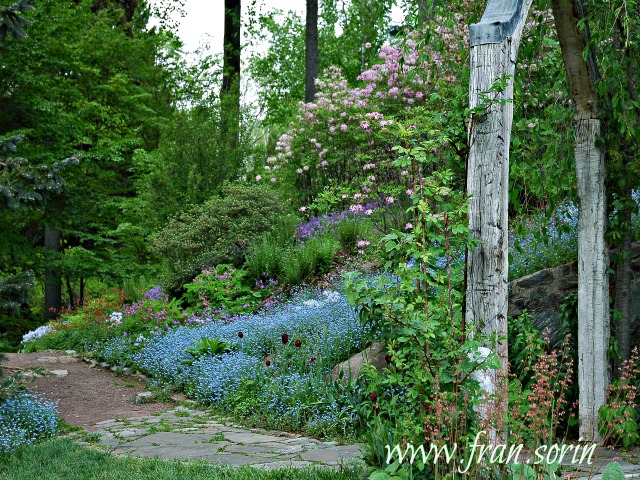
In the English garden Rosa 'Felicia' with her beguiling fragrance. Just a glimpse of her through the Sun and Moon archway.
The Philippine violet on the corner of the patio is just starting to bloom.
As is the shrimp plant. A new addition to this same corner.
The planter of bunny ears cactus, Opuntia microdasys, is back on the wall.
Peas are up.
Mexican mint marigold, Tagetes lucida, is just starting to bloom.
The stock tank pond surrounded by gaillardia, cosmos and narrow leaf zinnias.
A splash of pink from the Japanese anemone. Are their petals supposed to be distorted?
The fall bloomers have definitely enjoyed our recent rains. And there is more to come this weekend.
Tuesday, September 25, 2018
LITTLE POPS OF COLOR
I have often mentioned how red was my least favorite color among garden flowers. But there are beginning to be more and more times when I eat my own words, and that time is now. Sometimes red gives that little pop of color which just brings the whole garden to life.
Whereas spring in the front courtyard is mainly about the blues, whites and yellows, fall is mainly about the the varied greens of the grasses and other textured plants. The salvia, Salvia greggii, dormant all summer, spring into life. One of those straggly plants that every year I think of removing until now. Here, straggly looks better than bushy as their arching branches reach over the rocks.
In another corner of this garden the same is true of the firecracker fern. I have seen magnificent displays of this plant when grown in good soil but mine stays rather short and retiring until rain and cooler temperatures bring out the bloom.
Under the shade of the Lady Banks rose, dormant all summer, the shy and retiring Oxblood lilies, Rhodophiala bifida, respond to a good soaking rain by sending up their naked blooms. And what a show they put on this year.
And in the back garden there are the annual strawberry gomphrena, Gomphrena globosa and spider zinnia, Zinnia tenuifolia, and they are red too. Although they usually reseed each year I still save save seeds just in case we have an unusually hard winter.
Another red flowering plant that will be moved into the garage for winter is the Japanes Lantern hibiscus, Hibiscus schizopetalus. It is certainly worthy of a home in the entry garden, if only for its exotic frilled bloom.
Look how deep the color is on the blanket flower, Gaillardia pulchella. Cooler nights are responsible for the depth of color. All flowers seem to take on more color during the fall.
Yes. Red is good.
Whereas spring in the front courtyard is mainly about the blues, whites and yellows, fall is mainly about the the varied greens of the grasses and other textured plants. The salvia, Salvia greggii, dormant all summer, spring into life. One of those straggly plants that every year I think of removing until now. Here, straggly looks better than bushy as their arching branches reach over the rocks.
In another corner of this garden the same is true of the firecracker fern. I have seen magnificent displays of this plant when grown in good soil but mine stays rather short and retiring until rain and cooler temperatures bring out the bloom.
Under the shade of the Lady Banks rose, dormant all summer, the shy and retiring Oxblood lilies, Rhodophiala bifida, respond to a good soaking rain by sending up their naked blooms. And what a show they put on this year.
And in the back garden there are the annual strawberry gomphrena, Gomphrena globosa and spider zinnia, Zinnia tenuifolia, and they are red too. Although they usually reseed each year I still save save seeds just in case we have an unusually hard winter.
Another red flowering plant that will be moved into the garage for winter is the Japanes Lantern hibiscus, Hibiscus schizopetalus. It is certainly worthy of a home in the entry garden, if only for its exotic frilled bloom.
Look how deep the color is on the blanket flower, Gaillardia pulchella. Cooler nights are responsible for the depth of color. All flowers seem to take on more color during the fall.
Yes. Red is good.
Subscribe to:
Posts (Atom)