My Blog List

Saturday, January 23, 2021

MY GARDEN HAS INSOMNIA

When I lived in Eastern Canada gardeners were well assured of having a respite during the winter. It was a time when browsing through seed catalogues and placing an order was the highlight of winter gardening. Seed starting came next, geared towards being able to plant frost sensitive flowers and vegetables outside by May 24th. The garden slumbered under a thick layer of snow.

Now here I am in Texas with its unpredictable climate and often mild winters. Because I knew there was to be no winter travel this year it gave me the opportunity to be more diligent about planting a winter vegetable garden. It has been a great success.

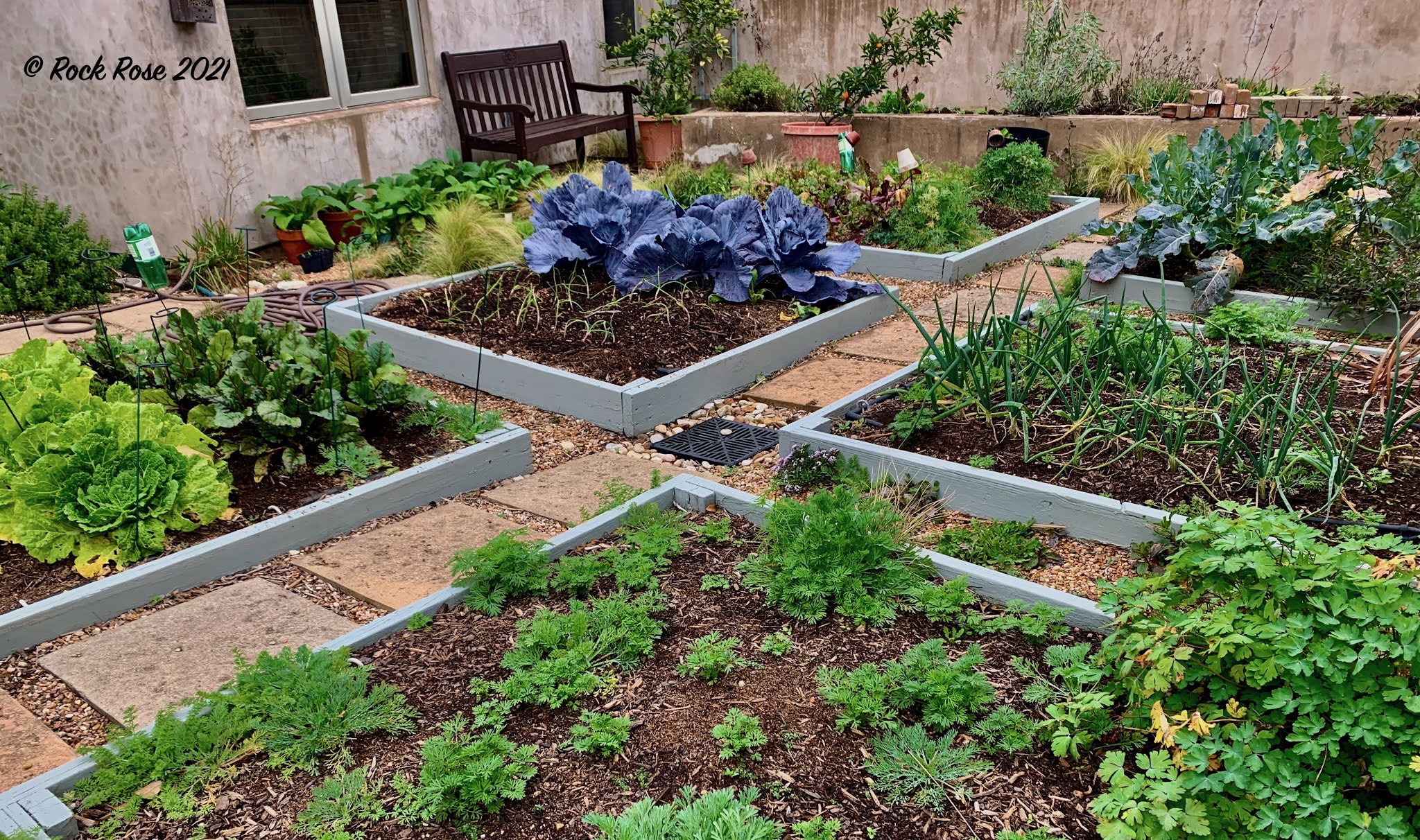


We have had an unusually mild fall, although frost has made an appearance on several occasions necessitating the covering of my peas.  I was  determined to keep them going in order to get an early spring crop, but because of mild weather was rewarded with a winter crop. 
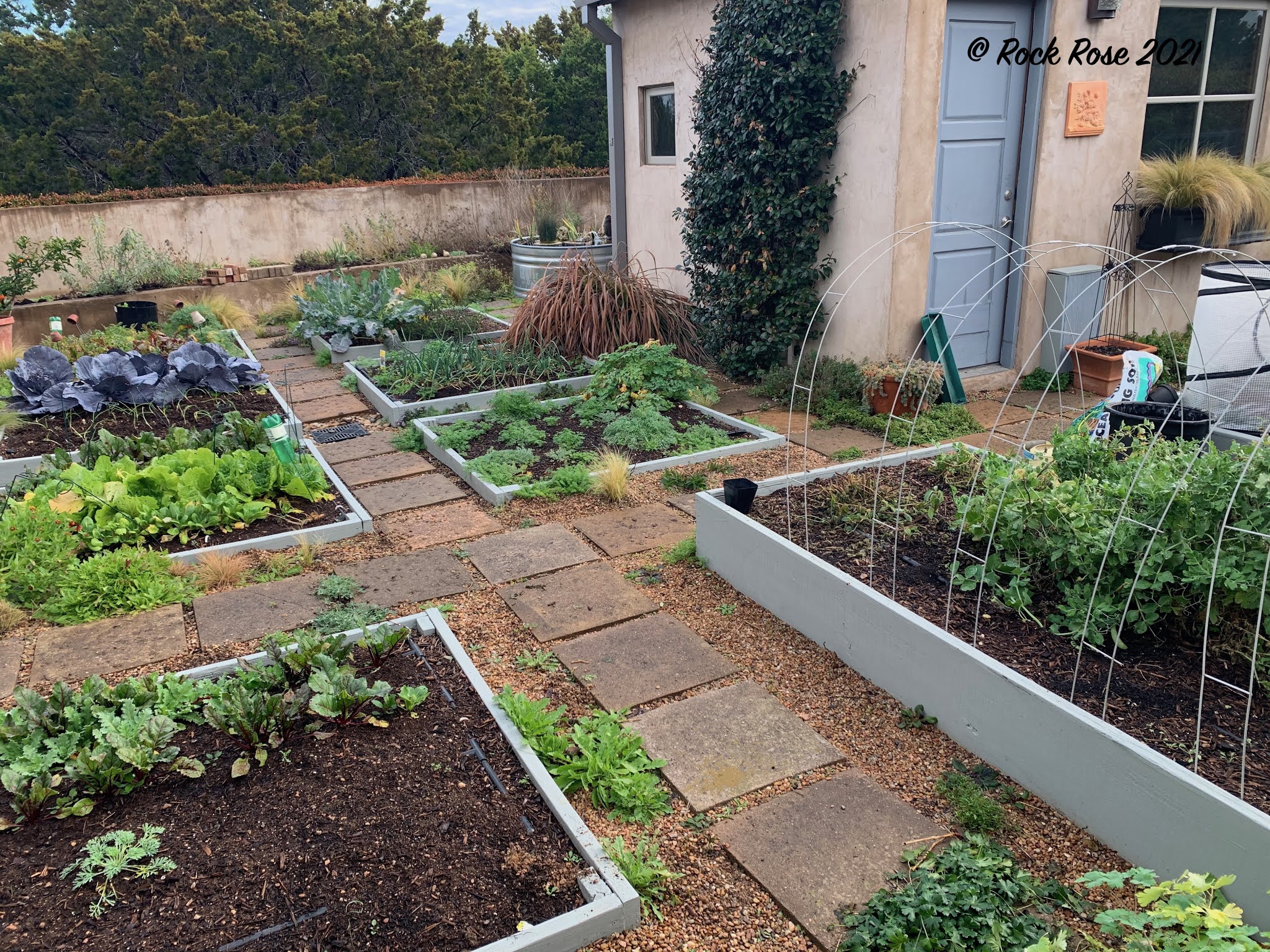
 

We have already devoured two crops of broccoli, pak choi and a succession of chard and kale not to mention peas, carrots and beets. All these plants are contained in beds in my vegetable garden. Even so there are many intruders in those beds chiefly larkspur, California poppies and the most successful seeder of all Love-in-a-mist. Known as hardy annuals this is their time to germinate, growing over the winter in time to flower in the early spring. I regret I have allowed them to take over. 


Those spaces between the pavers create an ideal spot in which seeds from last years flowers settle and particularly with Love-in-a-mist it seems every one germinates.  

And they found an even better home in the vegetable beds among the cilantro.

And poppies too.


And bluebonnets. Knowing how they can cover a diameter of 3' I may need to remove the one in the center of the path.

Every year I vow to keep those paths free of these opportunists and every year I relent which means even more will arrive every year. 

Blanket flowers, Gaillardia pulchella give me great difficulty. That is because they behave like perennials and these rather shop-worn plants are beginning to flower again. Soon they will have to go because they make a tripping hazard but I will leave them in case the bees come by looking for nectar or pollen. There are hundreds of seedlings just getting going.

It is my firm intention this year to reduce their numbers before they make it impossible to walk down the paths. 

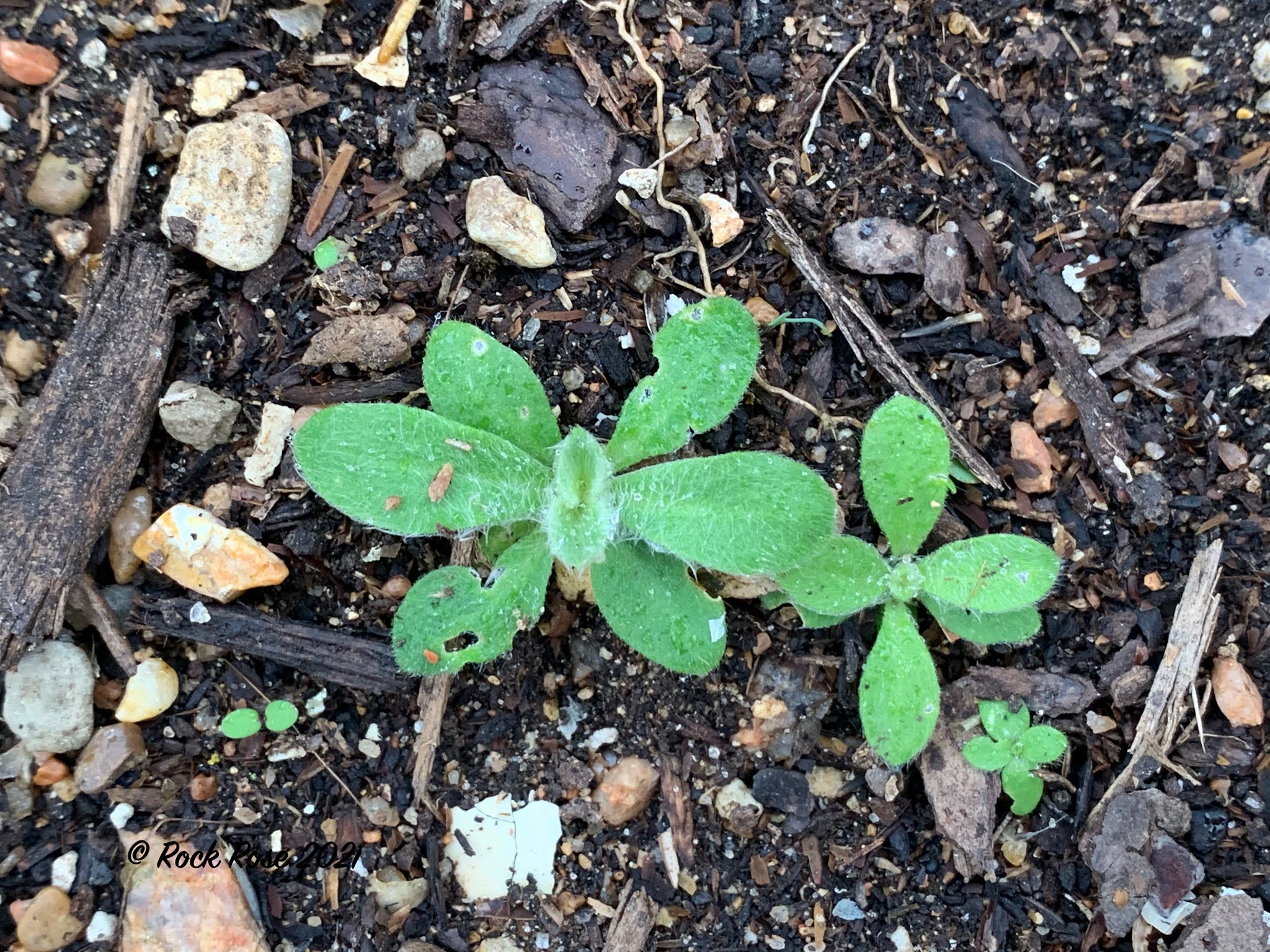
Some plants don't seed quite so prolifically  so I am happy to see a few rose campion, Lychnis coronaria, just beginning to develop. I plan to remove them from where they are growing at the edge of the path to a more prominent position.
 Those that are a little larger will have to stay. A happy trio of rose campion, Lychnis coronaria, Gulf coast penstemon Penstemon tennuis,  and alyssum, Lobularia maritima. They are in the herb garden and will stay there.

Verbena bonariensis by the hundreds! I have already shared many and have potted some up in case of a some weather mishap. Last year's plants are looking strong and healthy but there is much winter to come yet. 

 Larkspur seedlings in the sunken garden. A little thinning required. They won't grow as large as the ones in the beds because the soil is poor. The same being true of love-in-a-mist.
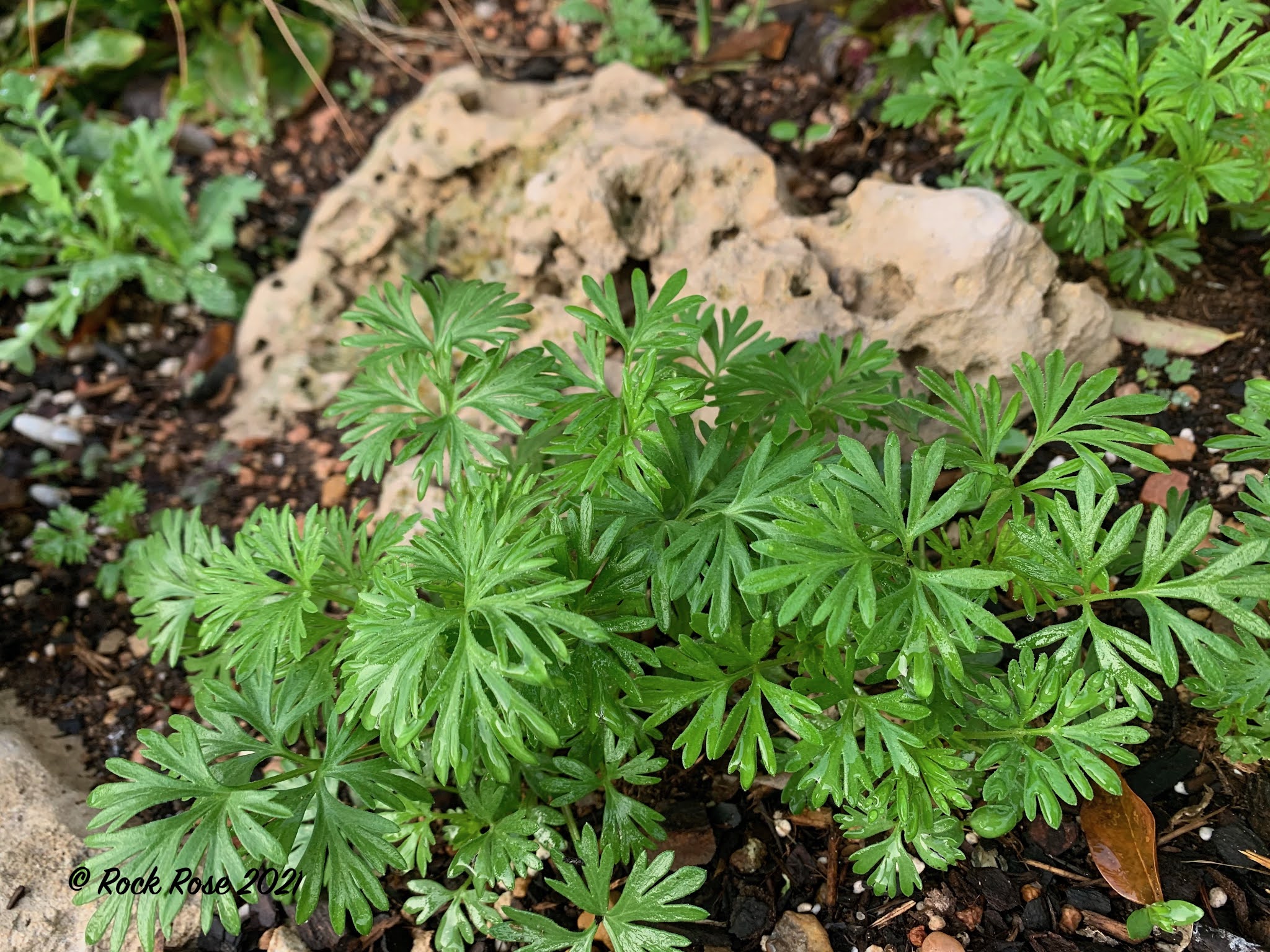
Here is a plant that hasn't slept in 2 years, Scabiosa. One of my favorites in the rock garden becaseu its foliage is never touched by insects.

Someone once said my weeds were a lot different from theirs. The fact is a weed remains something that is growing in the wrong place and I have plenty of those.


Tuesday, January 12, 2021

OH, NO! SCALE

 If there is one advantage to being short-sighted it is that as you grow older your close-up vision becomes even more acute bringing with it an added bonus. This makes you capable of reading the tiniest print, taking out splinters and spines from cactus and you can see when scale develops on one of your cactus. Albeit, a little late but not too late this time. Certainly worth getting out the fine paint brush and the bottle of 70% alcohol. 

How could this have happened? I am normally very observant when it comes to any kind of change. But this was the problem that I discovered this morning when I went into the greenhouse. It almost seemed that the multiplication of the insidious scale had happened overnight, although it had probably been going on for a while. I have scoured the Internet for an identification on the cigar shaped invaders. The only photo I came up with was Eunoymus scale. Yes, there are one or two of the adult tortoise-shell type scales but what are these others? Are they a different type of scale or the young? I think they maybe what are known as the crawlers which is a time at which the insect is most vulnerable. I spent about 30 minutes painting them with alcohol and finding that many of them just seemed to be easily removed by the treatment.I will repeat the application in a weeks time keeping them in isolation until clear.

This is not the first time scale has visited my cactus and succulent garden. Outdoors, the prickly pears ( Opuntia) also get scale, the kind that look like little tortoise shells or limpets. They also seem to appear overnight soon turning the whole pad white if you don't catch early and sucking the juices from the pads. When a pad becomes extremely infested it is simpler to remove rather than treat. So far no cochineal scale (Dactylopius spp) have visited my prickly pear This scale, in the adult stage, has the white fluffy coating that is hard to penetrate with oils and soapy sprays. If there is one reason for liking the cochineal scale it is because it carries with it a great story. When I give tours at the Wildflower Center I delight in finding the scale and telling people how it was discovered by the Spanish when they arrived in  Mexico and became so prized by them that its value was second only to silver.  I usually scrape off a scale with my finger and squash it to reveal this bright red color. The Aztecs used this carmine red to dye cloth producing vibrant red color. Europe had nothing like it and the Spanish were successful in keeping their source secret for many years. They managed to do this until 1777 when a French explorer discovered their secret source in Oaxaca.

When I first heard the story it jogged my memory of the little bottle of cochineal in the pantry at home which was used for dying cakes pink. At first I was a little horrified but then I learnt about the later substitutes for cochineal, which had almost killed the industry. Many of the artificial dyes that had been created were found to be carcinogenic. Today cochineal is used less but still found in candy and lipsticks although the cry from vegetarians has led to discovery of vegetable dyes being used. And yes, all those red Smarties I ate as a little girl and used to paint my lips were dyed with cochineal.

Saturday, January 2, 2021

PARSLEY, SAGE, ROSEMARY, AND THYME

Very shortly after we moved into the house, and with a clean slate, I began work on designing the herb and vegetable garden. The good growing season was coming up and I wanted to be able to plant a fall/winter crop. There is rarely a day goes by when I do not go into the garden to pick some herbs to enhance my dinners.

And like many herb gardens there is a sprinkling of flowers, some of them edible, and a few grasses to soften the paving made by David. (Today it is easier to find larger pavers but 20years ago it was impossible.)

Whether fresh or dried, herbs are plants that I could never do without and they are so easy to grow. Parsley, sage, rosemary and thyme plus chives, oregano, marjoram, mint, cilantro, and lemon grass all have found a home in my garden. And for those who do not have a garden many of these can be grown together in a single pot placed outside the kitchen door or on a sunny kitchen window ledge in the house.

This is a herb garden I made for my son for Christmas. Unfortunately it never reached him as we had to cancel our plans to go visit. Notice the addition of edible flowers. Among the herbs I planted are chive (onion and garlic) parsley, cilantro, marjoram and mint. If grown organically, flowers of violas can be added to your salads. 

Below I have picked thyme and rosemary which are the only herbs needed to flavor  my slow cooker pot of white beans. 

I also use rosemary chopped with garlic, salt and olive oils as a marinade for rack of lamb.

A sprinkle of dried thyme leaves, olive oil and salt is all you need to enhance the taste of roast tomatoes.


I grow two different kinds of sage. The first, Salvia officinalis, is the culinary sage. It grows year round in my garden. In early spring it flowers with the most amazing blue flowers worthy of any garden setting. It is easily propagated in the fall by bending a stem and pinning it to the ground ( the technique of layering)..

The second one is more ornamental, although it can be used in the kitchen. It has more rounded leaves Salvia officinalis 'Berggarten'


I use sage in stuffings and fried in butter or oil as a delicious finishing touch on the top of Italian dishes such as risotto..


Mint has been given a dedicated place alongside the potting shed and beneath the window box where I can
control it. It does need continual cut back to prevent it taking over the path but has found a happy home in this spot. This year I started using in in lamb burgers along with cumin and feta cheese. So delicious. Also, in mint sauce which we have with lamb, although I still prefer redcurrant jelly. It is great in a water melon salad with feta cheese and arugula. 

 I also use mint chopped with feta cheese and cumin in lamb burgers. 


It is impossible in our climate to successfully grow French tarragon but a good substitute in Mexican mint marigold, seen below with yellow flowers. I grow it mainly as a late-flowering ornamental.  


I grow 2 varieties of chive, onion chives and garlic chive. I prefer the former but it is more difficult to grow because the snails seem to really like it and frequently sever the plant at the base. It grows best throughout the winter blooming with beautiful balls of lilac flowers, which can also be used in salads. It is distinguished from garlic chives by its hollow round stems. Garlic chives have flat stems and have the typical allium white flower heads. 

Onion chive.

I also grow society garlic but only for its flowers and performance in our Texas climate. I have been told that the leaves can be used as a flavoring and the reason it was called society garlic was because it did not cause the same breathy problem that garlic does. I'm not sure this is really true!

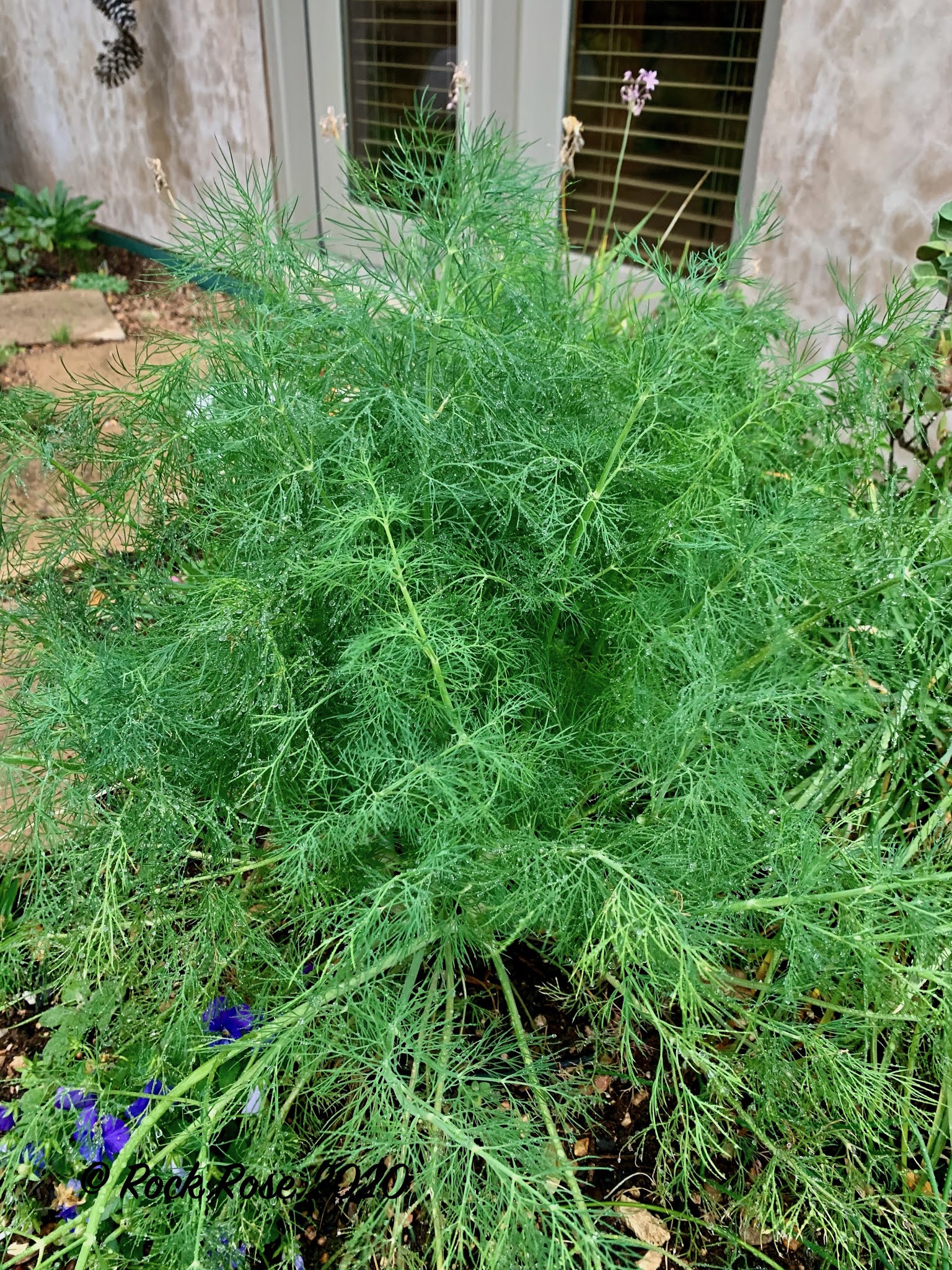
                                                                                dill

The feathery fronds of dill are wonderful with fish and eggs. 

Cilantro I always allow to flower and go to seed so every year, in the fall,  cilantro pops up all over the garden. It is growing in among beets and carrots this year as well as in the herb garden path.


I grow Italian parsley, another herb I permit to go to seed, and find it popping up in many places. 


And finally oregano. I try to pick the stems early in the morning to hang in bunches to dry. I then crumble the leaves into a jar to use in many Italian dishes. Mixed chopped herbs are delicious in polenta. Oregano grows throughout the year and must be cut back frequently if you want to prevent it going to seed and keep it nicely shaped. It makes a useful small evergreen shrub for the garden. 

Basil is a summer herb which grows well for us in Texas. It dies over the winter and must be replaced every spring when temperatures are well about 50°

If you don't have a specific place for growing herbs then plants them in among garden plants. They will reward you by flavoring your food year round as well as saving you money at the grocery store. 


Wednesday, December 23, 2020

THE MIRRORED BOXES

More time spent at home means more projects and at this house they are lining up and waiting to be done. The mirrored wall boxes were in need of some refurbishment as the wood had begun to rot on a couple of them and one mirror was cracked. I'm sure our feathered friends who spend much time staring at themselves and pecking the glass would appreciate it. The original boxes were on the outside of the front wall where they give the impression of windows looking into the garden. 


I had come across the idea many years ago in a Sunset magazine and kept the clipping in my file of Garden Ideas. Here was the perfect opportunity to use the boxes which would play off the upper windows of the house. I'm so glad that David has become handy with the saw during retirement. They are a simple structure of mitered 2x4s backed with a mirror and plywood. Some years later I requested 3 more to put on the inside of the walls.

 
This fall we took down the Lady Banks rose that was in the corner of the garden. It was more than 20 years old and I will have to admit poorly pruned. This rose needs a lot of support and I had permitted underlying dead branches to remains as the support framework. It had spread several feet over the top of and along the wall and was becoming unmanageable with dead twigs constantly falling. This and the fact that the rose had never recovered from the terrible hail storm that occurred in April a few years ago, scaring the branches and taking every new leaf, its bloom considerably reduced, made the decision to remove easier. It took David a full week to take it down little by little.
Now suddenly there was a bare spot extending around the corner. I suggested that we add a couple more boxes to fill in the space. 


And at the same time change the color of the boxes to match the gate and the overhead beams. My plan is to plant a Hesperaloe on the corner. Something that will not take any maintenance and will do well there. 


And there is a fig ivy climbing back up the wall. I will allow a delicate tracery of this vine and not let it turn into a hedge! My job was to repaint the wooden bench and the cactus theatre. It is amazing how a coat of paint can breathe a few more years of life into an old bench. In fact all our benches are getting a similar paint job. Those relegated to places outside the walls suddenly find themselves inside the garden. 


Not that there is much time to sit around! 

Monday, December 7, 2020

KALE AND CALAMONDIN

This time of year two wonderful garden crops are ready to bring into the kitchen. In the heat of summer I was anxiously awaiting cooler days and the vegetable garden rewards of our mild winters. I sowed seeds of kale, chard and pak choi in 4" pots in my laundry room moving them to the potting shed and under lights when they had a few leaves. This gives them a head start and a better chance of surviving the ravages of the decollate snail and pill bug decimation. I chose the curly kale because we like the slightly bitter taste. Not only do they have a high germination rate but they stay viable for a number of years. 


The packet I used was packed for 2017. The leaves are now of a good size for picking with 6 leaves enough for a meal for the two of us. I find kale much easier and more worthwhile to grow than spinach. If you are going to grow kale it pays to find some good recipes. Yesterday morning, in a chapter on winter greens, in a 2006 edition of Bon Appetit magazine, I found the following recipe. 

Other than the fact I did not have the more exotic mushrooms (I used baby bellas) I had all the other ingredients to hand including the thyme which I also grow.

It looks exactly like the photo in the magazine and was absolutely delicious. A definite keeper. We had it for dinner but it would make a really great special lunch dish too.


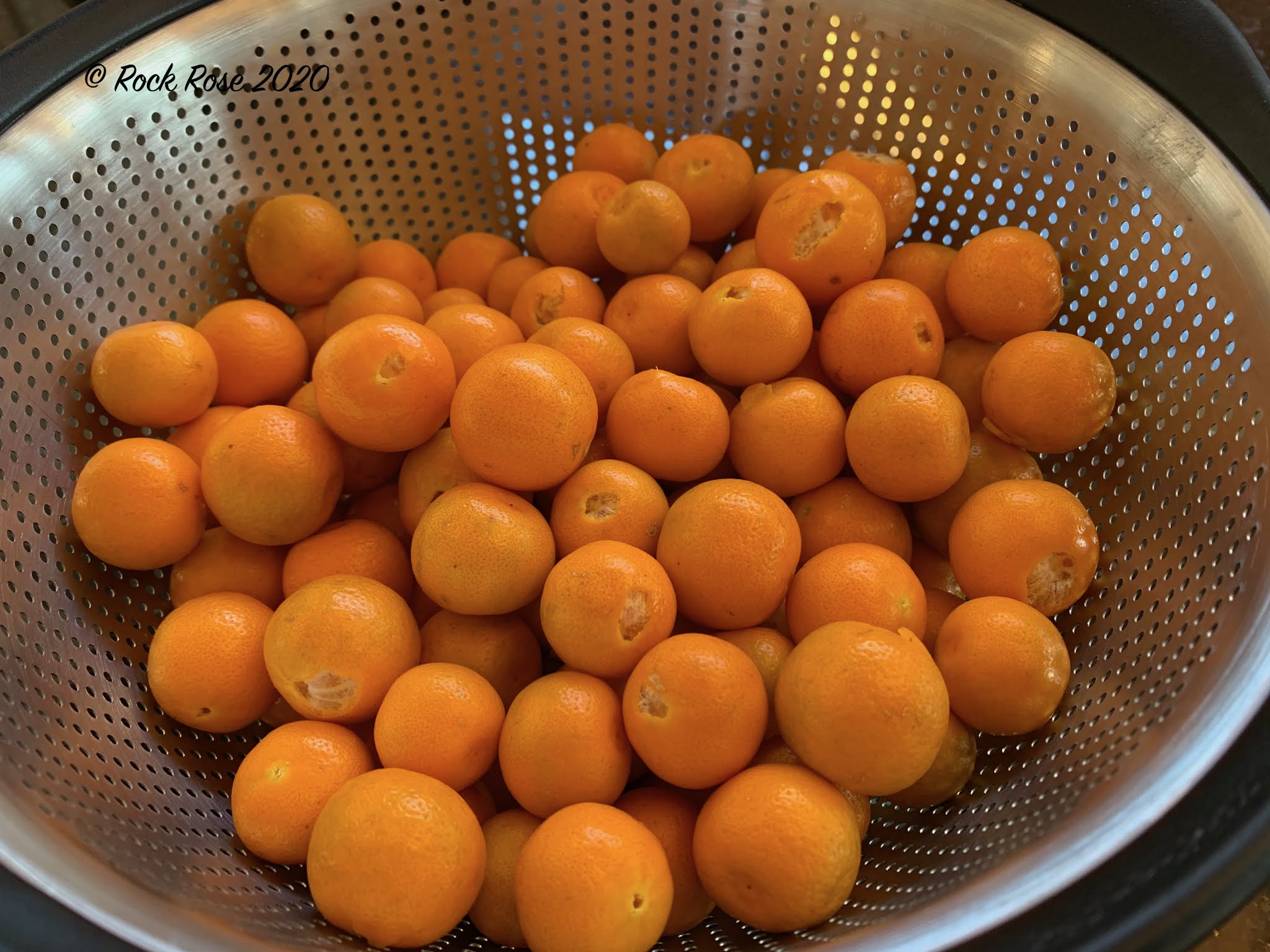
Later on in the day I went into the garage to make the first picking of calamondin fruit. The plants were wheeled into the garage a week ago because of an impending freeze. We were far more sensible this year keeping the pots on the driveway all summer and then using various wheeled carts to bring them in. They are now permanently on a variety of carts for the winter so we can easily transport in and out. 

When we lived in Hong Kong we saw hundreds of these trees at Chinese New Year. They are given as gifts and represent good luck and wealth. The Chinese word for the tree is very similar to the word for wealth. But they are more than just decorative trees they make the most delicious marmalade.

Making this marmalade is a real labor of love but so worth it for the absolutely delicious sweet/tart combination of flavors which we love on our toast at breakfast. And there is absolutely no waste as every scrap of the fruit is used, even the pips! Here's how to use your calamondins.

Cut the oranges in half.

Squeeze each half, to remove all the pips and juice, into a sieve over a a bowl. Then slice all the fruit peels thinly and add to the juice. Tie the pips in a muslin bag. For each cup of fruit add 3/4cup water into a large non-reactive pan tying the muslin bag so it is in the mix. Boil for 20 minutes. Cool and leave overnight in the fridge to allow the pectin to develop.

Measure the fruit again and for each cup add one cup of sugar. No pectin needed.

I like to use the spoon drop method for testing readiness but you can also use a cold plate or even the candy thermometer to jelly set, 220°

Pour into sterilized jars. No need to can. First batch completed. Lids popped and a good set achieved.

So incredibly delicious on my morning toast.


Friday, December 4, 2020

SISSINGHURST The Dream Garden. A book review

While visiting gardens has become more difficult in the last year and travel to far-off lands out of the question there is still one thing that gardeners can do and that is read about gardens. Here is a book that has me dreaming about a return visit to the gardens at Sissinghurst, armed with even more knowledge about that garden and its makers.

 Sissinghurst is surely one of the gardens that is top of the list when visiting gardens in England. The first time I visited I looked at it only as a garden, wowed by the garden rooms, those views from the Tower, the White Garden and a very brief introduction to Vita Sackville West and her husband Harold Nicolson, the makers of the garden. Before leaving I purchased the National Trust book Sissinghurst. Portrait of a Garden so I could learn a little more. Since then I have purchased several books written by both garden writers and family. I was captured by this couple, their unusual marriage but mostly how they, with different ideas about how to garden managed to pull off such a wondrous place. My feeling is that you will never truly understand this garden unless you know something of its history, even though that history is less than 100 years.

At the very start Richardson says "I am not going to make any excuses for the wilful intermixing, in this book, of sturdy horticultural description with biographical detail and speculation regarding Harold and Vita's intellectual and aesthetic motivations." In this respect the book offers a newer look at the garden and its makers.

After a short introduction to the garden makers and how they came to purchase Sissinghurst, you  begin to understand why this garden is so important. Each chapter takes you on a walking tour of the garden. moving from one garden to another learning, if things have changed, how it was in Vita and Harold's time, what happened after their death when it became part of the National Trust. It begins in the entry garden where, like the visitors in Vita's day, you now pay your 'shilling' to enter.

"And then the visitor gains a first proper glimpse of the tower directly ahead, framed by Sissinghurst's gateway. It is a a transfixing moment, especially as the tower has not loomed particularly large until now. "

If you love roses then you will enjoy the chapter on the large collection of roses in the Rose garden before moving to the lime walk and a complete change in character. The one area of the garden which Harold not only designed but also planted. The walk takes you through the nuttery, the herb garden (about as far away from the kitchen as you could get) the orchard to the famous White Garden, and finally to the new Delos Garden. There is a short chapter on the new Delos Garden which was the name Vita gave to the Mediterranean garden she tried unsuccessfully to create at Sissinghurst. Dan Pearson was the designer given the task of designing and implementing the garden in the rather cold and inhospitable winter climate. I wonder if Vita would have been happy. The garden has seen many changes since taken over by the Trust and Tim Richardson admits he thought he knew the garden well until he undertook this project. 

Whether you have the chance to visit the garden or only in the pages of this book you will be sure to leave with a sense of what makes the garden so important and visited by thousands from all over the world every year.

I was offered this book to review and have really enjoyed pleasant days of reading during these Covid times. 

Sissinghurst The dream garden by Tim Richardson, foreword by Dan Pearson, Photographs by Jason Ingram. published by Frances Lincoln. 


Tuesday, November 24, 2020

HAPPY THANKSGIVING

 Wishing all my gardening friends a Happy Thanksgiving.


Saturday, November 21, 2020

GARDENING IN NOVEMBER

 November is a busy time in the garden. Winter vegetables need to be tended and direct sowing of seeds. And there are seeds to be saved from summer bloomers. November finds my counters littered with saved plastic boxes filled with dried seed heads waiting for a little finger work. Tender plants are already in the greenhouse safe from expected frosts-although so far we have been fortunate. Apart from a few nights of temperatures in the high 30s we are now having Indian summer which is a lot nicer than a Texas summer. Warm dry days and cooler nights. The plants are loving it.

There are many years when the Copper Canyon daisy, Tagetes lemmonii, never gets to bloom. It can be so late that an early frost nips it in the bud. This year, however, it is spectacular.

The same is true of the Gomphrena 'grapes' Because it is a late bloomer it rarely get chance to bloom. In the end I gave the original plant away, but it had left behind some seedlings in the gravel, which I left, and this year the plants are blooming beautifully. They grew like spindles all summer and then about a month ago they started to produce flower heads. Maybe I will try to transplant into a place at the back of the border where they can mingle in among other plants including Verbena bonariensis. It is best grown where it can grow through other plants. 

Ajania pacifica, is another good fall bloomer. It is quite the spreader but easy to pull and performs well in a rock garden setting. 

But it is seed collecting time for many of the fading summer bloomers including the globe gomphrenas, pink and purple although not entirely necessary as they usually naturalize-sometimes a little too vigorously. Gomphrena 'fireworks' gives off a curry smell in the fall. The first year I grew the plant I remember thinking that one of my neighbors was busy making an Indian dinner! Since then it has shown up everywhere although none seems to have escaped the garden. It has a big tap root which often results in it overwintering. All the gomphrenas leave a lot of mess behind when the petals start to fall. Confetti time.

I have so many blanket flower and verbena seedlings that I have to move some of them to places where I would like them. Not in the pathway, although alyssum and daisy fleabane can stay. I will probably pull out the Mexican feather grass that is growing alongside it. 

I have already transplanted a few Larkspur from the vegetable beds to the sunken garden. I just have to make sure that the snails don't eat the seedlings before they are big enough to stand on their own two feet.What's going on in your garden?

Fruit is ripening on the citrus but it will be a few more weeks before I pick the kumquats and the calamondin to make marmalade. Lots of work but so worth the end result. We are terribly finicky about our marmalade and like the sweet/tangy taste when made from these little fruits. 

Kumquat

Calamondin

Improved Meyer lemon

I'm having one of the best winter vegetable garden seasons in quite a while. Already harvested pak choi, chard, peas and beets broccoli and carrots are well on the way to a good harvest. 

It's not often we get a successful pea harvest in the fall unless we protect the crop from frosts. This year, so far, no frost but then no rain either.

This variety is Cascadia which I have the best success with in spring. It produces tender posts that can be eaten at all stages from snap to full pod. They remain crisp and stringless. 

I don't know what I would do without my garden as it has kept me busy during these difficult stay-at-home days. 


Wednesday, November 11, 2020